Haute Black Journal
Singita Faru Faru Lodge: An Insider's Guide for 2026

Marlene Azeez
Director, HauteBlack
View all articles →
# Singita Faru Faru Lodge: An Insider's Guide for 2026
At first light, the Grumeti feels almost suspended. The river holds the sky’s color for a few quiet minutes, then the first elephant steps into view and the whole surroundings seem to wake in layers.
That is the right way to think about singita faru faru lodge. Not as a place to sleep between drives, but as a carefully edited vantage point on one of Africa’s great wildlife theaters.
An Unrivaled Serengeti Encounter
On my first properly judged stay at Faru Faru, the moment that stayed with me was not a dramatic sighting. It was breakfast. A guide had read the morning well, the light was still soft over the water, and the lodge felt completely in step with the bush rather than imposed on it. That is Faru Faru’s real strength. It turns time in the Serengeti into experiences that feel considered, private, and worth the effort it takes to get here.
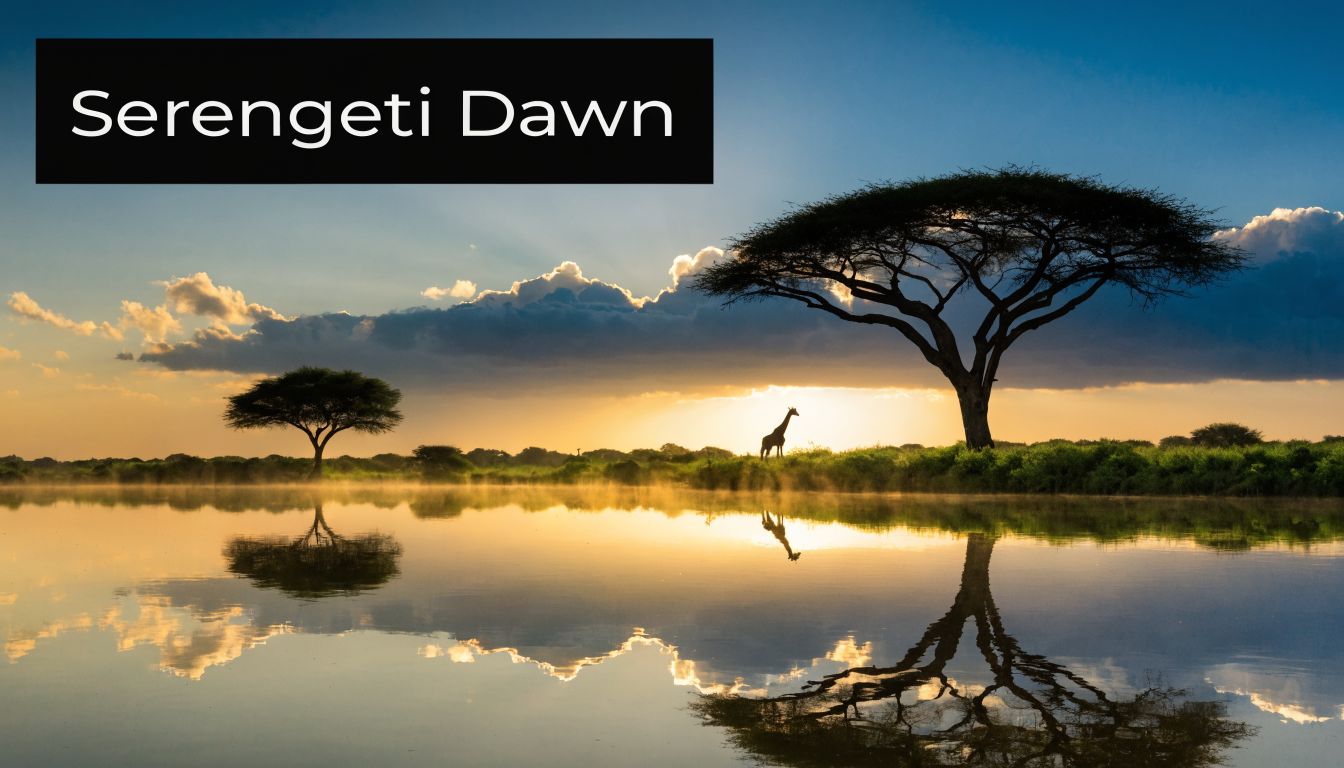
The design makes that possible. Contemporary architecture, long sightlines, and a restrained palette keep your attention on the river, the passing game, and the changing weather. Some safari camps ask guests to admire the camp itself. Faru Faru is more disciplined. It creates comfort at a very high level, then lets the setting do the memorable work.
That distinction matters for travelers who measure luxury by outcome, not by ornament. The return here is privacy that changes the feel of each day, suites that work for couples as well as families traveling together, and guiding that supports genuine engagement with wildlife rather than a rushed checklist of sightings. You are not merely buying a beautiful room. You are buying a better chance of those rare safari moments that still feel intimate once you are home.
It also attracts a specific type of guest. This is usually a strong fit for travelers who want polish without stiffness, and for multi-generational groups who need comfort, space, and enough flexibility that grandparents, parents, and children can all enjoy the same trip in different ways. In practice, that often produces a stronger family return than more overtly formal safari properties.
Timing shapes the value. Travelers planning around wildlife concentration, family school calendars, or a wider East Africa routing tend to get more from Faru Faru when the brief is precise and the dates are chosen with intent. If that seasonal context is part of your planning, it helps to review the broader rhythm of the Great Migration in Africa before confirming a stay.
The final layer is access and judgment. A well-booked Faru Faru itinerary should feel easy from the first planning call, but it should never be generic. Done properly, this is not just another luxury safari stop. It is the kind of Serengeti stay that repays careful planning with memories that hold their value for years, especially when the right relationships behind the scenes shape the trip around how you travel.
The Exclusive Grumeti Reserve Advantage
The reserve is the key differentiator here. Faru Faru sits within Singita Grumeti, and that private setting changes the quality of time on safari in ways a first booking often underestimates. The return is not abstract. It shows up in quieter sightings, more control over the rhythm of the day, and a far better chance that a major wildlife moment feels personal rather than shared.
That matters because public circuit safaris can dilute even excellent game viewing. You may arrive at a sighting with several other vehicles already in position. The guide may have less freedom to adapt. The wildlife is still there, but the atmosphere can feel managed for volume. In Grumeti, the focus shifts from counting animals to preserving the integrity of the encounter.
Why private reserve access changes the day
Private access affects the experience in practical, guest-facing ways.
- Sightings hold their shape: Fewer vehicles around a leopard, lion, or elephant sighting means less visual noise and less pressure to rotate out quickly.
- Guides can follow the moment: A strong guide has more room to read the bush properly, wait out a promising situation, or change course when conditions suggest something better nearby.
- Different generations travel better together: Grandparents may want a slower morning, while teenagers want maximum game time. A reserve with flexibility handles those preferences more gracefully, which is one reason Faru Faru works well for families focused on seamless family trip planning.
This is where experiential ROI becomes clear. One unhurried hour with a relaxed elephant herd at last light often delivers more lasting value than a crowded day spent chasing a higher sighting count.
The Grumeti factor
Grumeti has a distinct mood within the broader Serengeti ecosystem. The mix of riverine habitat, woodland, and open plains creates variety across relatively short distances, which helps each drive feel different. For guests staying several nights, that variety protects against the sameness that can flatten a safari.
It also supports different styles of travel. Some clients want early starts, long drives, and a guide who treats each outing like a field exercise. Others want a slower cadence, with time back at the lodge and wildlife coming to them between activities. Faru Faru suits both approaches because the reserve itself supplies interest beyond the standard drive schedule.
Practical rule: If privacy, pacing, and room to adapt matter as much as wildlife density, choose the reserve first. Then choose the suite and dates.
What works, and what doesn’t
Faru Faru rewards guests who use the reserve properly. Stay long enough to let the area reveal itself. Give your guide room to build a day around conditions rather than a checklist. Accept a slower hour when the setting is good, because that patience is often what produces the sighting you remember most clearly.
The weaker fit is the traveler who wants constant motion and a tally-sheet safari. Faru Faru earns its premium by protecting space, calm, and access. That is the difference between seeing wildlife and feeling alone with it. For the right client, that distinction is where the memory value compounds, and where strong industry relationships make a measurable difference in how well the stay is set up from the start.
Avant-Garde Sanctuaries at Faru Faru
After a long drive, the difference between a good safari room and an expensive one becomes obvious within minutes. At Faru Faru, you walk back into a suite that settles the senses, restores privacy, and keeps your attention fixed on the bush outside. That is a meaningful return for travelers who want their accommodation to improve the safari itself, not just decorate it.
The lodge has 9 suites in total, including 7 one-bedroom suites, 1 dedicated two-bedroom family suite, and 1 two-bedroom suite for up to 4 adults, with an overall capacity of only 22 to 24 guests as detailed in the lodge brochure.
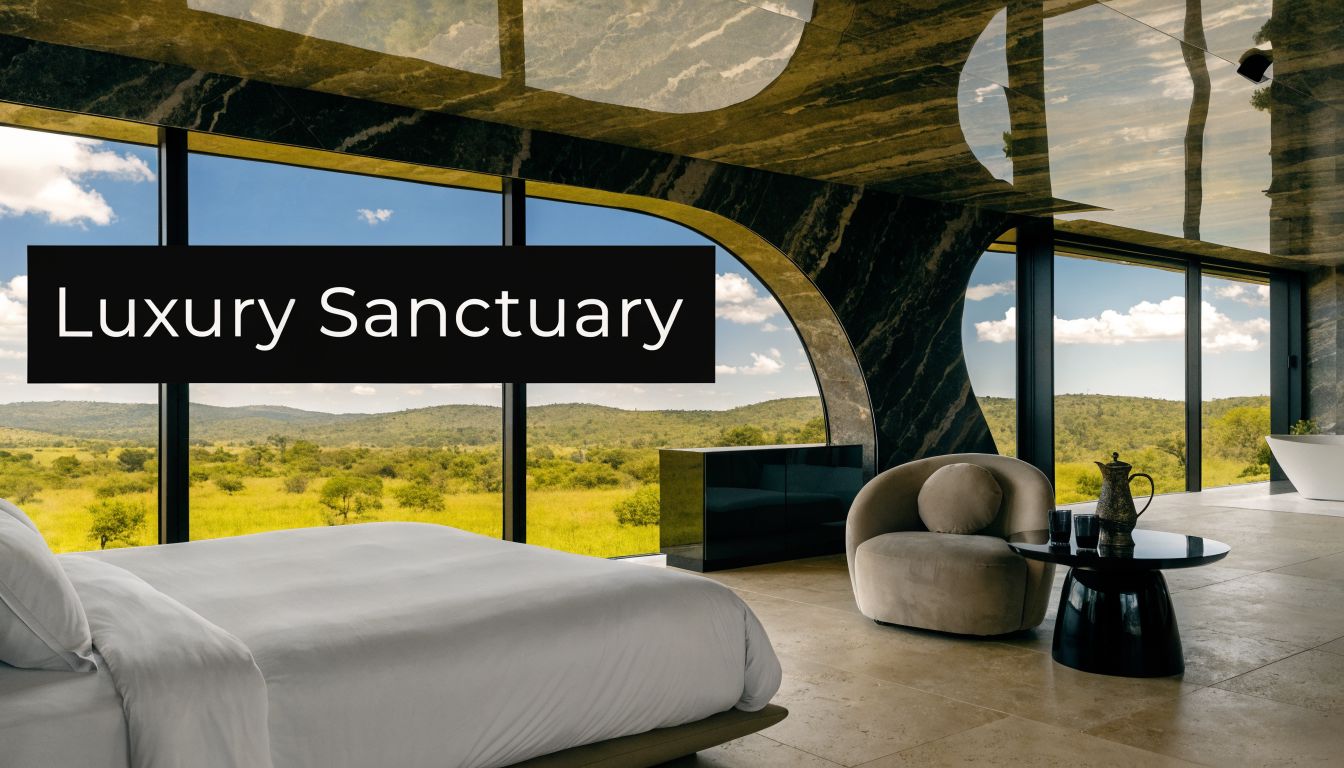
That restrained inventory matters more than the headline number suggests. Staff have room to read the day properly. Shared spaces stay quiet. You rarely get the low-grade social traffic that can make larger safari lodges feel performative by day two.
Suites designed to keep the bush front and center
Faru Faru’s interiors are deliberately restrained. Bone, ivory, nude, and clay tones keep the room visually calm, which is exactly what works after hours of dust, heat, movement, and sensory intensity outside. In the bush, loud design dates quickly and distracts from the reason you came.
The best safari suites do three jobs well. They cool the mood after a drive, direct the eye outward, and give each guest enough room to reset before the next activity. Faru Faru gets that balance right.
In the morning, filtered light and open views make the suite feel connected to what is happening outside. By late afternoon, that same openness supports a different kind of value. Guests can rest, read, or sit on the deck while still feeling part of the setting, which often matters more than another layer of decorative luxury.
Which suite type fits which traveler
The right room choice at Faru Faru depends less on square footage than on how you want the trip to feel.
| Traveler type | Best fit at Faru Faru | Why it works |
|---|---|---|
| Couple focused on privacy | One-bedroom suite | Quiet, uncluttered, and well suited to a more intimate safari rhythm |
| Family with younger children | Dedicated family suite | Shared space works well, while still giving parents and children breathing room |
| Two couples or a small family group | Two-bedroom suite | Better for time together without sacrificing bedroom separation |
The one-bedroom suites suit couples who want a quieter, more romantic cadence. The family suite and two-bedroom option solve a more complicated problem. Multi-generational travel works best when everyone can come together easily, then step away without friction when they need to.
That matters in practice. Grandparents can join for sundowners and dinner, parents can keep the day flexible, and children are less likely to feel overmanaged. For families arranging a wider East Africa itinerary, seamless family trip planning offers a useful reference point for thinking through room configuration, pacing, and expectations before arrival.
The value of low density
Low density affects the quality of every hour here. Breakfast feels unhurried. Pool time remains private. Vehicle departures do not turn into a production. Guests move through the lodge with a sense of space that is increasingly rare at high-end safari properties.
This short film gives a better sense of the property’s mood than any room description alone.
Choose Faru Faru if you want your suite to extend the safari experience and protect your privacy between drives.
What seasoned travelers appreciate most
The guests who respond most strongly to Faru Faru are usually the ones who understand proportion and pace. They notice how the architecture opens to the surroundings. They value how easily the eye travels outward. They recognize that a room can support a safari best by creating calm, privacy, and a genuine sense of place.
That is where the experiential return becomes clear. A well-judged suite improves sleep, preserves energy, gives families room to travel well together, and creates those quiet in-between moments that often stay with clients longer than the formal game activities. Haute Black’s relationships strengthen that return further by helping secure the suite category and lodge rhythm that best fits the people on the trip.
Signature Experiences Beyond the Game Drive
A stay here works best when you don’t treat the game drive as the only headline. Faru Faru certainly delivers the classic safari rhythm, but the richer version of the experience comes from how well the lodge fills the hours around it. The property includes dual infinity pools above a perennial waterhole, a fully equipped Technogym, and a spa, while conservation operations including anti-poaching patrols support the wildlife-rich environment that guests come to experience through the official lodge page.
The practical question isn’t whether there’s enough to do. There is. The question is how to sequence it so the stay feels expansive rather than over-programmed.
How to build a better day at Faru Faru
The most successful itineraries tend to follow one of two models. Either you commit to a strong safari cadence with active mornings and focused afternoons, or you deliberately alternate intensity and recovery. Trying to do everything every day usually leads to fatigue.
A smart rhythm often looks like this:
1. Anchor the morning around wildlife
Early hours are usually best used for game viewing. Energy is high, light is beautiful, and wildlife activity often rewards the effort of an early start.
2. Use late morning for recovery, not filler
This is the right time for the gym, a treatment, quiet reading, or watching the waterhole from the lodge. Too many travelers over-schedule this part of the day and flatten the overall experience.
3. Choose one distinctive add-on
A walking safari, balloon outing, or anti-poaching unit visit gives the stay texture. It changes your relationship to the natural environment.
4. Protect the evening mood
Don’t underestimate the value of unhurried sundowners and dinner. On a good safari, evenings are when the day settles into memory.
Experiences that justify the time
Not every extra activity deserves equal billing. A few stand out because they change perspective rather than merely adding variety.
- Walking safaris: These are for travelers who want to slow down and engage with detail. On foot, the bush stops being a backdrop and starts reading as a living system.
- Hot air ballooning: Best for guests who value scale and atmosphere. The aerial perspective turns the Serengeti from a sequence of sightings into a coherent natural expanse.
- Anti-poaching visits: These add moral depth to the trip. For many discerning travelers, understanding the protection infrastructure makes the safari feel more grounded and less extractive.
- Wellness time at the lodge: This sounds secondary until you’ve done several early mornings in a row. The spa and pool setting are not indulgent add-ons. They’re part of maintaining the quality of the stay.
Food, pace, and the invisible luxury
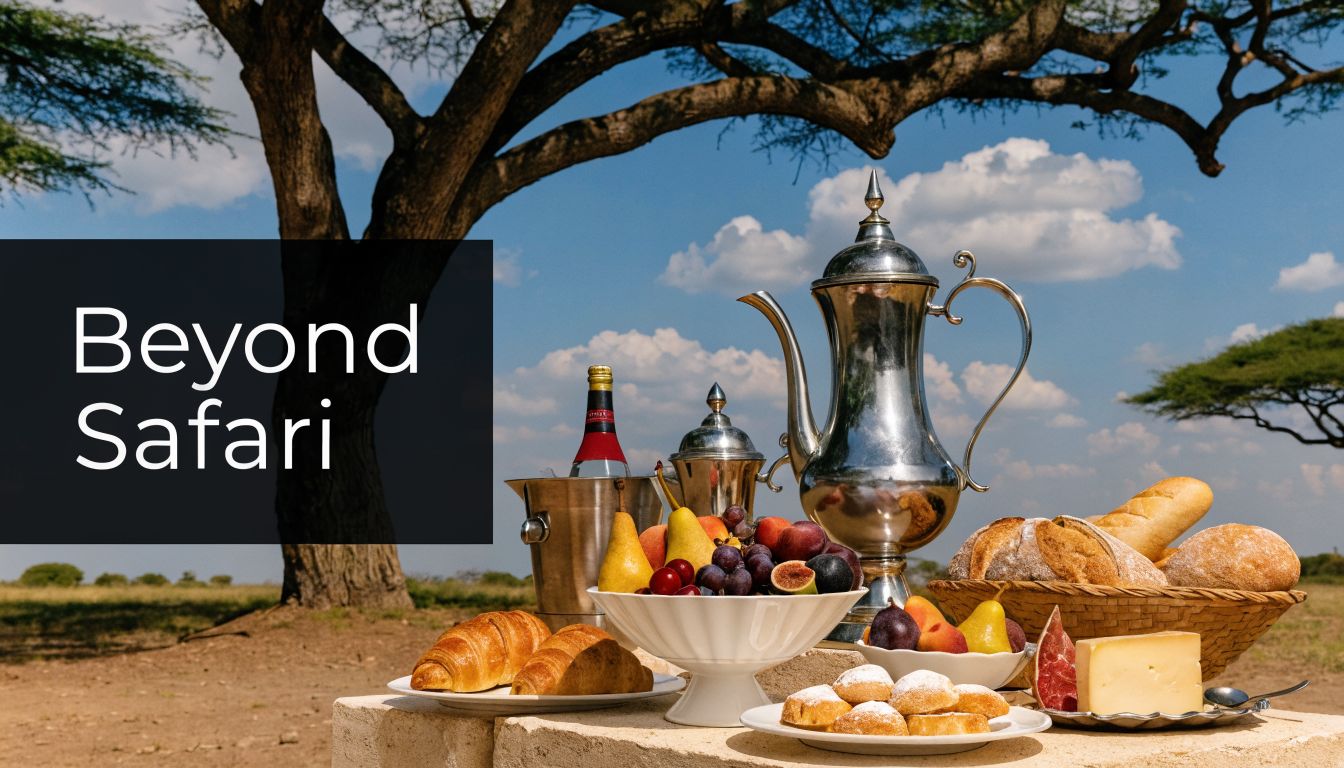
At this level, dining matters less as spectacle and more as timing, setting, and responsiveness. Bush breakfasts work because they extend the feeling of the drive rather than interrupting it. A private meal works when it feels natural, not staged. The best safari food service is often invisible in the right way. It seems to appear exactly when the day calls for it.
If you leave Faru Faru saying only that the game drives were good, you probably underused the lodge.
What works best for different travelers
A couple should usually prioritize one or two rich, atmospheric experiences over constant movement. A family should think in layers, making sure each day includes a central shared moment and enough downtime to prevent everyone from traveling on different emotional tracks. Solo travelers often benefit from adding the more interpretive experiences, especially guided walks and conservation-oriented outings.
What doesn’t work is trying to prove you extracted maximum value by filling every available slot. Faru Faru is an immersive property. Some of the return comes from motion. Some comes from being still in the right place.
Bespoke Itineraries for Discerning Travelers
I usually judge a Faru Faru itinerary by one question. Did the stay create memorable sightings, or did it create a family story everyone will still talk about years later? At this lodge, the return comes from arranging the days so the right people are together at the right moments, with enough privacy and breathing room that the experience never feels processed.
Faru Faru rewards travelers who plan around outcome, not activity count. Couples usually get more from one dramatic morning and one completely private evening than from trying to book every possible extra. Families and mixed-age groups do better when the stay includes shared anchors, separate interests, and enough suite privacy that no one feels they are living on top of each other.
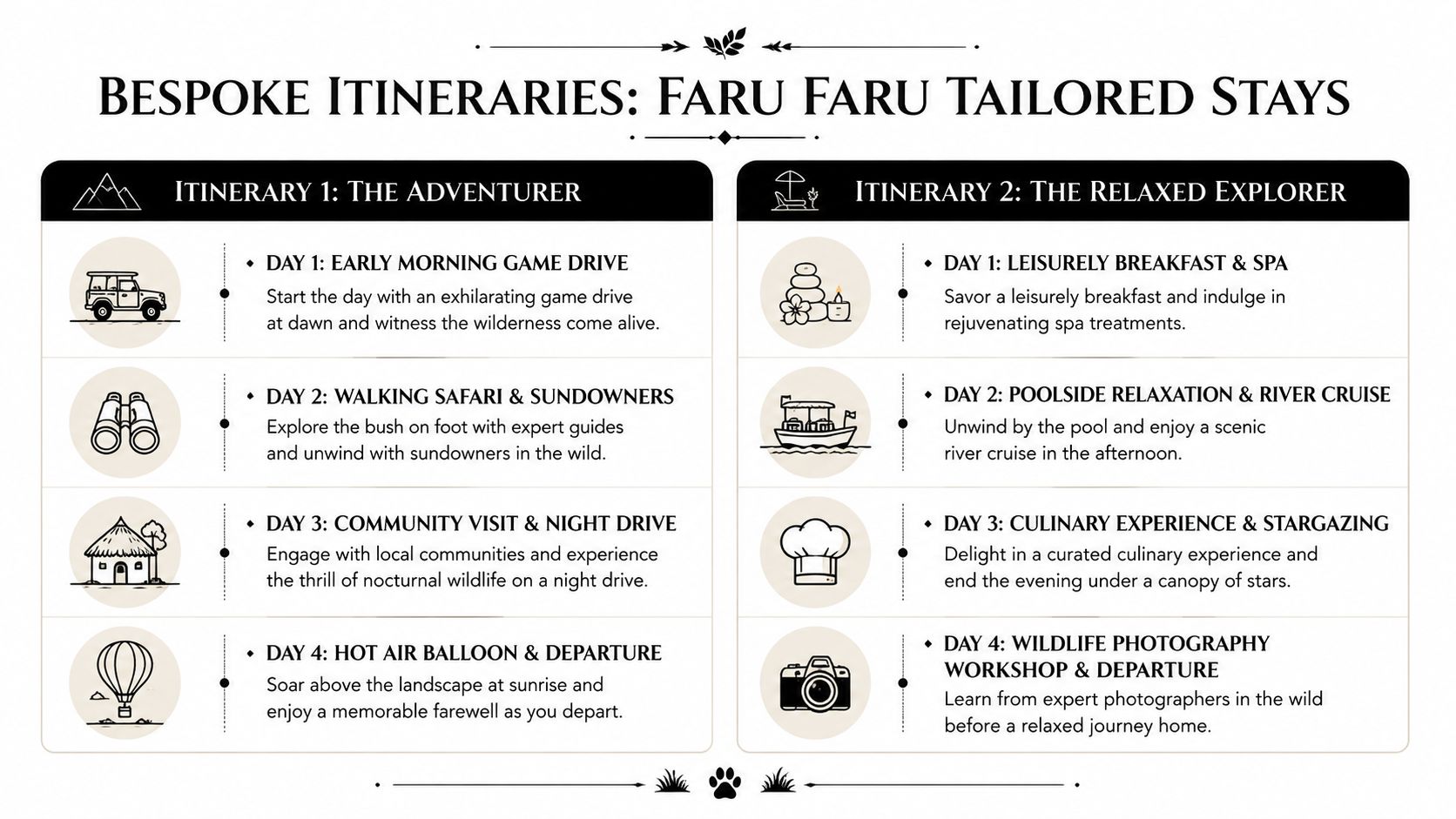
Travelers considering a highly bespoke East Africa journey often benefit from seeing how customized package tours are structured around pace, privacy, and priority experiences rather than fixed sightseeing blocks.
The ultimate honeymoon
For couples, Faru Faru performs best as a low-friction, high-privacy safari. The mistake is treating every day like a checklist. The better approach is to protect a few prime windows for wildlife, then leave space for the suite, the setting, and the small private moments that make the stay feel personal rather than staged.
Day 1 should stay light. Arrive, settle in properly, and add only a short evening drive if timing is kind.
Day 2 works best with a serious early drive and an unhurried afternoon. At Faru Faru, time back in the room is part of the investment. You are paying for design, quiet, and that rare feeling of having the Serengeti close without needing to perform for it.
Day 3 is the moment for one distinctive experience. A balloon flight suits couples who want scale and ceremony. A walking safari suits those who value conversation, detail, and a more grounded encounter with the bush.
Day 4 should remain open enough to absorb whatever the reserve gives you. One final drive may be right. So may a slow breakfast and a late departure.
Couples get the strongest experiential return at Faru Faru by protecting privacy and resisting the urge to over-program.
The multi-generational safari
Families need a different rhythm. The best itineraries create overlap without forcing uniformity. That matters at Faru Faru because the property can effectively support different age groups, but only if the schedule respects energy levels, attention spans, and the fact that grandparents, teenagers, and younger children rarely want the same day.
Day 1 should focus on comfort and orientation. A relaxed first evening helps everyone settle and reduces the fatigue that often undermines the next morning.
Day 2 is usually the best full shared safari day. Start together, return before energy drops, then split the afternoon between rest, pool time, or quieter lodge time.
Day 3 is often where the trip becomes memorable in a deeper way. Older guests may choose a more active outing, while younger family members keep a gentler pace and reconnect later over lunch or sundowners. That structure preserves harmony and usually produces better stories than forcing the entire group through one fixed plan.
Day 4 should bring the group back together. A final easy drive, a good breakfast, and a calm departure generally leave a stronger last impression than one last ambitious push.
Clients comparing routing across seasons often find our Tanzania safari recommendations useful for deciding how Faru Faru fits within a wider East Africa journey.
Side by side priorities
| Traveler type | Best pacing | Best add-on | Main risk |
|---|---|---|---|
| Honeymoon couple | Slow and intimate | Balloon or private dining moment | Over-scheduling |
| Multi-generational family | Split-energy planning | Age-specific activity mix | Assuming every guest wants the same safari day |
A key advantage of Faru Faru is flexibility with purpose. It can hold romance, family connection, solitude, and serious wildlife time in the same stay. Haute Black improves that return by shaping the itinerary around who should share each moment, where privacy matters most, and which experiences are worth protecting from overplanning.
Planning Your Journey Logistics and Optimal Timing
I’ve seen Faru Faru work two very different kinds of magic. One stay is built around the migration, with guests waking to serious game viewing and a sense that every drive could turn cinematic. Another is timed for quieter weeks, when the reserve feels more private and the lodge becomes a place to exhale, reset, and spend longer in each sighting without another vehicle in view. Both can be right. The return depends on what you want the trip to give back.
For travelers choosing Faru Faru as an investment in memory rather than a simple safari booking, timing should be set by outcome. If the goal is dramatic wildlife movement, the Grumeti migration period from May through July deserves early attention. If the goal is privacy, a softer pace, and more space around each experience, I often look beyond the peak migration window. The best decision is rarely about chasing a generic “best time.” It is about matching season to temperament, family rhythm, and the kind of moments you want to remember.
When to go, based on your objective
Use one primary objective to guide the dates.
- For migration-focused travel: Prioritize May through July and plan well ahead. Those departures are the first to tighten.
- For greater privacy: Choose periods outside the busiest migration weeks, when the reserve can feel calmer and the overall mood more unhurried.
- For stronger itinerary balance: Set Faru Faru within the full Tanzania journey, especially if you are pairing safari with another camp or the coast.
If you’re comparing regional timing before committing, our Tanzania safari recommendations offer a useful planning reference. For a more detailed look at seasonal trade-offs before fixing flights, the best time for a Tanzania safari is also worth reviewing.
Getting there well
The routing is straightforward on paper. International arrival into Tanzania. Domestic light-aircraft connection into the Serengeti. Final road transfer into camp.
What matters is how those pieces are arranged.
Faru Faru rewards clean logistics. After a long-haul flight, an overstuffed same-day connection can flatten the first 24 hours of the stay. I usually protect arrival day by allowing enough buffer, especially for families with different energy levels or couples who want their first evening to feel calm rather than operational. The domestic flight is not a minor leg. It sets the tone for the safari and often determines whether you arrive ready for sundowners and dinner or ready only for bed.
A good arrival feels easy because every decision has already been handled.
Planning details that affect the experience
Small choices have an outsized effect at Faru Faru because the lodge itself is so well judged. Once you are there, the difference between a good stay and an exceptional one often comes down to pacing.
- Stay length: Too short, and the travel effort outweighs the emotional payoff. Give the property enough time for both game viewing and stillness.
- Suite selection: Choose for purpose. Couples usually benefit from privacy and position. Families often benefit more from layout and proximity.
- Activity timing: Leave space between marquee experiences so each one still feels distinct.
- Regional pairing: If Faru Faru is one stop in a longer Tanzania itinerary, build the route around energy management, not just map logic.
The trade-off is simple. Packing in too much can reduce the very sense of privilege guests come here for.
What to avoid
Avoid choosing dates by headline seasonality alone. A migration window can be right for one client and wrong for another. Avoid compressed flight plans that turn arrival into a test of stamina. Avoid treating Faru Faru as a place to rush through in pursuit of the next stop.
Done well, the planning increases the experiential return. You get better wildlife conditions for your priorities, more privacy where it counts, and enough room in the schedule for the unscripted moments that justify coming all this way in the first place.
The Haute Black Advantage at Faru Faru
At this level of travel, the booking channel isn’t a footnote. It shapes the outcome. Singita Faru Faru Lodge already delivers an exceptional product, but the highest return usually comes when the stay is structured by someone who understands not only the property, but also the traveler’s tolerance for pace, need for privacy, and priorities around suite placement, guiding style, and itinerary flow.
That matters because luxury safari planning is full of subtle trade-offs. A prime-view suite may matter more than a generic category upgrade. A family may need room adjacency and flexible daily planning more than a long list of activities. A couple may benefit more from protected downtime and one well-timed signature experience than from trying to capture every possible add-on.
The practical advantage of an experienced luxury advisor is judgment. Not access in the abstract, but knowing when to push for a better-located suite, when to protect a slow afternoon, when to connect Faru Faru with another Tanzanian stop, and when not to. The wrong extra night in the wrong place can flatten a journey just as easily as the right one can enhance it.
For travelers who value experiential ROI, that advisory layer becomes even more relevant. It can mean arranging the stay around the migration window that best matches your goals, prioritizing the suite configuration that supports either romance or family ease, and building in the right balance of drives, wellness, and interpretive experiences. It can also mean handling the invisible parts properly, from domestic air timing to special requests that need to be communicated clearly before arrival.
The best luxury travel planning protects what money alone can’t secure at the last minute. Calm. Timing. Fit. And the feeling that the trip unfolded with intention rather than effort.
If you’re considering Haute Black for a Singita Faru Faru Lodge journey, the value is straightforward: bespoke planning, VIP recognition, and the kind of high-touch itinerary design that turns an excellent safari into a sharply precisely crafted one. For discerning couples, families, and private clients, Haute Black can help shape the right dates, suite strategy, internal flights, and complementary experiences so the trip flows effortlessly from first briefing to final departure.
Explore Our Guides


Signature Experiences


