Haute Black Journal
Private Jet Empty Leg Flights: How to Find and Book Them

Marlene Azeez
Director, HauteBlack
View all articles →

An empty leg can offer 25% to 75% off comparable one-way charter pricing, but only when you're flexible on routing, departure time, and aircraft type. The lower fare is real, but it buys access to an aircraft's existing movement, not a private jet scheduled entirely around you.
You may be looking at an Aspen weekend that came together at the last minute, a board meeting that moved forward, or a family escape to the Mediterranean with dates that suddenly align. A private jet empty leg can look like the obvious answer, especially when the displayed fare sits well below a conventional one-way charter.
The mistake is treating that fare as a cheaper version of the same product. An empty leg is schedule-dependent inventory. The aircraft already needs to move, and your trip has to fit the route, date, departure time, and aircraft type that the operator has available. If those four constraints work, the opportunity can be excellent. If they don't, a guaranteed charter is usually the more rational purchase.
The Empty Leg Moment You May Already Be In
A spontaneous weekend often creates the perfect empty-leg scenario. You might accept an early departure from a nearby airport, travel one way, and remain open to a different aircraft on the return. That flexibility gives an advisor room to match your plans with an aircraft that's already repositioning.
A fixed commitment creates the opposite situation. If you need to arrive before a wedding ceremony, connect to a cruise departure, or sit in a boardroom at a specific hour, the headline discount matters less than the consequences of missing the event. Private aviation is valuable because it removes friction. An empty leg can reintroduce friction if you use it for the wrong trip.
An empty leg, also called a repositioning flight, deadhead, or ferry flight, operates without revenue passengers because an aircraft must return to base after dropping off a charter client or travel to its next pickup. The aircraft's movement is driven by another assignment, not by your request.
Practical rule: Treat an empty leg as an aircraft opportunity first and a travel product second.
Industry estimates commonly place repositioning activity at approximately 30% to 40% of private-jet flight hours, meaning roughly one in three private-aviation movements may operate without passengers, according to industry discussion of the empty-flight problem. That range is an estimate, not an audited global statistic, because public aviation datasets generally record aircraft movements without consistently identifying whether passengers were onboard.
The working model is simple. First, decide how much flexibility your itinerary can absorb. Then let the available aircraft determine whether an empty leg belongs in the plan. If your route, timing, and destination are immovable, ask for an on-demand charter instead.
What an Empty Leg Really Means
Think of an empty leg as a private aircraft that's already scheduled to fly a route you happen to want. A client may have chartered the jet from one city to another, while the aircraft's next obligation is elsewhere. It must move, even if no additional passenger books that segment.
The terminology varies, but the underlying movement is the same:
- Repositioning flight: The aircraft moves to satisfy a future operational requirement.
- Deadhead: The aircraft flies without revenue passengers.
- Ferry flight: The aircraft travels without passengers, often to reach its next assignment or base.
- One-way charter: A passenger books the aircraft for one direction, while the operator manages the aircraft's onward positioning separately.
The commercial product can take two forms. An operator or broker may offer access to the entire aircraft for a reduced whole-jet charter price. In other arrangements, a marketplace may sell individual seats or shared access. Don't assume the word “empty” tells you which product you're buying. Ask whether your group receives the cabin exclusively, whether other passengers are expected, and which entity holds the contract.
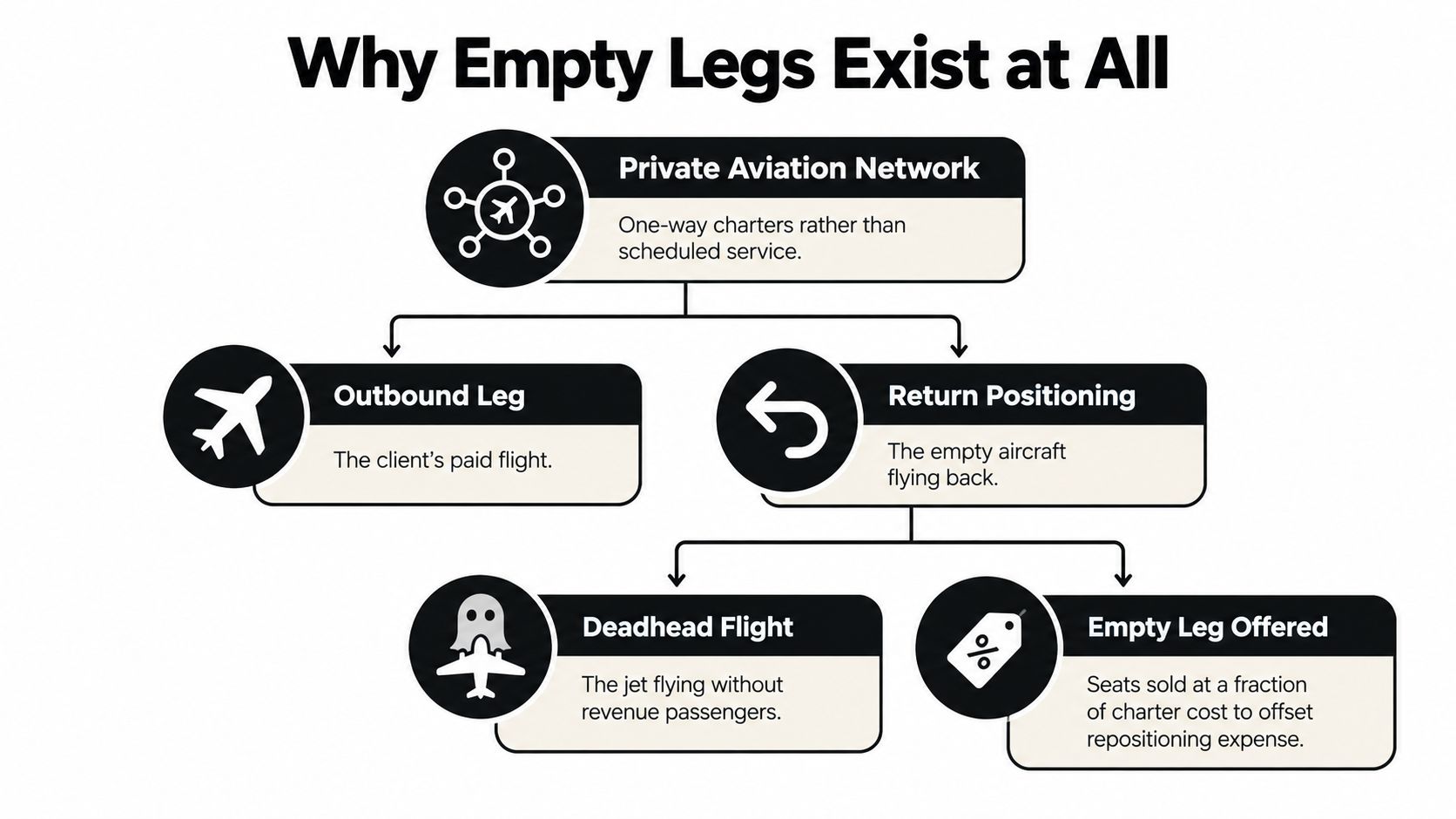
The distinction changes the conversation with the operator. A full charter gives you control over the mission. An empty leg gives you a chance to join a mission that already exists. You can ask whether a nearby airport works, whether the departure window can move, and whether the aircraft can accommodate your luggage, pets, or specific passenger requirements. You can't assume the answer will be yes.
For broader context on aircraft access and charter formats, review HauteBlack's private aviation service. The important question remains operational: what has already been scheduled, and how closely does it match your trip?
A short visual explanation can also help clarify the mechanics:
Why Empty Legs Exist at All
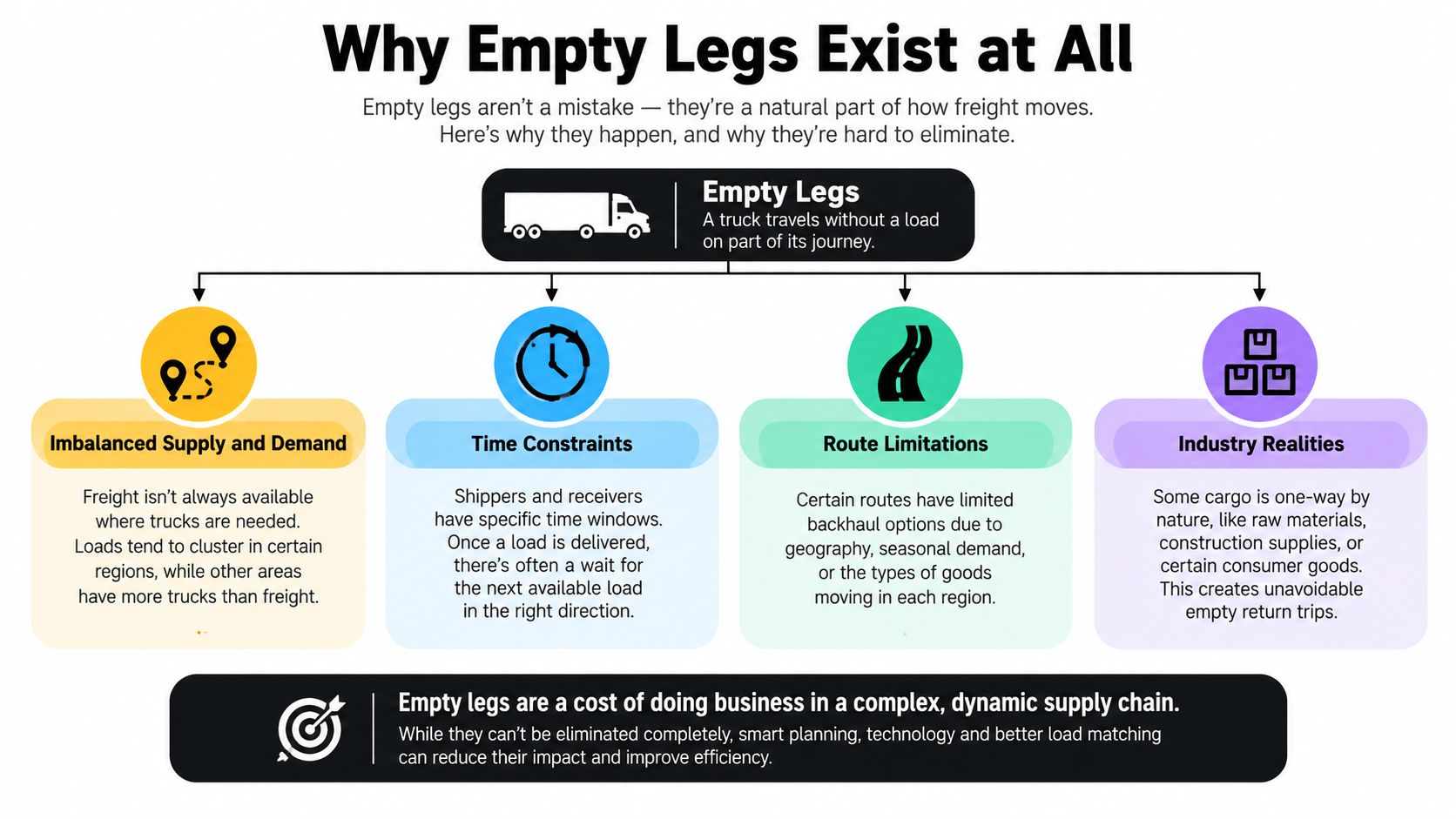
A New York to Aspen charter can create a repositioning flight before the aircraft serves its next client. The jet may need to return to base, move to another city, or reach a scheduled passenger elsewhere. If no separate customer has purchased that movement, the operator still has to manage the aircraft, crew, maintenance, and upcoming itinerary.
That operational pattern creates empty-leg inventory. Your request did not create the flight. The operator had already planned the aircraft movement, then offered available capacity to another traveler whose itinerary could fit. The sale can recover part of the operating cost while giving a flexible client access to an aircraft already moving through the network.
The supply is substantial, although no public dataset provides buyers with a perfectly clean count. Industry data cited by the National Business Aviation Association indicates that repositioning represents approximately 30% to 40% of private-jet flight hours. A significant share of aircraft utilization therefore supports fleet positioning rather than direct passenger carriage.
Use that figure to understand the market, not to expect a seat or aircraft on your route. Availability follows the underlying charter schedule, seasonal travel patterns, fleet location, and operator decisions. A route that appears repeatedly during one period can vanish when aircraft assignments change.
The same mechanics explain why empty legs remain route-specific. The aircraft has a destination, but that destination may not match yours. HauteBlack's desk looks for overlap between the aircraft's required movement and the member's itinerary, then makes the trade-off clear: accept schedule-dependent inventory when the trip can flex, or book guaranteed on-demand charter when timing and arrival control matter more.
What an Empty Leg Actually Costs
An empty-leg offer can look dramatically cheaper than a standard one-way charter. Seats or whole-aircraft charters are often marketed at approximately 25% to 75% below comparable one-way charter pricing, with some favorable cases citing savings of at least 50%, according to private-jet pricing information from Flyius. Treat that range as a possible discount, not a promise. The lowest quote is useful only if the itinerary works.
Price reflects more than the aircraft. Aircraft category, route length, crew requirements, airport fees, taxes, demand, and schedule fit all shape the final proposal. HauteBlack's desk compares the saving with the operational compromise. An inconvenient airport, narrow departure window, or added exposure to schedule changes can make a higher-priced on-demand charter the better decision.
| Variable | Impact on Final Price |
|---|---|
| Aircraft category | Larger or more capable aircraft generally have different operating costs and market prices. |
| Route length | Distance affects operating time, fuel, crew planning, and airport arrangements. |
| Crew costs | Crew positioning, duty requirements, and overnight arrangements can change the quote. |
| Airport fees | Handling, landing, parking, and terminal costs vary by airport and itinerary. |
| Taxes and charges | Applicable taxes and pass-through costs may increase the final amount. |
| Schedule fit | The closer your plans match the aircraft's existing movement, the more practical the offer. |
| Demand | Popular routes and busy travel periods can reduce the price gap versus chartering on demand. |
Read HauteBlack's guide to private-jet charter costs before accepting a quote. Compare the complete trip, not only the advertised fare.
The surrounding itinerary can erase part of the saving. A different hotel night, commercial connection, or longer ground transfer adds cost and time. Travelers building flexible independent plans can use Global Pet Sitter travel planning for broader itinerary considerations. Empty legs make financial sense when the schedule already suits you. For a meeting, event, or connection you cannot miss, pay for the control of a guaranteed charter.
Why Empty Legs Cancel and What That Means for You
An empty leg can be operationally safe and commercially less dependable at the same time. In the United States, a paid empty-leg charter is generally conducted within the same FAA Part 135-certified operator, aircraft, and crew framework that governs commercial on-demand charter operations. The aircraft doesn't use a lesser safety standard because the cabin was empty before you booked it.
The volatility comes from the underlying passenger mission. If the original client changes the destination, delays departure, cancels the charter, or requires the aircraft elsewhere, the repositioning segment may move, reroute, or disappear. Your ticket depends on another itinerary that you don't control.
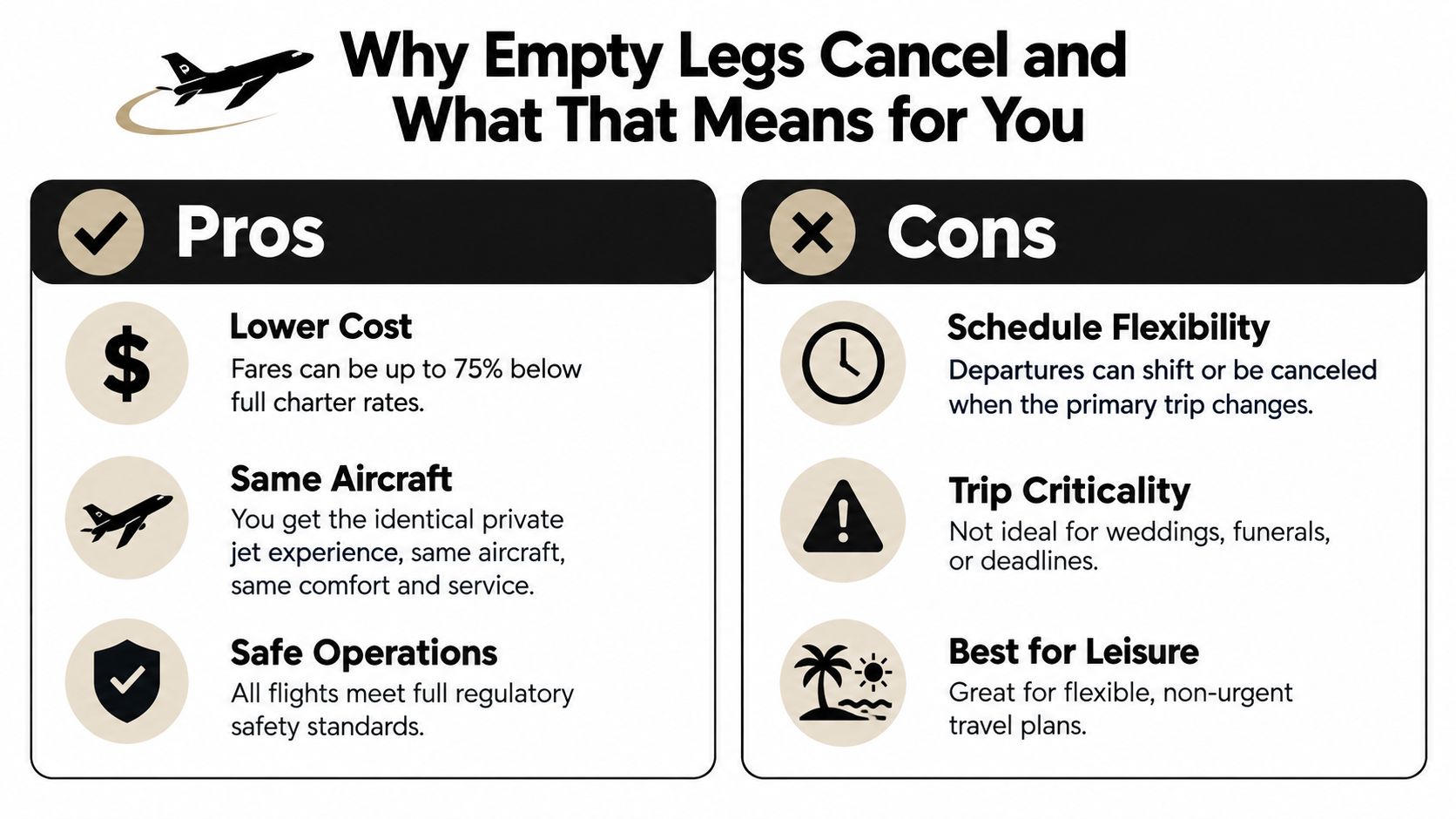
Industry reporting identifies a typical booking window of roughly 48 to 72 hours, because operators often learn the final aircraft-positioning requirement only after downstream charter schedules firm up, as explained in this empty-leg safety and booking guide. That timing suits a spontaneous traveler. It's uncomfortable for someone coordinating a complex, fixed-date itinerary.
Match the flight to the trip
Use an empty leg for flexible leisure positioning, a spontaneous regional trip, or an opportunistic journey where you can accept alternate airports and timing. Don't use it as the sole transport for:
- Weddings and ceremonies: A late arrival can't be repaired with a lower fare.
- Cruise departures: Missing embarkation can disrupt the entire trip.
- International connections: A schedule change can affect immigration, onward flights, and luggage plans.
- Fixed-time executive meetings: A board meeting or investor presentation needs control more than a discount.
Before paying, obtain written answers to the questions that matter:
1. Who is the certificated operating carrier?
2. Which aircraft registration and crew are assigned?
3. What event can trigger cancellation or schedule change?
4. How much notice will the operator provide when circumstances change?
5. Must the operator provide replacement transportation, a refund, or rebooking?
6. Which company holds your passenger contract and payment?
7. Can the advisor arrange a fallback aircraft if the mission fails?
The right test isn't whether the empty leg is safe. It's whether your itinerary can survive the flight changing.
How to Find and Book an Empty Leg
Start with the trip you need to protect, then test whether empty-leg inventory can serve it. Give an advisor your preferred route, acceptable departure window, nearby airports, aircraft preferences, passenger details, luggage requirements, and deadline for certainty. This lets the desk filter schedule-dependent options instead of forwarding every aircraft movement that appears relevant.
Source the opportunity
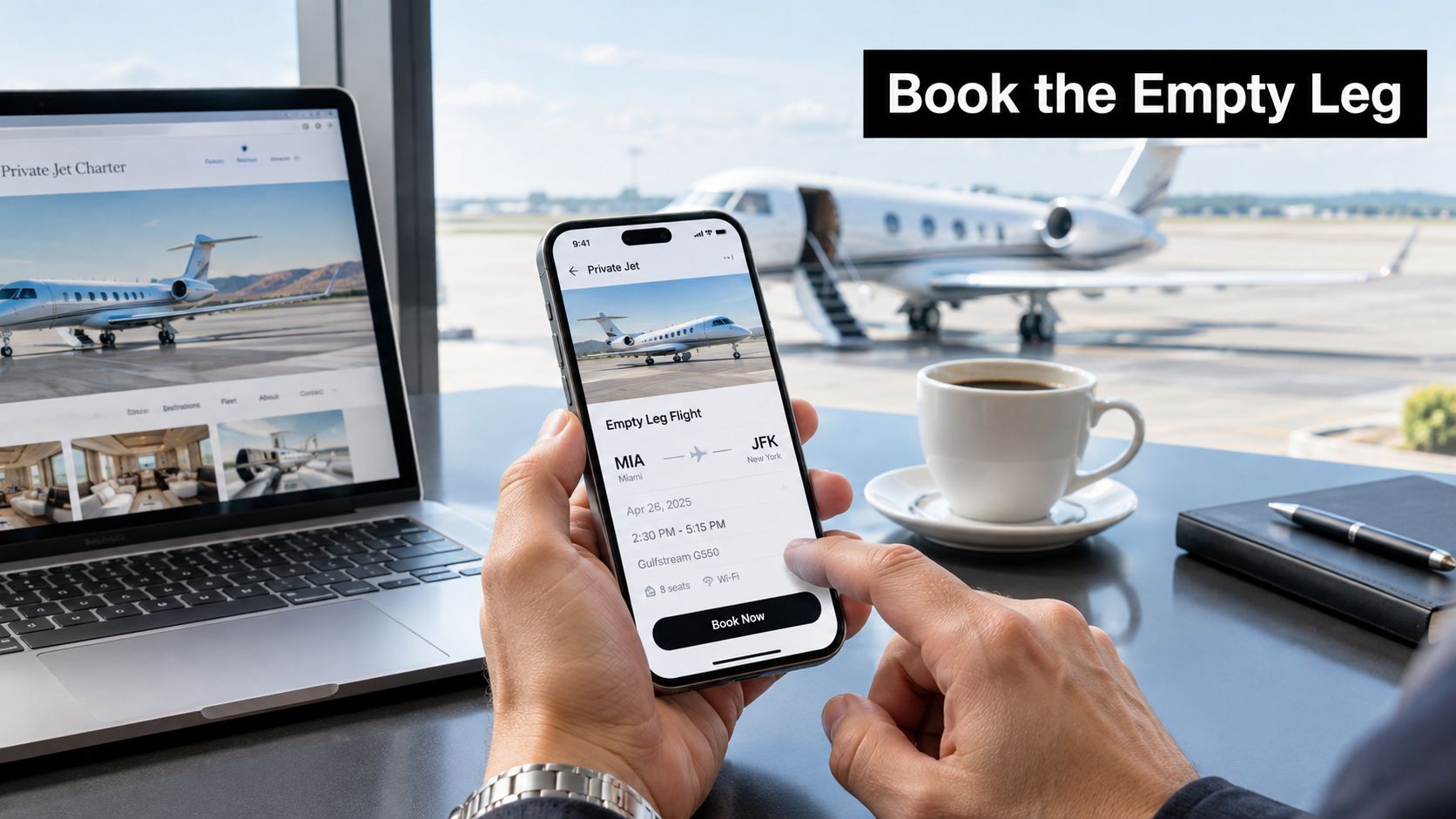
Empty legs appear through operator marketplaces, broker feeds, private alerts, charter desks, and direct advisor outreach. Public listings often show only a route and approximate time. They may omit the underlying mission, operating carrier, aircraft assignment, or cancellation terms.
Ask a specialist desk to compare the empty leg with an on-demand charter before you commit. The meaningful choice is lower fare with dependencies versus higher fare with control. A low price has little value if the flight cannot support the rest of your itinerary.
Screen the proposal
Request a written quote naming the operating carrier, aircraft, passenger capacity, departure and arrival airports, estimated timing, inclusions, taxes, cancellation rules, and payment terms. Confirm whether the quote covers the entire aircraft or individual seats. Ask which company holds your passenger contract and payment.
Then test the flight against the complete journey. Hotel arrival, ground transfers, event timing, connecting flights, and the return plan must remain workable if the aircraft schedule changes. If one delay creates a chain of missed commitments, a guaranteed charter deserves serious consideration.
Build a fallback before payment
Discuss the backup aircraft before the empty leg becomes urgent. Agree who will monitor the underlying schedule, when the operator must update you, which replacement options are available, and how additional costs will be handled.
For an executive itinerary, the fallback may be a full charter. For a leisure weekend, it could be a commercial flight, a nearby airport, or a later departure. Match the fallback to the consequence of failure.
The 48-to-72-hour window can suit spontaneous travelers because aircraft plans may become clearer close to departure. It creates pressure for passengers who need long lead times, fixed connections, or extensive coordination. HauteBlack's executive guide to private-jet flight booking offers planning context for weighing that trade-off.
For HauteBlack members, the desk can screen repositioning opportunities against the full itinerary, then coordinate hotels, transfers, and private events around the flight. That coordination matters because the aircraft is only one part of the journey.
When Empty Legs Work and When They Don't
An Aspen weekend is a strong empty-leg candidate. You can use a nearby airport, accept the aircraft's departure window, and arrange another option for the return if plans shift. For a discretionary trip, an empty leg is the right tool when the saving justifies giving up schedule control.
A European wedding week calls for more discipline. The date is fixed, guests may share villas and transfers, and arriving late can affect the event itself. HauteBlack would consider an empty leg for an early positioning segment, not as the sole plan for reaching the wedding.
Family travel around the Mediterranean is harder to match. Multiple destinations, children, luggage, villas, boats, and ground transfers can conflict with a pre-existing aircraft movement. Book a full charter for the core itinerary, then assess an empty leg for a flexible return or a separate regional segment.
A same-week board meeting usually belongs on a guaranteed charter. A route that looks perfect can still fail if the aircraft's underlying mission changes. Pay for schedule control when a delayed arrival could affect the meeting, negotiations, or decisions.
| Itinerary pattern | Empty-leg recommendation | Why |
|---|---|---|
| Flexible Aspen weekend | Right tool | Airports and timing can change. |
| European wedding week | Supplement only | The event date and arrival carry greater weight than the fare. |
| Mediterranean family journey | Selective use | One flexible segment may work, while the main itinerary needs continuity. |
| Fixed-time board meeting | Avoid as sole transport | Schedule volatility creates too much exposure. |
Honeymoon travel follows the same rule. A flexible outbound repositioning flight may look attractive, but losing the first hotel night, private transfer, or booked experience quickly turns a saving into an operations problem.
Empty-leg inventory follows the aircraft's existing schedule, not the itinerary you would design from scratch. HauteBlack's desk screens each opportunity against the trip's real priorities, including how much timing flexibility the travelers have and what failure would cost. That makes empty legs powerful for adaptable travelers and a poor fit for anyone who needs the aircraft to follow a fixed plan.
The Empty Leg Decision in Practice
An empty leg works when your itinerary can follow the aircraft's existing mission. You are buying access to that movement, not a private jet scheduled around your preferred plan. The lower price compensates for accepting less control than an on-demand charter provides.
Use this decision test before approving a quote:
- Verify the operator: Confirm the certificated carrier, aircraft identity, crew, and operating responsibility.
- Confirm the mission: Ask why the aircraft is moving and which schedule changes could affect your flight.
- Review the terms: Get cancellation triggers, refund provisions, replacement obligations, notice expectations, and aircraft-substitution terms in writing.
- Test the itinerary: Check hotels, transfers, connections, events, luggage, and return transportation.
- Price the fallback: Decide what happens if the empty leg disappears and who will arrange the replacement.
- Accept the consequence: Book only if you can absorb a delayed, rerouted, or canceled flight.
The trade-off is clear. Empty-leg pricing reflects the aircraft's repositioning requirement rather than passenger demand alone, as explained earlier. The saving comes with less schedule control.
Use empty legs for trips that can bend. Pay for a guaranteed charter when the itinerary can't.
HauteBlack's desk applies that rule to the complete journey. It reviews the aircraft, operator, timing, trip priorities, and fallback plan before recommending an empty leg. A flexible weekend or regional segment may suit this inventory. A fixed-time meeting, wedding arrival, or tightly connected holiday usually deserves a guaranteed charter.
HauteBlack helps members and private clients assess empty-leg opportunities, arrange full charter alternatives, and coordinate hotels, VIP arrivals, transfers, and experiences around the flight. Visit HauteBlack to discuss whether an empty leg fits your itinerary or whether a guaranteed charter gives you the control the trip requires.
Explore Our Guides


Signature Experiences


