Haute Black Journal
Medieval Castles of France: 8 Best Visits in 2026

Marlene Azeez
Director, HauteBlack
View all articles →
You've chosen France, saved photographs of turreted skylines, and started comparing hotels. Now comes the harder decision: which castles deserve your time, and how do you visit them without spending the day negotiating parking, queues, and steep village streets? The difference between a memorable afternoon and an exhausting excursion usually lies in the arrangements made before you arrive.
French history still stands tall, but the best encounter with it feels personal. Ancient gates opening before the crowds, a historian explaining the purpose of an arrow slit, lunch waiting after a windswept rampart walk. Those are the experiences to design around, rather than an ambitious list of monuments to finish.
The medieval castles of France reward different kinds of travelers. Couples may want the romance captured in Italian castle wedding imagery, translated into a French escape with discreet service and unhurried evenings. Families need manageable walking routes, engaging guides, and somewhere comfortable to retreat after the stone staircases.
Choose your fortress, then build the day around it. From cliff-top Dordogne keeps to Loire strongholds and Provençal ruins, these recommendations pair architectural character with nearby luxury-stay strategies, private touring requests, and HauteBlack itinerary ideas. Early entry and after-hours access require the monument's authorization, not merely a private guide booking. Get that distinction settled before you confirm the rest of the day.
1. Cité de Carcassonne
Carcassonne is the choice for travelers who want more than a castle. Its fortified urban setting lets you experience the relationship between a stronghold, its streets, and the territory beyond its walls.
Start by taking in the scale from outside.
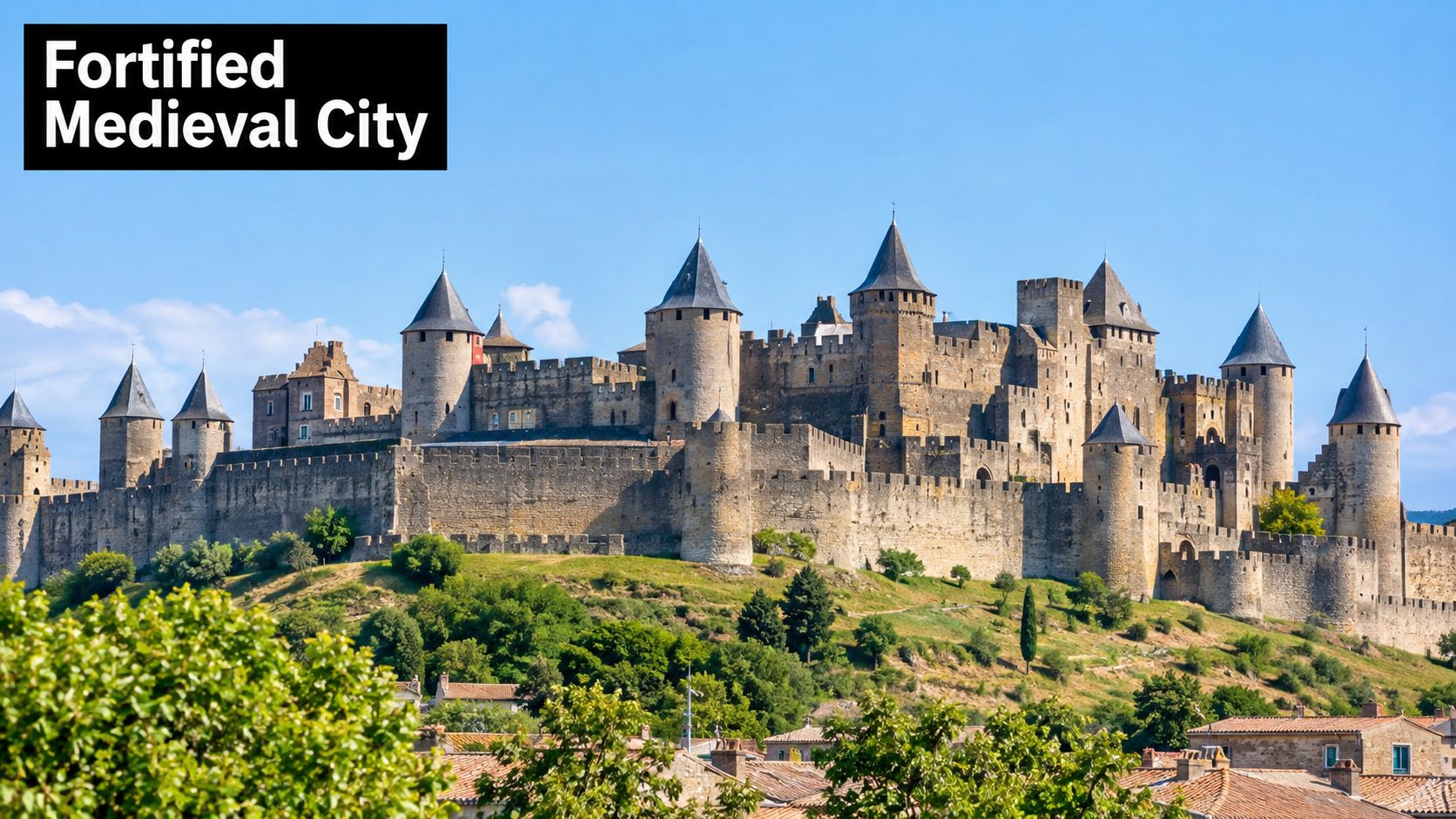
The complex includes approximately 3 kilometers of surrounding walls and 52 towers and barbicans, with royal defenses developed mainly during the 13th century and UNESCO inscription awarded in 1997, as detailed in the Centre des monuments nationaux's Carcassonne dossier. Ask your historian to explain how the castle functioned as an administrative and military center, rather than treating every tower as another photograph.
Build the Visit Around the Gates
Request the earliest authorized guided slot, then have your driver confirm the closest permitted drop-off. A private transfer doesn't automatically eliminate walking, so the exact approach matters for grandparents, younger children, and anyone who finds uneven stone tiring.
For accommodation, prioritize a luxury stay within easy reach of the Cité if evening atmosphere matters most. Choose a countryside estate instead if your ideal return involves privacy, gardens, and dinner away from the visitor streets.
This footage offers a useful introduction to the fortified skyline.
Build a bespoke South of France journey around the fortress, a reserved lunch within the walls, and an unhurried afternoon. For a multigenerational party, split the visit after the shared historical introduction: enthusiastic walkers continue with the guide while others settle into lunch.
2. Château d'Angers
Choose Angers for substance rather than fairy-tale prettiness. Its appeal is the formidable relationship between defensive architecture, royal authority, and the art encountered within the fortress.
Construction began in 1230 on the orders of Blanche of Castile, when Anjou stood on the kingdom's border; the defensive circuit extended approximately half a kilometre and incorporated 17 towers, according to the Centre des monuments nationaux's account of Château d'Angers. That frontier context is the right starting point for your guide, before turning to the château's later residential and custodial roles.
Make the Apocalypse Tapestry the intellectual center of the visit. Request a specialist who can explain its imagery clearly, and ask whether a curator-led appointment is available rather than assuming standard private guiding includes curatorial access.
Give the Loire Room to Breathe
For a HauteBlack-designed Loire itinerary, use Angers as a deliberate contrast to Chinon and the region's Renaissance palaces. Don't compress fortress architecture, tapestry interpretation, vineyard visits, and a long lunch into the same crowded day.
- Stay strategy. Request a luxury country-house base for a slower regional journey, or an elegant city stay when easy restaurant access matters more.
- Access strategy. Prioritize a weekday opening slot, with tickets and specialist guiding coordinated separately.
- Dining strategy. Reserve a seated lunch after the tapestry visit, leaving time to discuss what you've seen.
For an art-loving couple, I'd put the gallery before any extended exterior circuit. For a family, brief the guide to connect the imagery to a few memorable stories rather than delivering an exhaustive lecture.
Practical rule: A private guide makes the interpretation personal. Only a separately confirmed arrangement makes the space private.
3. Château de Coucy
At Coucy, choose a historian over an elaborate production. Ruins demand interpretation: without it, you notice broken walls; with it, you start to understand entrances, defensive choices, and the ambitions behind the masonry.
This is the recommendation for travelers who enjoy questions more than furnished interiors. Ask your guide to distinguish surviving fabric, later interventions, and informed reconstruction, explaining what can be established from the remains.
Leave room for silence, too. Wind across exposed stone and the texture of weathered masonry contribute more to the experience than a continuous stream of dates.
Pair Feudal History With Champagne
A HauteBlack-designed northern France journey can connect Coucy with Reims Cathedral and Champagne house appointments, but keep the geography honest. Have the advisor map actual driving requirements before committing to a single-day excursion from Paris.
For accommodation, request a luxury base around Reims if Champagne is central to the journey. If Coucy is the priority, choose privacy and convenient road access over a prestigious hotel address that adds unnecessary transfers.
For a couple with different interests, divide the day by emphasis rather than by endurance: a focused historian-led castle walk, followed by lunch and a Champagne appointment selected for its relevance to their tastes. That makes the pairing feel considered instead of miscellaneous.
Don't book a helicopter simply because the itinerary looks shorter on paper. Confirm landing permissions, onward road transfers, weather contingencies, and the complete door-to-door journey first.
Arrange a private car as the dependable baseline. Request aviation only when the confirmed logistics improve the experience.
Before departure, have the guide verify the route's current surface conditions and exposure. For guests who prefer limited walking, design a shorter interpretive visit around the most rewarding viewpoints instead of making the entire party follow an exhaustive circuit.
4. Château de Pierrefonds
Pierrefonds belongs on the list for travelers who want the theatrical image of a French castle, with a visit that also questions how that image was created. Go for the silhouette, then stay for a serious conversation about restoration and medievalism.
Its setting invites a slower arrival rather than a dash straight to the entrance.
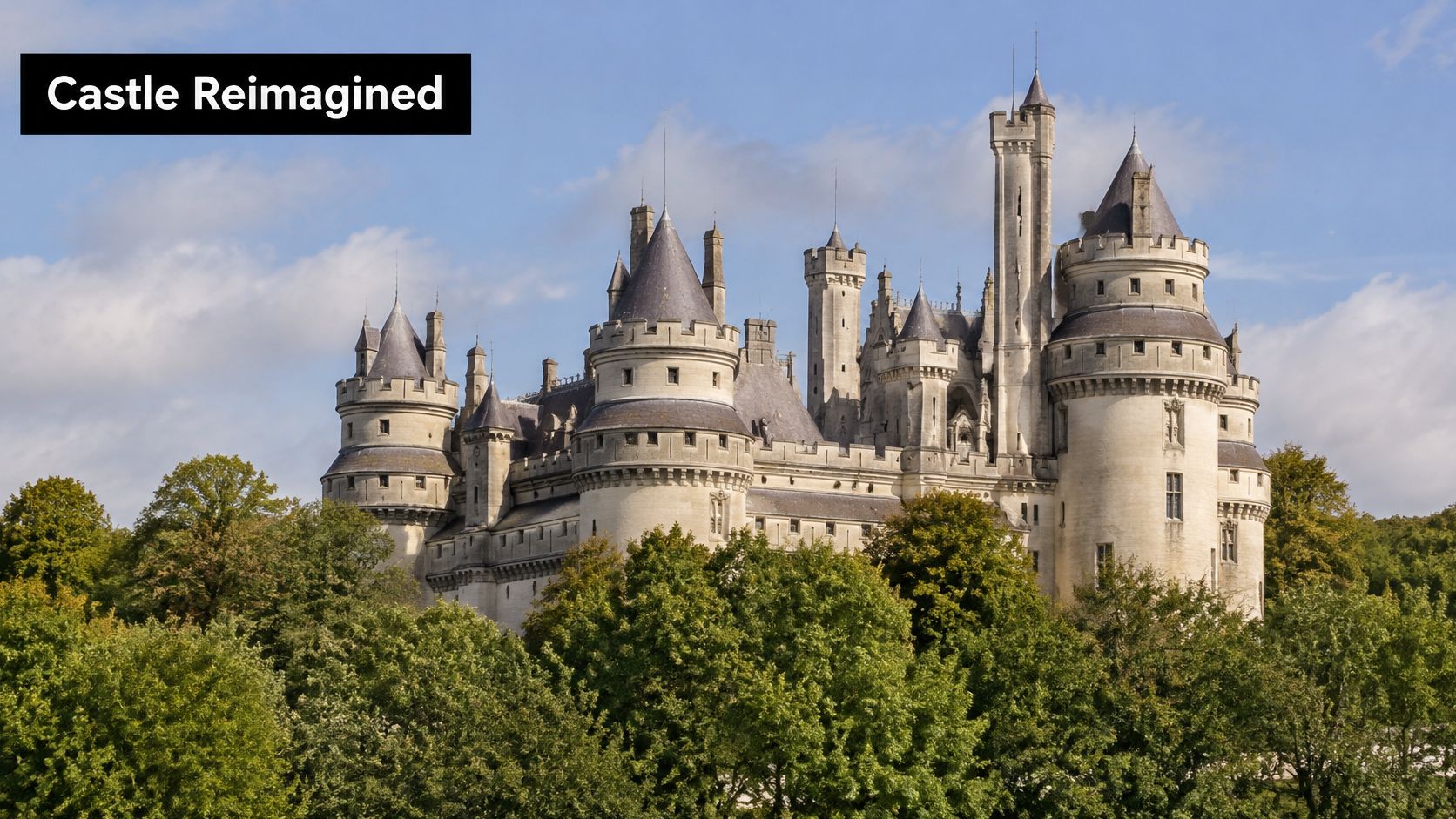
Pierrefonds recorded 184,587 visitors in 2025, a useful reminder to arrange your visit deliberately rather than equating a private transfer with a quiet monument, according to Franceinfo's reporting on national monument attendance. Ask your guide to distinguish the medieval story from the later work associated with Eugène Viollet-le-Duc.
Make This a Romantic Escape
For a Paris-based couple, commission a private-car excursion with lunch in Compiègne and enough flexibility to linger. For guests who dislike returning to the city after dinner, request a nearby luxury country-house stay or private residence with a properly arranged evening meal.
After-hours access is a request to investigate, not a booking assumption. Have HauteBlack establish what the monument will authorize, which spaces are included, and whether the arrangement changes staffing or photography conditions.
A private-chef picnic can be a lovely alternative to a formal lunch, provided the location, permissions, weather backup, and cleanup are settled beforehand. Don't leave those details to the driver on the day.
For families, ask the guide to make restoration part of the intrigue: which details express defensive necessity, and which express a later vision of medieval grandeur? That question gives children and adults something more engaging than another room-by-room procession.
5. Château de Vincennes
Keep your Paris hotel and make Vincennes the fortress day. It's the strongest choice here for travelers who want to add royal military architecture without turning their French itinerary into another hotel move.
Begin with the keep's commanding exterior.
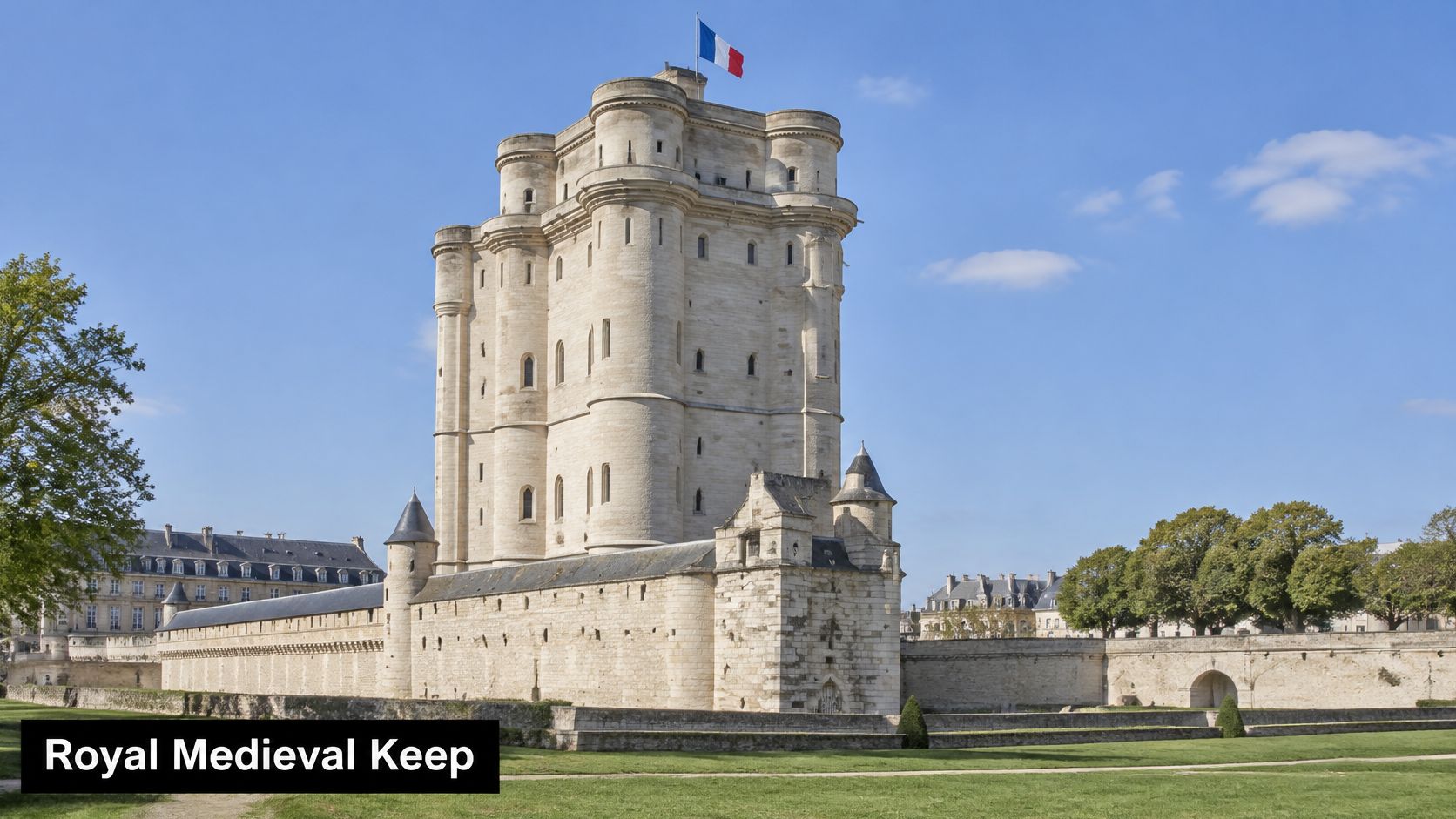
The medieval keep rises approximately 50 metres, with an enceinte, fortified gateway, and tower-punctuated curtain walls forming its protected setting, as described in the official Château de Vincennes monument dossier. Ask your historian to explain the fortress as a secure royal stronghold shaped by the conflict between the French and English crowns.
Use Paris as Your Luxury Base
Build Vincennes into a HauteBlack Paris escape, retaining your preferred suite, concierge relationships, and evening reservations. A private car is the sensible default for this urban excursion; don't add aviation where road arrangements are more practical.
Pair the keep and Sainte-Chapelle de Vincennes with a separate Paris appointment focused on Gothic architecture. Avoid stacking every major religious monument into the same day just because the subjects connect.
- For architecture enthusiasts. Request a guide who can compare defensive planning with royal ceremonial space.
- For mixed-mobility groups. Confirm the exact stair requirements and arrange an alternative interpretation for anyone skipping the climb.
- For executives with limited time. Protect a focused visit and a reliable return window instead of adding speculative stops.
Request the earliest suitable authorized appointment, with chapel access checked independently. The successful version of this day ends with energy left for Paris, not with everyone recovering from an overfilled cultural schedule.
6. Château de Chinon
Chinon is my recommendation for travelers who want royal history followed by a proper vineyard lunch. The fortress above the Vienne gives the day its architectural focus; the wine country provides a natural change of pace.
Commission a historian-led visit centered on the Plantagenets, then ask for a clear account of Chinon's association with Joan of Arc and Charles VII. Resist the temptation to turn those subjects into a hurried roll call of famous names.
A good guide should connect people to places you can see. Ask where the architecture helps explain authority, defense, residence, and ceremony, while distinguishing visible evidence from the broader historical narrative.
Let the Vineyard Set the Afternoon Pace
For accommodation, request either a luxury country-house stay in the surrounding Loire countryside or an elegant town base with straightforward dining arrangements. Couples should prioritize atmosphere and privacy; families should prioritize room configurations, vehicle access, and a comfortable place to pause between outings.
The strongest HauteBlack itinerary pairs the fortress with a private Chinon estate tasting chosen around the guests' interests. An experienced collector needs a different appointment from a couple who just wants an enjoyable introduction over lunch.
- Castle first. Keep the historical visit separate from the tasting so neither feels rushed.
- Lunch with intention. Request a valley-facing setting where available, with a weather-protected alternative.
- Keep the driver. Make the return effortless and leave the tasting free of transport decisions.
For a multigenerational group, arrange a shared castle introduction followed by different afternoon options. Some guests can continue with wine, while others return to the hotel for the garden, a book, or an early dinner.
That flexibility is a better luxury than insisting everyone complete the same program.
7. Château des Baux-de-Provence
At Les Baux, plan around exposure before planning around photographs. The attraction is the encounter between ruined fortifications, pale limestone, and the wide Provençal countryside, not a sequence of sheltered interiors.
Wear shoes selected for stone rather than lunch. Ask the guide to choose a route that balances the strongest viewpoints with your group's comfort, especially when children or older relatives are traveling.
Treat weather planning as part of the cultural arrangements. Request a clear alternative for heat, strong wind, or rain rather than assuming an outdoor monument will work equally well under every condition.
Stay in the Alpilles, Not in the Car
Use a luxury countryside hotel or private villa in the Alpilles as the accommodation brief. Prioritize shade, privacy, an appealing place to rest, and dining that doesn't require another long transfer after the castle visit.
Build a private Provence heritage and villages itinerary around Les Baux, with Saint-Rémy or Arles as a considered companion rather than an automatic addition. If your guests want a leisurely lunch and time at the villa, protect those preferences.
Comfort first: The best castle visit isn't the longest route. It's the route that leaves everyone able to enjoy the rest of Provence.
Request an early or later authorized visiting window, then verify seasonal opening arrangements before reserving lunch. If private or exclusive access matters, establish precisely what can be offered and put the confirmed terms into the itinerary.
For a honeymoon, I'd favor a focused castle visit followed by a private lunch and an unstructured afternoon. For a family, ask for interpretation grounded in practical questions about living, building, and defending on rock.
Both approaches are stronger than a long lecture delivered in an exposed spot.
8. Château de Beynac
Beynac is the choice for Dordogne drama. Approach the day with time to appreciate the relationship between the cliff, the fortress, and the river rather than treating the castle entrance as the only destination.
The wider view belongs in the itinerary.
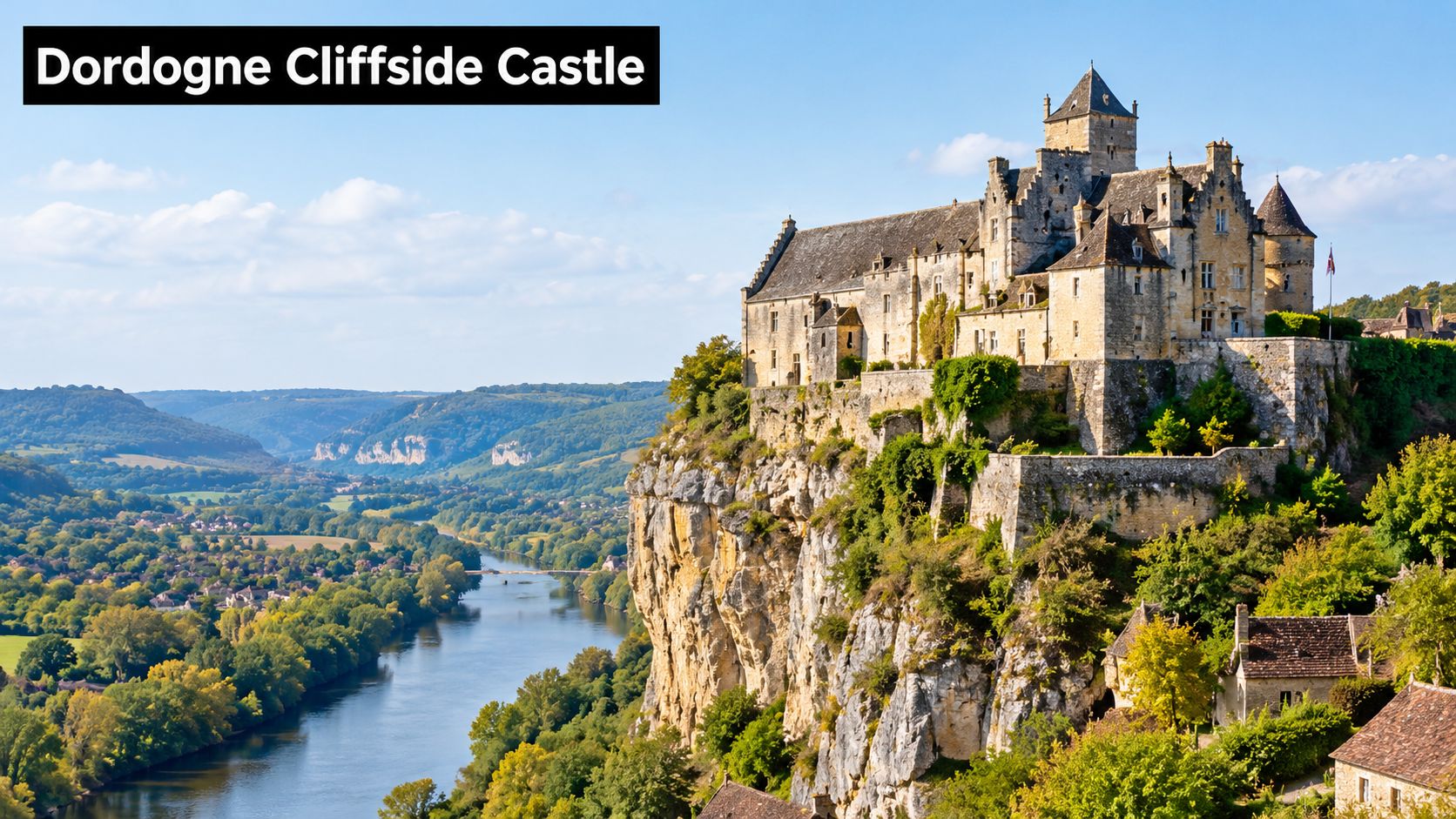
Ask your historian to explain Beynac alongside Castelnaud, using the opposing sites to discuss control of the valley and the region's wartime history. Visit both only if your party actively enjoys military architecture; otherwise, choose depth at Beynac and reserve the afternoon for the river.
Pair Stone With Water
For your stay, request a luxury country-house hotel or fully serviced private estate in the Dordogne. Have HauteBlack compare the actual transfer routes, rather than relying on the apparent distance on a map, and confirm that the accommodation suits your group's dining and accessibility needs.
A private river excursion provides a welcome change of perspective after the castle. Choose canoeing for guests who want activity, or investigate an appropriate guided alternative for those who prefer to remain comfortably seated.
Confirm river conditions and operating arrangements before treating the excursion as fixed. Keep a private lunch in Beynac village as the anchor, with enough flexibility to reverse the order of activities when needed.
For a couple, the ideal sequence is an interpreted castle visit, a leisurely lunch, and time on the water. For grandparents traveling with children, split the afternoon so energetic guests can paddle while others enjoy a shorter outing or return to the estate.
End with dinner already arranged. After a day of slopes, stone, and fresh air, nobody should need to start researching restaurants.
Medieval Castles of France: 8-Site Comparison
| Site | Historical and Architectural Distinction | 🔄 Visit Complexity | ⚡ Access and Setting | ⭐ Ideal Use Case | 📊 Key Advantage |
|---|---|---|---|---|---|
| Cité de Carcassonne | Double medieval walls, about 52 towers, castle, and basilica; extensively restored by Viollet-le-Duc | Easy to explore, but crowds are heavy in peak season | Southern France; accessible from Toulouse and Montpellier; parking near the walls is limited | Immersive medieval experience, guided visits, and evening events | Exceptional preservation and a complete example of medieval fortification |
| Château d'Angers | Fortress with 17 towers and the monumental Apocalypse Tapestry | Straightforward half-day visit; tapestry viewing may be limited by conservation conditions | Near Angers' historic center and the Loire Valley circuit | Medieval art and architecture; curator-led tapestry tours | Combines imposing fortifications with an internationally important textile |
| Château de Coucy | Ruined early-13th-century fortress with a once 54-metre-high keep | Moderate; ruins limit interior access and visitor services are limited | Picardy, near Reims and Laon; quieter than major tourist sites | History-focused visits and photography in a less-crowded setting | Remarkable scale conveys the power of medieval feudal lords |
| Château de Pierrefonds | Medieval foundations rebuilt by Viollet-le-Duc as a 19th-century interpretation | Easy to visit; can be busy on weekends and school holidays | Compiègne forest, north of Paris; suitable for a day trip | Dramatic castle visits, photography, and private events | Striking restoration and interiors, with both medieval and 19th-century history |
| Château de Vincennes | Royal medieval complex with a 52-metre keep, chapel, and defensive enclosure | Generally accessible; some areas may close for conservation | Eastern Paris; easy to reach by metro, though the urban setting is less secluded | Short Paris-area heritage visits and private tours | Rare surviving royal fortress close to the capital |
| Château de Chinon | Three medieval enclosures linked to the Plantagenets, Henry II, and Joan of Arc | Moderate; extensive ruins, steep paths, and stairs | Loire Valley above the Vienne; accessible from Tours and Angers | History tours combined with local wine tastings | Strong links to major medieval rulers and events |
| Château des Baux-de-Provence | Rock-carved fortress ruins above a medieval village in the Alpilles | Challenging in heat; uneven terrain and steep paths | Provence; near Arles, Avignon, and Saint-Rémy-de-Provence | Scenic visits, photography, and seasonal evening programs | Dramatic landscape views and a distinctive rocky setting |
| Château de Beynac | Well-preserved cliff-top fortress with furnished interiors, keep, and chapel | Moderate; steep access and stairs; summer crowds and limited parking | Dordogne River valley, near Sarlat-la-Canéda | Castle visits paired with river excursions or nearby Castelnaud | Combines preserved interiors with exceptional cliffside views |
Let HauteBlack Open the Castle Doors
Choose a focused regional combination, not a cross-country collection of famous names. Angers and Chinon suit a Loire journey with vineyards and contrasting architecture; Pierrefonds and Vincennes work around a Paris stay; Beynac deserves time within a Dordogne itinerary rather than a rushed detour.
Carcassonne and Les Baux offer different southern experiences, so don't treat them as interchangeable stops. Decide whether you want a fortified urban setting or a ruin-and-terrain encounter, then build the surrounding journey accordingly.
The same discipline applies to nearby icons. Champagne house appointments, Loire tastings, and Provence village lunches should complement the castle visit, not compete with it for time. A well-chosen pairing beats an overloaded day, particularly when your party includes different ages, interests, and walking abilities.
Confirm the Experience Behind the Promise
Have your advisor distinguish among private guiding, priority arrangements, and exclusive monument access. They aren't synonyms, and each requires its own confirmation.
The final itinerary should identify the meeting point, permitted vehicle approach, expected walking conditions, included spaces, and any restrictions affecting the visit. For guests with mobility requirements, request specific answers about surfaces, stairs, toilets, and resting opportunities rather than accepting a broad accessibility description.
Your accommodation deserves equally careful attention. A beautiful suite is less useful if every outing begins with an inconvenient drive, while an excellent countryside base can turn the return from sightseeing into part of the pleasure.
- Choose the right stay. Match the hotel, villa, or estate to privacy, dining, family configuration, and route requirements.
- Choose the right transport. Use a private car for regional continuity and consider private aviation when the complete transfer improves the journey.
- Choose the right access. Request specialist guides and after-hours possibilities early, then rely only on confirmed arrangements.
For your 2026 journey, give HauteBlack a concise statement of priorities: the castles that interest you, who's traveling, your preferred pace, and any comfort requirements that are essential. Include whether your ideal afternoon involves a cellar appointment, a private lunch, a river excursion, or simply returning to a quiet terrace.
HauteBlack can design the bespoke itinerary around those preferences, coordinating VIP stays, private guides, transport, and requests for authorized after-hours access. Contact your dedicated advisor before committing to the route, so the most important appointments shape the journey rather than becoming difficult additions later.
HauteBlack designs private French castle journeys with luxury stays, specialist guides, chauffeur-driven transfers, and customized cultural appointments. Visit HauteBlack to plan your medieval France escape and discuss the private-access arrangements that matter most to your party.