Haute Black Journal
Luxury Fall Foliage Travel with HauteBlack

Marlene Azeez
Director, HauteBlack
View all articles →
# Luxury Fall Foliage Travel with Haute Black
May 27, 2026
Every autumn, affluent travelers make the same mistake. They book the most photographed inn, drive the obvious scenic road, and arrive just in time to sit in traffic with everyone else who had the same idea. They get the leaves. They also get the queues, the compromised timing, the overworked staff, and the sense that a supposedly exclusive escape has become a public event.
That's not a luxury experience. That's peak-season friction with better linens.
The right approach to fall foliage travel starts from a different premise. You're not chasing a postcard. You're commissioning privacy, precision, and access. The leaves are the setting. The product is solitude, ease, and being exactly where you should be, exactly when nature is at its best.
Beyond the Beautiful View
You step off a turboprop at a discreet regional airfield, not into a terminal bottleneck. Your bags disappear into a waiting car. Forty minutes later, you are on a private terrace above a ridgeline washed in amber and rust, with no check-in queue, no coach traffic, and no sense that half the country had the same idea.
That is the standard to set for fall foliage travel.
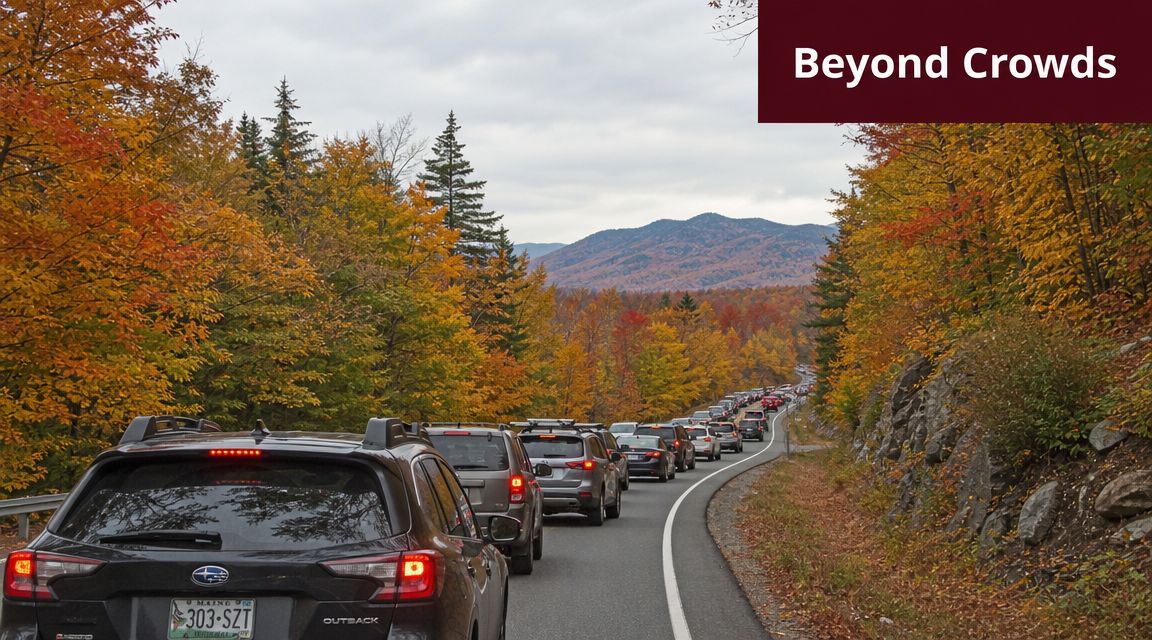
Peak leaf season rewards precision and punishes generic planning. The color window is short. Demand is intense. The celebrated gateways, scenic loops, and legacy inns become inefficient the moment the season turns. If you want the season at its best, stop treating foliage as a sightseeing errand and start treating it as a private production.
The right trip begins with controlled access. Fly into the quieter airfield, or arrive by helicopter directly to an estate with acreage, staff, and views the public never sees. Stay in a private house with a proper team or in a small property that limits keys and controls arrivals. Use back routes selected in advance, not whatever mapping software suggests after breakfast. For travelers building an early-autumn calendar, our guide to the best places to travel in September 2026 is a smart starting point for getting ahead of the rush.
What luxury changes
Luxury changes the mechanics of the trip, not just the thread count.
- Private access over public exposure. Choose estates, reserve-only lodges, and standalone residences over famous hotels attached to famous roads.
- Arrival as part of the experience. Private aviation, helicopter transfers, and preplanned ground routing protect the best hours of the day instead of wasting them in traffic.
- Service that removes friction. Fires lit before arrival, dinner timed to sunset, guides on call, and no lobby choreography.
- Atmosphere with taste. If you want your home to reflect the season before departure, Fiore's Los Angeles fall flowers offers a polished reference for autumn arrangements.
The finest fall trip gives you possession of the moment. No crowds in the frame. No compromised timing. No public spectacle dressed up as exclusivity.
Make this mental shift. Do not buy your way into the same autumn everyone else is having. Build the journey around privacy from the first mile, and the view becomes only one part of something far better.
Timing the Unforgettable
You arrive on a brilliant October weekend, the leaves are perfect, and so is everyone else's timing. The road stalls. The inn is loud. The “famous” overlook looks like a valet queue without the service. Fall foliage travel fails at the margins, and timing is where those margins are won.
“Go in October” is amateur advice. Peak color moves by county, elevation, recent temperature swings, and exposure. Serious planning starts with precision. One of the more useful tools available is a foliage forecast built from several million data points and mapped county by county, week by week, as noted in this fall foliage planning piece from NANPA. Use that level of detail to choose your exact window first. Then secure the aircraft, residence, and ground routing around it.
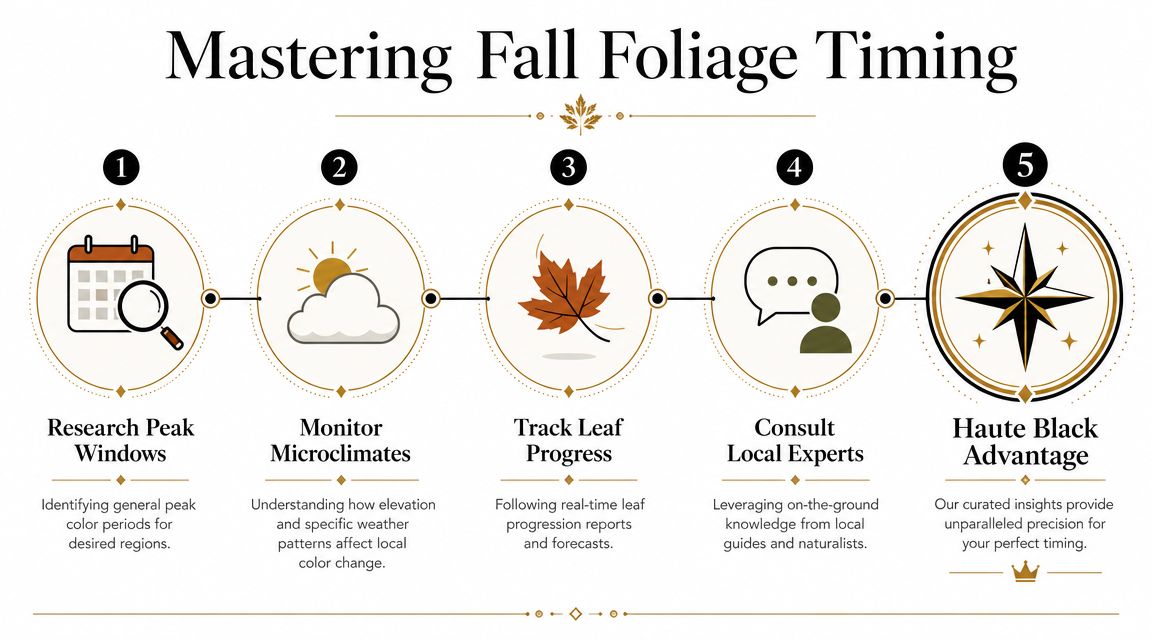
Why timing has to be precise
Leaves do not turn evenly across a region. Elevation and temperature set the pace, which is why higher terrain turns first and lower valleys often follow later. The Points Guy's overview of the best foliage regions lays out that pattern clearly.
Use it.
Start high, then descend over several days. In Vermont, the Blue Ridge, or Colorado, that single decision often gives you a longer run of excellent color than committing to one base and hoping the surrounding roads happen to be at their best. It also gives your team room to route around congestion, weather shifts, and the predictable bottlenecks that come with peak weekends.
Three regions worth doing properly
New England
New England rewards accuracy and punishes clichés. The same villages, covered bridges, and scenic loops that look charming in photographs become intolerable when everyone arrives within the same 48-hour window. Go midweek, fly into a smaller airport, and stay on private land or at a discreet estate property with acreage. If you want help placing an early-autumn journey before the obvious rush, our September luxury travel recommendations are the right place to start.
Blue Ridge
The Blue Ridge gives you range. You can use elevation shifts to keep pace with the season, then pair those drives with private houses, refined mountain inns, and low-profile retreats away from the parkway's most predictable stops. This is a strong choice for travelers who want atmosphere without sacrificing access.
Western aspens
Aspen country is cleaner, sharper, and more sculptural. Gold can appear quickly, then disappear just as fast after wind or an early storm. That makes timing even more important. Book flexible air arrangements, keep driving segments short, and position yourself near multiple elevations so the itinerary can adapt without losing its rhythm.
The practical rule
Practical rule: Choose the best leaf window first, then build the route around it.
Climate patterns are also making fixed assumptions less reliable. Warmer nights in many parts of the United States can delay peak color and compress the season. This confirms that rigid, old-fashioned assumptions about “the usual week” no longer hold.
The right timing does more than improve the view. It protects privacy, preserves the best hours of the day, and gives you options once the public roads start behaving like public roads.
Curated Itineraries Beyond the Main Road
The difference between a premium trip and an exceptional one is narrative. A premium trip has good hotels and nice dinners. An exceptional trip flows. Every arrival feels intentional, every transition feels easy, and every view feels earned rather than stumbled upon behind a row of parked SUVs.
The New England legacy route
Start with a quiet aviation arrival in northern New England, not the gateway most weekend travelers use. From there, move directly to a private estate or a discreetly serviced property with land, privacy, and serious interiors. You want a place where breakfast can happen facing a meadow instead of a parking area, and where evening cocktails don't come with noise from the next table.
Day one should be light. A late lunch, a slow drive through secondary roads, and an unpublicized overlook timed for last light. The point isn't to maximize activity. The point is to settle into the atmosphere before the region begins its daily performance.
The next morning, use an early aerial transfer or a private guided drive into higher terrain before public traffic thickens. Schedule a private gallery appointment or studio visit in a nearby town once the roads begin to fill. Public peak hours belong to everyone else. Your best hours should be spent in spaces that can be controlled.
By the third day, descend into lower country where the color is catching up. Here, New England sheds its postcard clichés for a richer texture. Historic farms, private cider tastings, river roads, and a dinner in a restored house where the room matters as much as the menu.
A strong New England itinerary should feel like this:
| Day | Focus | Priority |
|---|---|---|
| Arrival | Quiet transfer and estate check-in | Reset pace immediately |
| High terrain | Elevated roads and panoramic views | Catch earlier color |
| Valley transition | Art, architecture, countryside dining | Avoid midday crowd zones |
| Finale | Secluded final night | End with privacy, not spectacle |
The Aspen gold journey
The western version is bolder and cleaner. Fly directly into the mountains, skip the public grind, and settle into a private residence or a hotel with residential-style space and proper service. Aspen country works best when the trip combines visual drama with restraint.
Your first full day should begin before the area is busy. A private naturalist or photographer can take you into aspen groves at the hour when the trunks are silver, the gold is lit from the side, and the roads are still quiet. Midday belongs to a spa treatment, a long lunch, or an in-residence setup with a chef.
By evening, move the social energy indoors. Private dining works especially well here because the scenery has already done the work. You don't need another crowded terrace.
What both itineraries have in common
They're not destination lists. They're controlled sequences.
- Transitions are short and deliberate. No long, exhausting public-day movements.
- Public hotspots are used selectively. If a landmark is worth it, access it before or outside standard visitor flow.
- Each day has one anchor. Too many “must-sees” cheapen the experience.
- Accommodations carry the mood. In fall, where you stay matters almost as much as what you see.
That's the standard to hold. The best fall foliage travel doesn't rush to collect famous stops. It edits ruthlessly.
The Art of Arrival and Seclusion
Peak leaf season punishes ordinary logistics. Roads jam. Hotel arrivals stack up. Drivers lose hours to scenic bottlenecks that are only scenic if you're moving. If privacy matters to you, logistics are not back-office details. They are the trip.
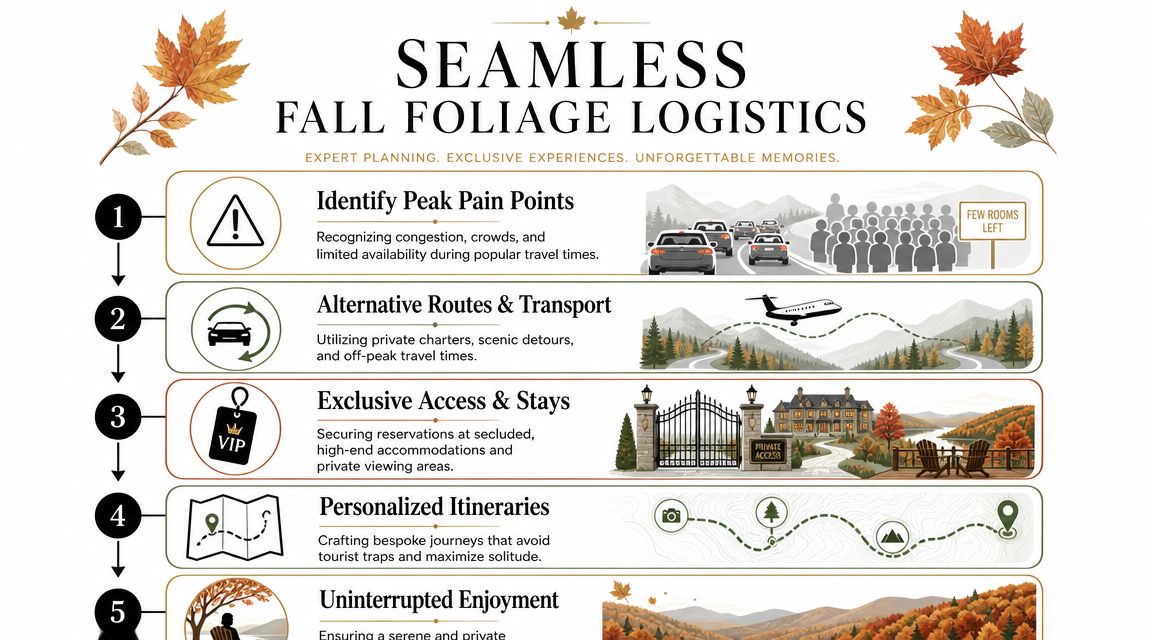
Why standard planning fails
Generic travel advice says to go midweek, start early, and book ahead. Fine. That may help a public trip. It doesn't solve the fundamental issue, which is that standard routes force you through the same infrastructure as everyone else.
A more intelligent approach focuses on bypass, not endurance. That aligns with the broader point made in this discussion of crowd management in fall travel, which notes that standard guides rarely address avoiding bottlenecks altogether through private access and transportation.
The three decisions that matter most
Airport choice
The glamorous airport isn't always the smart one. Smaller regional fields are often more valuable because they reduce transfer time and put you closer to the right estate, lodge, or heli-transfer point.
Ground versus air transfer
A helicopter isn't a novelty in this context. It's a solution. When a mountain corridor becomes a crawl, an aerial transfer turns a frustrating road movement into a clean scenic arrival. Done properly, it also preserves your schedule. That means lunch happens where it should, spa appointments aren't missed, and sunset doesn't vanish while you're staring at brake lights.
Hotel versus staffed residence
For peak-season foliage, a fully staffed private residence often wins. Hotels can be wonderful, but even excellent hotels become operationally noisy when occupancy surges. A residence gives you control of pace, dining, access, and atmosphere.
Privacy in fall isn't just about where you sleep. It's about how few shared systems you depend on.
If private aviation is part of your travel style, this guide to private jet luxury travel is worth reviewing for the practical advantages of using smaller airports and customized air routing.
My recommendation
If you're spending seriously on fall foliage travel, don't waste the investment on public friction. Choose the residence when privacy is the priority. Choose the helicopter when the road is the weak link. Choose the quieter airport when the main gateway looks easier on paper but worse in practice.
That's how seclusion is achieved. Not with hopeful scheduling. With decisive logistics.
Experiences That Define the Journey
A leaf-peeping trip becomes forgettable the moment it's reduced to observation. You drive, you stop, you photograph, you move on. Beautiful, yes. Memorable, not necessarily.
The better model is immersion with discretion.
Private experiences that justify the journey
A one-on-one photography session in the Catskills or Vermont with an outdoor photography specialist changes the way you see the terrain. You stop chasing the obvious wide shot and start noticing line, mist, negative space, and the value of waiting for light rather than consuming views as fast as possible.
A private chef picnic at an unpublicized viewpoint does something similar. The meal becomes part of the scenery instead of a break from it. Proper tableware, warm service, and a site chosen for silence will outperform any famous restaurant terrace packed with people angling for the same sunset.
After-hours cultural access is equally powerful in autumn. A museum visit or gallery opening outside public hours creates a useful contrast to the natural drama outside. It gives the trip rhythm. Morning for wilderness, afternoon for art, evening for a table that feels impossible to book.
What to ask for instead of more sightseeing
When clients ask for “the best spots,” I usually redirect them. Ask for these instead:
- Private creative access. Photographer sessions, plein-air painting, or a naturalist walk suited to your interests.
- One exceptional meal in the field. Not a hamper dropped on a blanket. A fully executed setting.
- A cultural door that doesn't open to the public. After-hours collections, private studio appointments, or invitation-only tastings.
- A closing ritual. Firepit cocktails, live acoustic music in-residence, or a late-night whisky tasting after a day outdoors.
Why this works
Sightseeing gives you images. Curated experiences give you authorship.
That distinction matters because the most discerning travelers don't just want to witness a season. They want to inhabit it. They want the story to feel specific to them, not interchangeable with a thousand other itineraries circulating online.
The best autumn journeys don't ask, “What did you see?” They leave you answering, “You should've been there.”
That's the right measure. Not volume. Not bragging rights. Not a checklist of scenic roads. A trip that feels unrepeatable.
Packing and Capturing the Moment
You step off a helicopter onto a private estate lawn at 4:15 p.m. The light is perfect, dinner is already set, and the only thing that can spoil the afternoon is what you brought with you. Poor packing shows immediately in autumn. The wrong coat, the wrong shoes, the wrong bag, and the day starts dictating terms.

Dress for transitions, not a single temperature. The best autumn itineraries move from misty airfields to warm car transfers, then to terraces, trails, tastings, and a polished dinner service. Your wardrobe needs to hold its line through all of it without a mid-day reset.
What to pack for this kind of trip
Build a compact wardrobe around materials that travel well and still read correctly in private clubs, country houses, and lodge dining rooms.
- Cashmere and fine merino. Loro Piana and Brunello Cucinelli work because they insulate without bulk and stay refined indoors.
- A smart weather-resistant coat or field jacket. Leave the overtly technical shell at home unless the itinerary calls for it.
- Structured boots. They should handle wet grass, gravel drives, and vineyard paths while still looking right beside a vintage Land Rover or at a fireside aperitif.
- A disciplined day bag. Choose one with room for gloves, sunglasses, portable power, and a camera, without looking like carry-on luggage.
- One evening layer with presence. A cashmere jacket, suede overshirt, or elegant wrap saves you from overpacking and still finishes the day properly.
Scent belongs in the plan as well. A good fall fragrance should match cedar, smoke, wool, and cold air rather than compete with them. This guide to finding autumn fragrances is a smart place to start.
If you want every detail handled before departure, private fittings, luggage strategy, and on-arrival wardrobe support are the kind of member services that make a difference. That level of planning is part of the Haute Black membership experience.
A short visual break can sharpen your eye before you travel.
How to photograph fall without making it look generic
Autumn is one of the most photographed seasons in travel. That is exactly why ordinary foliage shots feel disposable. If you want images with any staying power, stop chasing the postcard frame everyone else is taking from the public turnout.
Photograph access, atmosphere, and point of view.
1. Work the edges of the day. Early morning and late afternoon give color depth, texture, and shape.
2. Use private settings to your advantage. A covered veranda, a stable door, a library window, or a lakeside dock on private land creates context the public never gets.
3. Include evidence of the experience. Crystal on a terrace table, a waxed jacket on a chair, smoke rising from an outdoor fire. These details make the image yours.
4. Carry one excellent compact camera. A Leica Q3 remains one of the best choices for this style of travel because it is discreet, fast, and easy to keep with you.
5. Treat drones with restraint. They are useful on large estates and remote valleys, but careless use destroys the mood and often signals amateur taste.
The one mistake to avoid
Do not pack for photographs alone. Pack for a day that begins before sunrise, changes weather without warning, and ends somewhere far better than the lobby bar. When you are comfortable, properly dressed, and never fussing with your things, the camera starts recording the trip as it felt.
How Haute Black Elevates Your Fall Journey
You land on a crisp October afternoon, bypass the regional airport congestion by helicopter, and arrive at a private estate as the light turns gold across the valley. No coach tours. No packed scenic turnouts. No waiting at check-in while half the lobby photographs the fireplace. That is the difference good planning makes during foliage season.
Autumn travel is easy to sell and hard to execute well. Peak dates compress availability, crowd the obvious routes, and reward whoever secures access first. A key advantage is not knowing where the leaves are turning. It is having the right rooms held early, the right arrivals arranged privately, and the right alternatives ready when a region becomes too visible.
What a better travel partner changes
A well-connected advisor changes the trip at the level that matters. Better room placement. Faster recognition on arrival. Priority for villas, cottages, and residences with actual privacy. Estate visits, private tastings, after-hours access, and route planning built around discretion rather than tourist traffic.
During peak season, this precision matters more than destination research. Anyone can recommend Vermont, the Hudson Valley, or the Berkshires. Few can structure the journey so you avoid the public bottlenecks entirely and move through the season with calm, control, and excellent timing.
Who this suits
This approach is right for travelers who care about how the trip feels behind the scenes.
Couples get romance without the performance of crowded "iconic" viewpoints. Families get tighter logistics, better room configurations, and fewer tiring transitions. Founders, executives, and public figures get the privacy the standard foliage circuit rarely provides.
Style matters here as well. The right wardrobe makes private air transfers, long lunches, estate walks, and candlelit dinners feel considered rather than improvised. If you are refining that part of the experience, build your jet setter wardrobe is a worthwhile reference.
The Haute Black difference
The value is curation with conviction. Say no to the overexposed hotel. Skip the scenic road everyone else is driving. Replace the public overlook with a private ridge, the standard car transfer with a helicopter hop, and the crowded inn with the suite or standalone house that protects the mood of the trip.
For travelers who want private access, polished timing, and serious on-the-ground handling, Haute Black membership gives you a stronger way to plan the season.
If you want an autumn journey that feels private, exact, and exceptionally well run, work with Haute Black to design a fall foliage trip shaped around access, timing, and flawless execution.
Explore Our Guides
Signature Experiences