Haute Black Journal
How to Plan a Romantic Getaway That Actually Feels Romantic

Marlene Azeez
Director, HauteBlack
View all articles →
Published August 21, 2026 by Marlene Azeez
You've booked the flights, shortlisted the villas, and perhaps even chosen a restaurant with a waiting list. Yet the primary concern is harder to solve: will the trip feel romantic, or will it become an expensive change of scenery with the same exhaustion you brought from home?
The best answer to how to plan a romantic getaway isn't a longer destination list. It's a deliberate design process that starts with the mood you want, protects private time, and uses the destination to support the relationship rather than compete with it.
Designing the Emotional Shape Before the Destination
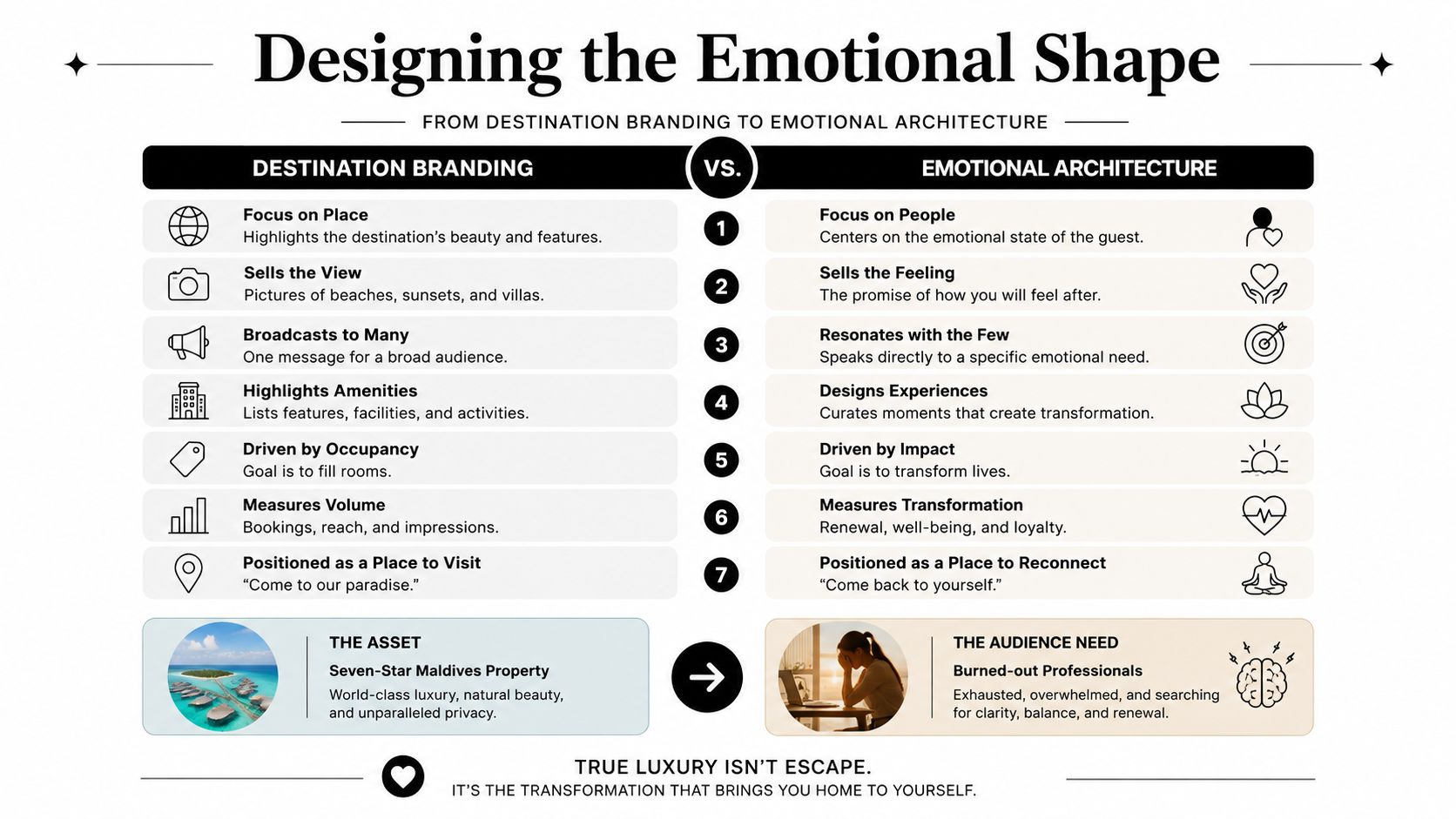
Two burned-out professionals once flew first class to a Seven-Star property in the Maldives. The villa was extraordinary, the service polished, and the setting impossible to fault. They still returned oddly flat because the trip had no emotional anchor. Every day looked beautiful, but nothing had been designed to make the couple feel closer.
That mistake is common among experienced travelers. They select the property before deciding what the journey needs to do. A 2024 romance-travel survey found that 73% of couples view travel as the ultimate relationship test, while 61% said a specific trip helped reignite their romance (TravelAge West romance-travel survey). That makes the getaway more than leisure. It's a relationship milestone, whether you're celebrating an anniversary or recovering from a demanding season.
Choose the feeling first
Before you search for hotels, settle three decisions.
- Define the dominant vibe: Reconnection calls for quiet, comfort, and generous unscheduled time. Adventure needs movement and a shared challenge. Celebration can support grand dining, dramatic scenery, and visible ceremony.
- Name one or two anchor moments: Think of a private overwater dinner, a vineyard helicopter landing, or a sunrise spa ritual. These moments give the trip a narrative spine without forcing every hour into the itinerary.
- Agree on the privacy calculus: Decide whether an adults-only property is essential, whether a private villa justifies a higher rate, and how many hours each day should remain completely unplanned.
A couple who wants an intimate, food-led escape might browse cabernet from McLaren Vale before choosing a vineyard experience. A couple seeking a hotel-led romantic atmosphere can use the world's most romantic hotels as inspiration, but should still filter those properties through the mood they agreed on.
Practical rule: Choose the emotional outcome before you choose the postcode.
Once the vibe, anchor moments, and privacy requirements are fixed, the destination becomes a search filter rather than the entire point. That framework also gives you a rational way to define the experience tier and budget.
Setting a Realistic Luxury Budget and Experience Tier
A luxury budget should protect the moments you will remember, not merely cover flights, rooms, and transfers. A 2026 honeymoon report placed average couple spending at $6,500 and reported that couples directed 26% of total wedding spend toward the honeymoon, compared with traditional guidance of 10%. Treat those figures as context, not a target. HauteBlack's insider access and waived fees can help redirect spend toward the room, dining, and experiences that define the trip.
Set the experience tier before choosing the property. Each tier makes a different trade-off between privacy, activity, and movement.
Sanctuary
Choose one iconic property and make the room the centerpiece. Prioritize a plunge-pool villa, expansive terrace, or suite with direct access to the setting. Fund one signature experience per day, one private dining moment, and private ground transfers. This tier suits couples who want restoration, generous privacy, and very little logistical friction. It also rewards using HauteBlack's property access to secure a better room or added value rather than spreading the budget across too many activities.
Expedition
Keep one home base, then spend on carefully selected outings. The room can be less extravagant than a sanctuary suite, provided the experience layer is strong. Build in a private sailing day, chef-led market visit, or guided cultural outing, then protect one meaningful dining reservation and a quiet block each day. This tier works for couples who want the property as a calm base while giving the destination a larger role.
Duo-City
Pair two destinations with different emotional textures, such as Paris and the Côte d'Azur. The format demands disciplined routing, private transfers, and acceptance that each room category may receive less budget. It suits couples who want urban energy followed by seclusion. Choose it only if both partners are comfortable packing, checking out, and moving between bases.
| Experience Tier | Lodging % | Experiences % | Dining % | Transfers % | Typical 7-Night Total | Signature Inclusions |
|---|---|---|---|---|---|---|
| Sanctuary | 26% | 20% | 15% | 12% | Set by destination and suite choice | Iconic property, private suite, signature experience, private dining |
| Expedition | 26% | 20% | 15% | 12% | Set by destination and excursion design | One base, curated outings, private transfers, guided experiences |
| Duo-City | 26% | 20% | 15% | 12% | Set by routing and room categories | Two contrasting destinations, intercity transfer, private dining |
Use 26% for lodging, 20% for experiences, 15% for dining, and 12% for transfers, then reserve the remainder for surprises and contingencies. Do not spend the buffer to force a famous suite. A polished room cannot compensate for removing the private dinner, excursion, or wellness element that gives the escape its emotional weight.
Choosing Between a Single Sanctuary and a Multi-Stop Escape
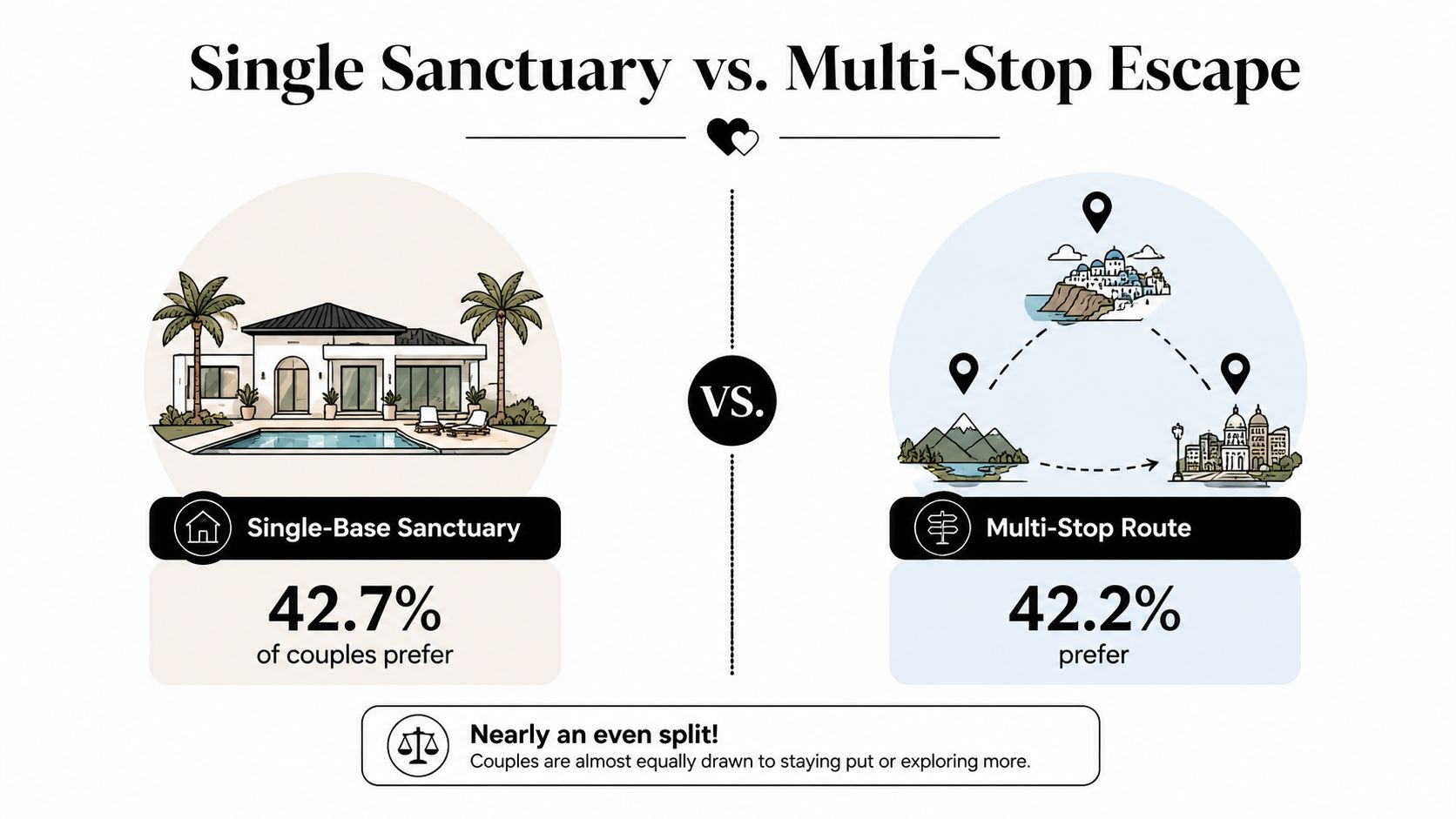
The structural choice is closer than most advisors admit. A survey found that 42.7% of couples prefer one home base, while 42.2% prefer two or three stops (Jayway quiet-honeymoon survey). The split is nearly even, so there's no universal answer. There is, however, a strong default for couples who value privacy.
Privacy ranked as extremely or very important for 83.2% of respondents in the same survey, and that preference naturally favors a single sanctuary. You unpack once, establish one relationship with the concierge, and give the property time to understand how you like your mornings, drinks, and dining. Surprise orchestration also becomes easier because one team controls the setting.
The case for one exceptional base
A single-base trip is the right choice when the relationship needs repair, the itinerary is shorter than seven nights, or the room itself is central to the experience. Adults-only or privacy-forward properties remove friction from the day. Aman Tokyo suits couples who want architectural calm and precise city access. Cheval Blanc Courchevel makes sense for a high-design mountain escape. Belmond Cap Juluca works when barefoot seclusion matters more than sightseeing.
When a second stop earns its place
Multi-stop travel works when each destination contributes something the other cannot. A city and a coast, a cultural capital and a retreat, or a vineyard region and a beach can create contrast without making the trip feel fragmented. The reported 7.1-night average romantic getaway length in 2026, up from 5.2 nights in 2023, makes a 4+3 structure plausible for couples who want variety (Honeyfund 2026 honeymoon report).
Watch the transfer time. A second stop should add a distinct emotional register, not just another room key. Choose it for a major celebration milestone or when one destination can't deliver both adventure and stillness. Otherwise, stay put and let the property deepen the experience.
Timing the Trip and Locking the Right Booking Window
The ideal week aligns with both partners' rhythms. Choose dates that allow each person to arrive without an unfinished work crisis, an overcrowded social calendar, or an unspoken expectation that the trip must repair everything immediately. Recovery time before departure matters as much as the flight schedule.
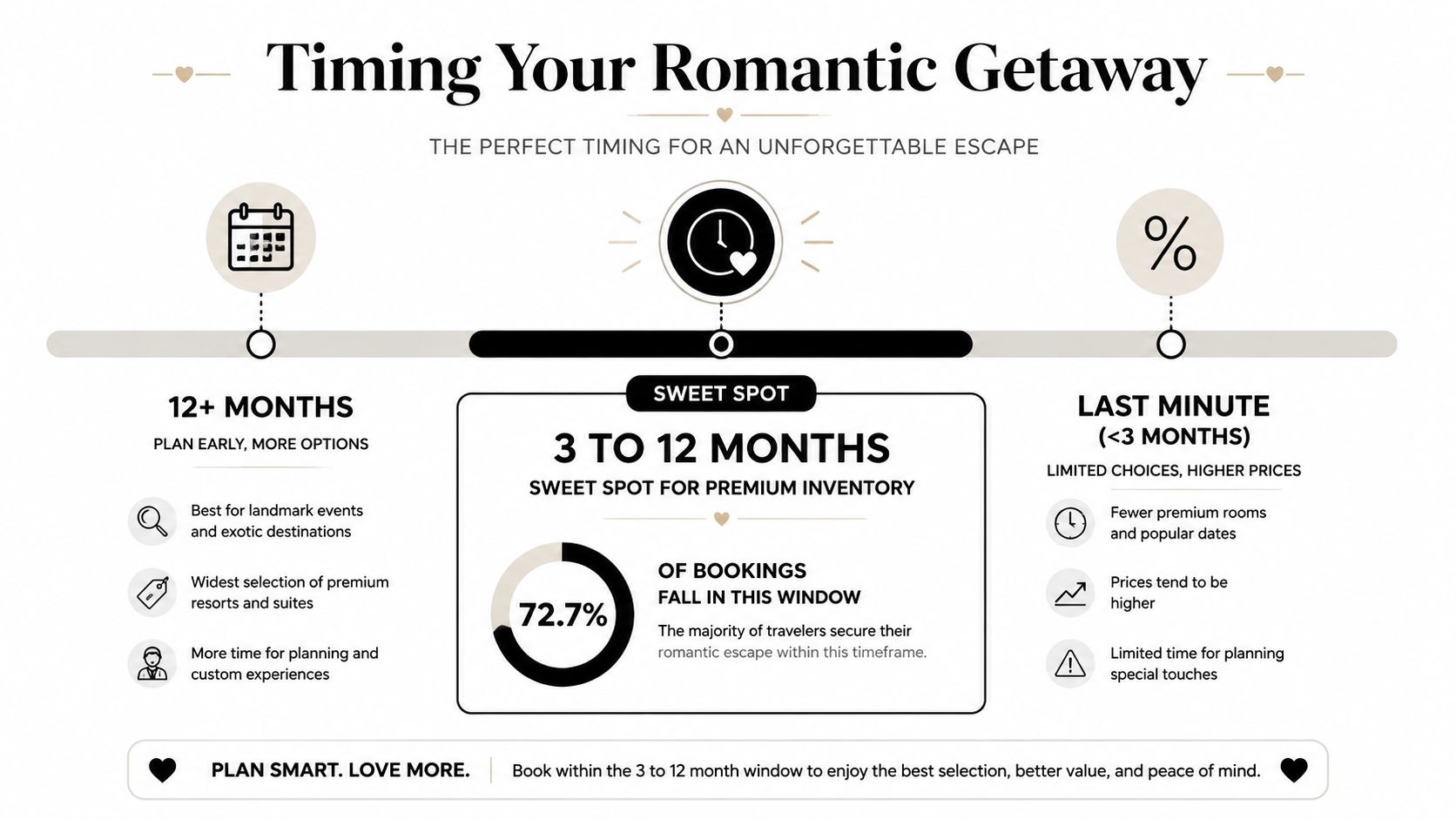
A 1,000-adult survey found that 72.7% of couples plan major romantic trips three to twelve months ahead, while only 3.1% describe themselves as spontaneous bookers (Stacker romance-travel trends report). Use that three-to-twelve-month window to secure premium inventory, particularly when the itinerary depends on a specific suite, private guide, or signature restaurant.
Match the window to the reason for travel
Anniversary and milestone dates warrant the earliest commitment. Start nine to twelve months out when the date is fixed and the room category matters. This protects the exact week, preferred suite, and dinner that gives the occasion intention. Demand-heavy periods may carry a premium, so decide whether the date or the destination's value deserves priority.
Shoulder weeks, such as mid-May or early October, balance availability with atmosphere. Begin four to six months out, then have the advisor confirm weather, operating schedules, and room category before you commit.
Shoulder-but-exclusive windows, such as late January in the Maldives or the period after Thanksgiving in Tuscany, suit couples seeking privacy outside the obvious calendar. Research the property carefully. These dates can support a quieter rhythm and better access to experiences that sell out first.
Stay length shapes the experience too. The average romantic getaway reached 7.1 nights in 2026, as noted earlier. A longer stay gives the relationship time to settle into the destination instead of compressing everything into a long weekend.
Early booking secures more than availability. It protects the suite, the table, and the calm. HauteBlack's advisor access can help coordinate those details while preferred-property benefits and waived fees preserve value where available.
Securing the VIP Room and Property-Level Advantages
The most desirable room is rarely found by sorting an online booking engine from lowest to highest rate. A VIP room is a negotiated outcome shaped by inventory, relationship, occasion, and the advisor's ability to communicate the couple's priorities before arrival.
At Rosewood Mayakoba, Six Senses Bhutan, or Cheval Blanc St-Barth, the published category may not reveal the most useful distinction. The question isn't whether the suite is larger. It's whether the terrace faces the right view, whether the plunge pool is private, whether the room supports breakfast without leaving the villa, and whether the property can place the couple near the experiences they've chosen.
Match the room to the couple
- Club-floor access: Ideal for couples who value effortless breakfast and evening canapés without committing to a formal restaurant every day.
- Plunge-pool suites: The right choice for partners who want 24-hour privacy and may spend as much time in the room as outside it.
- Overwater villas: Best for couples who care about the view floor, direct water access, and the visual drama of the setting.
HauteBlack operates a preferred-partner network covering over 500 properties, including Four Seasons, Aman, Rosewood, Belmond, and Ritz-Carlton. Its membership positioning includes complimentary upgrades when available, property credits of $100 or more, late checkout to 4 p.m., daily breakfast for two, and welcome amenities connected to the occasion. Those benefits can change the value of a room category without forcing the couple into a more expensive published rate.
| Perk | Standard Booking | Preferred-Partner Booking |
|---|---|---|
| Room category | Select from publicly displayed inventory | Request priority room placement and upgrades when available |
| Breakfast | May be charged separately | Daily breakfast for two where the benefit applies |
| Property credit | Usually unavailable | Property credit of $100 or more where offered |
| Checkout | Hotel's standard policy | Late checkout to 4 p.m. where available |
| Arrival | Standard check-in flow | Occasion-specific welcome amenities and VIP recognition |
| Planning | Guest coordinates separate requests | Advisor coordinates room, dining, and spa requests together |
A detailed guide to getting hotel upgrades in luxury travel helps clarify why these advantages depend on the booking channel and property relationship. The advisor's practical value is coordination. One message can request a corner suite, a private terrace dinner, and a couples spa booking before the guest confirms the trip.
Personalizing the Escape with Surprises and Couple Wellness
Personalization works when it expresses knowledge of the couple, not when it creates a spectacle for its own sake. The right surprise arrives at the right emotional moment, involves the right staff member, and respects whether the guest prefers intimacy behind a closed door or a memorable gesture in public.
Consider a 10th-anniversary couple at Aman Venice. The concierge arranges a sunset gondola ride, a table on the Altana terrace, and a playlist built from the song connected to their first date. None of those elements needs to announce itself. The gondola creates transition, the terrace provides the setting, and the music turns dinner into a private memory.
A couple-wellness reset needs the same care. A 35-year-old pair at SHA Wellness in Alicante might structure a four-day detox in a couples format, with a private hammam, a cryotherapy session, and a shared lymphatic massage on the final morning. That sequence works because it moves from active treatment toward a gentler shared close, rather than treating wellness as a collection of disconnected appointments.
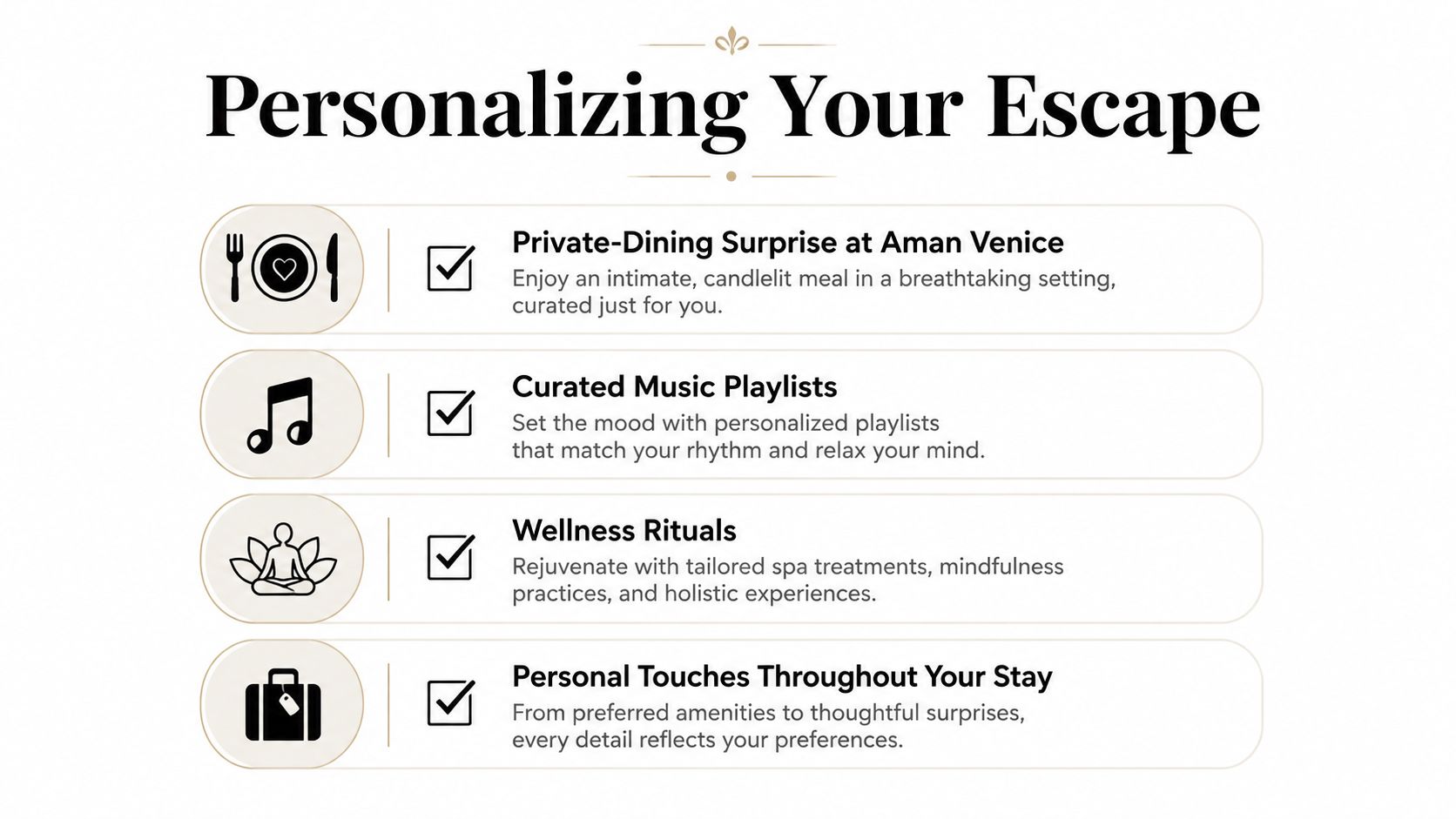
Three checks prevent a good surprise from becoming an awkward one
1. Timing: Place the gesture after arrival or between demanding activities, not during the couple's only unstructured afternoon.
2. Staff contact: Give one trusted concierge or guest-relations lead the full brief, rather than sending partial instructions to several departments.
3. Public versus private comfort: Confirm whether the partner enjoys attention from staff and other guests. A terrace table may delight one couple and embarrass another.
A retreat venue such as this VIVARA intimacy retreat venue can be useful when the couple's priority is intentional connection rather than conventional sightseeing. The principle is the same at a city hotel, villa, or wellness resort.
The best personalization is invisible. It appears as a preferred coffee already waiting, a room temperature adjusted correctly, a spa appointment placed after a slow morning, or a printed vow renewal set discreetly on the desk. Thoughtfulness should feel effortless, not produced.
Orchestrating Transfers, Concierge, and Membership Value
Romance depends on invisible infrastructure. A private transfer protects the first impression better than a shared shuttle, especially after a long flight. Confirm whether an SUV can handle the luggage or whether a Sprinter is more comfortable, then arrange the arrival sequence in advance: fast-track customs where available, chilled towels, and a direct escort to the suite instead of a prolonged lobby check-in.
The concierge should function as a remote planner before the trip, not only as a person who recommends restaurants after arrival. Use that relationship to position a private chef, pre-stage a yacht, or schedule hair and makeup before an anniversary dinner. Send the occasion details once, identify the decision-maker, and ask for written confirmation of timing, privacy, and cancellation terms.
Membership can add a second layer of coordination. HauteBlack's preferred network includes over 500 properties, with complimentary room upgrades when available and waived resort fees that can otherwise run $150 to $300 nightly. Members also have a dedicated advisor and waived planning fees, while the advisor can manage a multi-property itinerary through one point of contact. A practical overview of luxury travel concierge services explains the broader role of that support.
Pack for continuity, not excess
A compact packing protocol keeps the trip elegant and adaptable:
- Build a capsule wardrobe: Use interchangeable neutrals, then add one refined evening look for each destination.
- Protect comfort: Pack a universal adapter and motion-sickness wristbands for scenic drives or boat transfers.
- Carry the personal details: Add a scented candle, a printed vow renewal, or your partner's preferred coffee.
- Prepare for connection: If conversation has been difficult lately, review discreet partner therapy exercises at home before departure, not during a stressful transfer.
Finish the planning with a simple departure sequence. Confirm passport validity and renewal lead time early, review the complete itinerary 72 hours before departure, and send a final arrival message to the property concierge 24 hours before arrival. Those checks leave fewer openings for preventable friction.
A romantic getaway succeeds when the couple remembers how the trip felt, not how many arrangements were made behind the scenes. HauteBlack offers bespoke itineraries, VIP recognition, preferred-partner benefits, and coordinated access for couples who want those details handled before they arrive. Visit HauteBlack to begin designing a private escape around your relationship, your preferred room, and the moments you'll remember.
Frequently Asked Questions
Explore Our Guides


Signature Experiences


