Haute Black Journal
How to Get Fashion Week Invitations and VIP Access

Marlene Azeez
Director, HauteBlack
View all articles →
Published August 24, 2026 by Marlene Azeez
The popular advice is simple: apply for accreditation, wait for an invitation, and fashion week access will follow. That advice is incomplete. Fashion week invitations aren't controlled by one portal or one decision-maker. Accreditation, a brand's guest list, and your actual seat are separate approvals, and confusing them is the fastest way to arrive in Paris or Milan with credentials but nowhere to sit.
The practical route depends on who you are, which house you want to see, what value you bring, and which relationships already exist around you. Press and buyers can use official channels, while VIP clients, executives, and luxury travelers often need a more discreet route through trusted partners, private memberships, or concierge relationships.
Why Fashion Week Access Is Harder Than You Think
Fashion week access doesn't work like a conference registration. There is rarely one application that grants entry to every show. Berlin Fashion Week states that there's no general registration, with individual designers and organizers issuing invitations themselves, while press still needs accreditation through the appropriate channel. The official Berlin Fashion Week FAQ makes the distinction clear.
A federation or event organizer may confirm that you're legitimate press, a buyer, or an industry professional. That status can help you request access, but it doesn't force a fashion house to add you to its list. Each brand's communications team decides who receives an invitation, and that team may manage separate allocations for editors, buyers, stylists, VIP clients, partners, friends of the house, and production stakeholders.
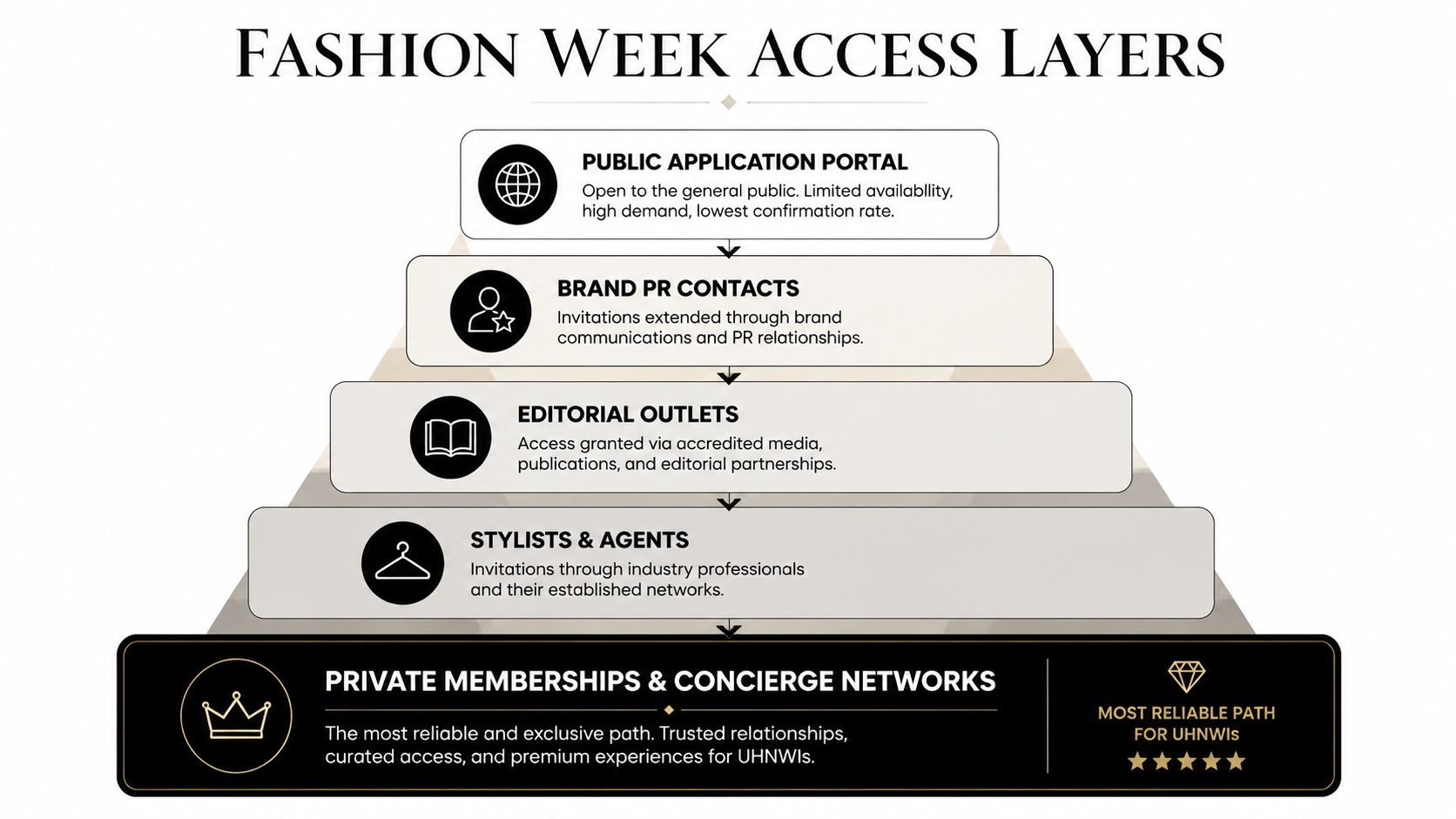
Accreditation is not a seat
Think of access as a layered system:
- Federation accreditation: Establishes your professional category and may provide access to an official press or industry environment.
- House-level approval: Determines whether a specific brand wants you on its guest list.
- RSVP confirmation: Records whether you've accepted and provides the operational details.
- Seating assignment: Determines whether you have a numbered seat, standing-room access, presentation access, or another form of attendance.
That final layer matters. A confirmed invitation may still apply to a presentation, showroom, backstage moment, or after-party rather than the runway itself. Fashion week coverage also shows that access can be fragmented across designers, PR agencies, sponsors, and production teams, with invitations and seating handled separately.
Practical rule: Treat accreditation as permission to ask, not proof that you'll sit inside the show.
The scale of the calendar makes this more difficult. Contemporary coverage describes editors' offices being inundated with messenger deliveries as the number of participating brands has expanded. In Paris, SS25 Fashion Week generated $629.6 million in Media Impact Value, 77.9K placements, and an average value of $8.1K per placement, according to Launchmetrics-linked Paris Fashion Week analysis. Runway formats represented 66% of event types in that analysis, which helps explain why invitations to major shows are tightly controlled.
The right question isn't “Where do I register?” Ask instead: Which layer am I qualified for, who controls it, and what relationship can move me forward?
Requesting Invitations Directly from Fashion Houses
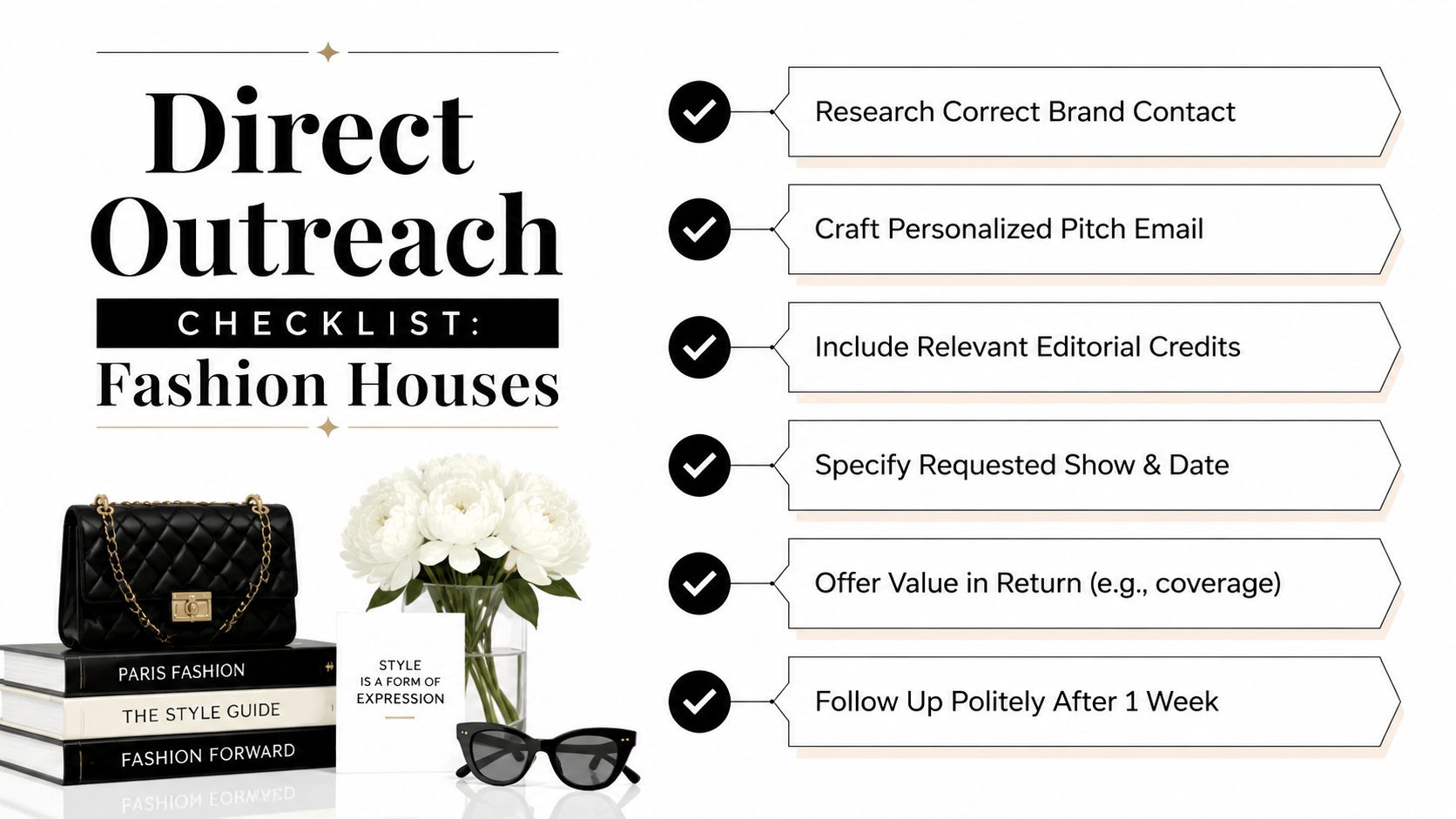
Direct outreach can work, but generic requests rarely deserve a response. Fashion houses receive more inquiries than their teams can handle, particularly during a crowded season. Your email must let a PR professional understand your relevance without opening several attachments or guessing what you're asking for.
Start with the correct contact. Look for the brand's communications director, press office, PR agency, or regional showroom contact. A federation directory may help identify the brand, but you'll still need the house-level contact because the brand controls its own guest list.
Build a request a PR team can process
Include the essential information in the opening lines:
- Your role: State whether you're press, a buyer, stylist, creator, VIP client, or brand partner.
- Your outlet or company: Name the publication, retail business, agency, or organization directly.
- Your audience profile: Explain who reads, watches, buys, or works with you. Keep it relevant to the house.
- Your prior coverage: Link to specific fashion work, not just a general homepage.
- The requested show: Identify the exact brand and format you want, rather than asking for “any fashion week access.”
- Your value: Describe the coverage, buying conversation, styling work, client relevance, or relationship you can offer.
- Your logistics: Include the city, availability, and whether you're requesting one place or a guest allowance.
A strong request sounds like a professional exchange, not a plea for status. A fashion editor might offer a collection review or runway report. A buyer should explain the retail context. A VIP client should be introduced through a known clienteling or hospitality relationship rather than presenting a personal desire as a business credential.
Personalize before you send
Mention the designer's current direction, a recent collection, or the specific reason the show fits your work. Don't flatter without substance. PR teams can distinguish genuine interest from mass outreach.
Your subject line should be precise, such as “Press request for [Brand] runway presentation” or “Buyer appointment request for [Brand].” Attach or link a concise media kit only when it supports the request. For broader guidance on making a credible professional collaboration proposal, use these EmailScout collaboration tips.
Follow up once, politely, after a reasonable interval. Keep the message short and include the original request below it. If the house declines or doesn't respond, don't turn the silence into a grievance. Fashion relationships compound through respectful conduct, useful coverage, and reliable attendance, not repeated demands.
Leveraging Private Memberships and Luxury Concierge Networks
For an executive, founder, investor, or private client, sending cold emails to ten fashion houses is usually the wrong use of time. The more effective route is often relationship-led access, where a trusted intermediary introduces you to the people managing the house, the hospitality partner, or the private client program.
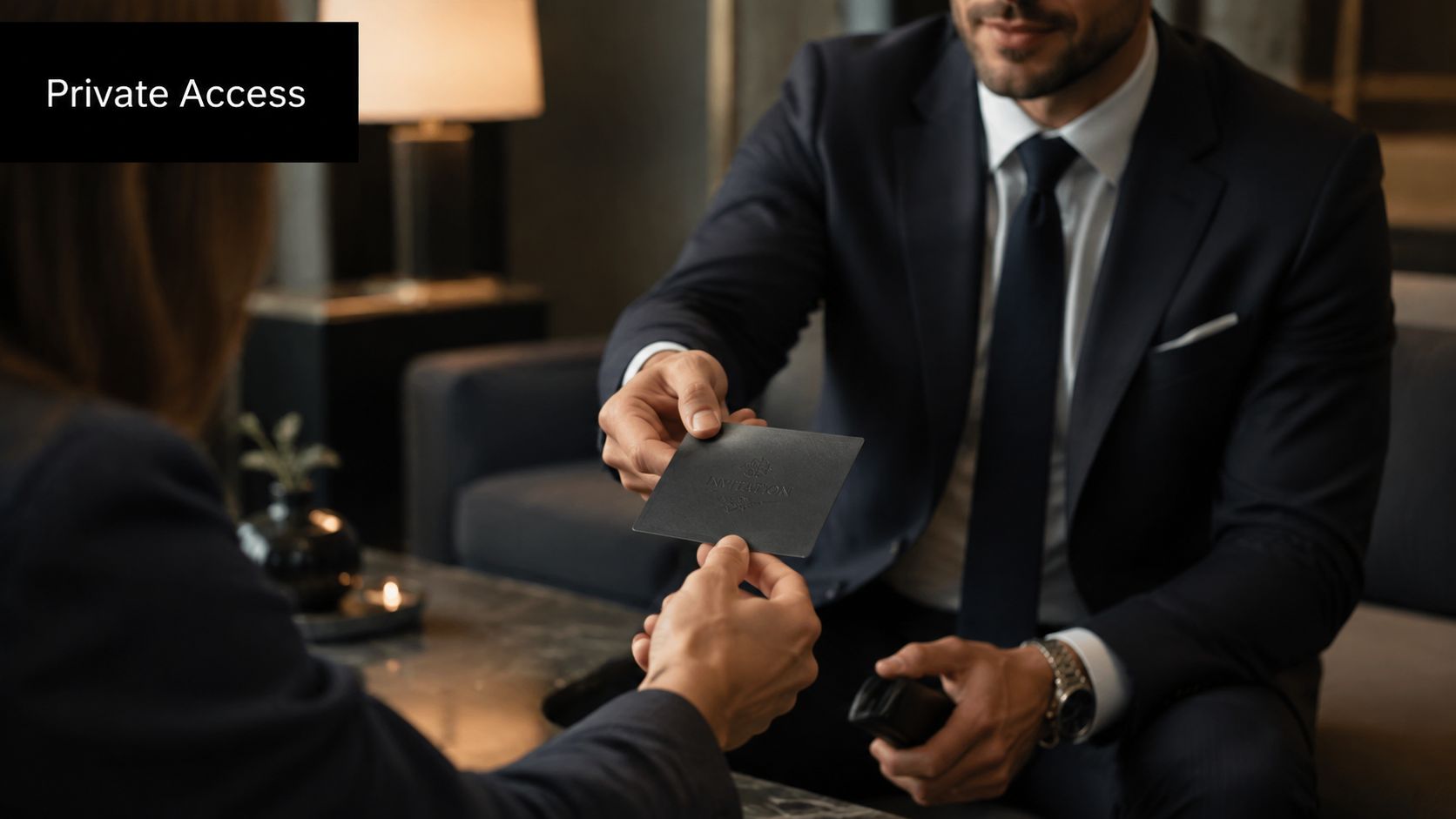
Consider the difference in how the request arrives. A cold email says, “I'd like to attend.” A trusted concierge introduces a known client with a clear profile, confirmed travel plans, and a reason the relationship makes sense for the house. That doesn't guarantee a seat, but it removes the anonymity that causes many requests to disappear.
HauteBlack operates as a private membership and luxury travel platform, with advisors coordinating bespoke travel, hospitality, cultural access, and private events. Its model is relevant to fashion week because the itinerary rarely stops at a runway. The right plan may combine a preferred hotel, private transfers, showroom appointments, dinners, cultural programming, and a targeted request to a house, all managed as one journey. Its luxury travel concierge guide provides context on that broader service model.
The value of a private network isn't merely the invitation itself. It's the judgment behind the request. A capable advisor knows whether your objective is a front-row seat, a buying appointment, a private presentation, a designer dinner, or a well-connected fashion week itinerary. Those are different asks and require different introductions.
HauteBlack's published membership information describes an AI-powered network connecting verified founders, executives, investors, athletes, and creators, alongside dedicated advisory support. It also curates 80+ intimate events annually, creating fashion-adjacent opportunities where relationships can develop outside the runway calendar. A private dinner or cultural evening may not replace a show invitation, but it can put you in a more relevant room than an indiscriminate guest-list request.
For clients traveling internationally, coordination matters as much as access. A late invitation can affect hotel location, transport, wardrobe, dining, and meeting schedules. Concierge support protects the entire experience from becoming a sequence of disconnected confirmations.
Here's a useful distinction:
- Traditional outreach: You prove relevance to each house from the outside.
- Accreditation: You establish professional status through an official channel.
- Private membership or concierge support: You use an existing relationship network to shape introductions and manage the surrounding experience.
The third route is especially practical when your priority is discretion, efficiency, and a coherent luxury itinerary rather than the thrill of winning approval from a public inbox.
Timing and Etiquette for Successful Requests
A polished request sent too late can fail just as easily as a poor request sent early. Fashion houses build guest lists progressively, and their teams need time to balance editorial relevance, commercial relationships, VIP priorities, seating capacity, and operational details.
Begin with research and relationship building well before the season feels urgent. Identify the houses, agencies, show formats, and relevant contacts. If you're press or a buyer, prepare your credentials before requesting access. If you're a private client, ask your advisor to begin conversations before flights and hotels become fixed.
Use a disciplined request rhythm
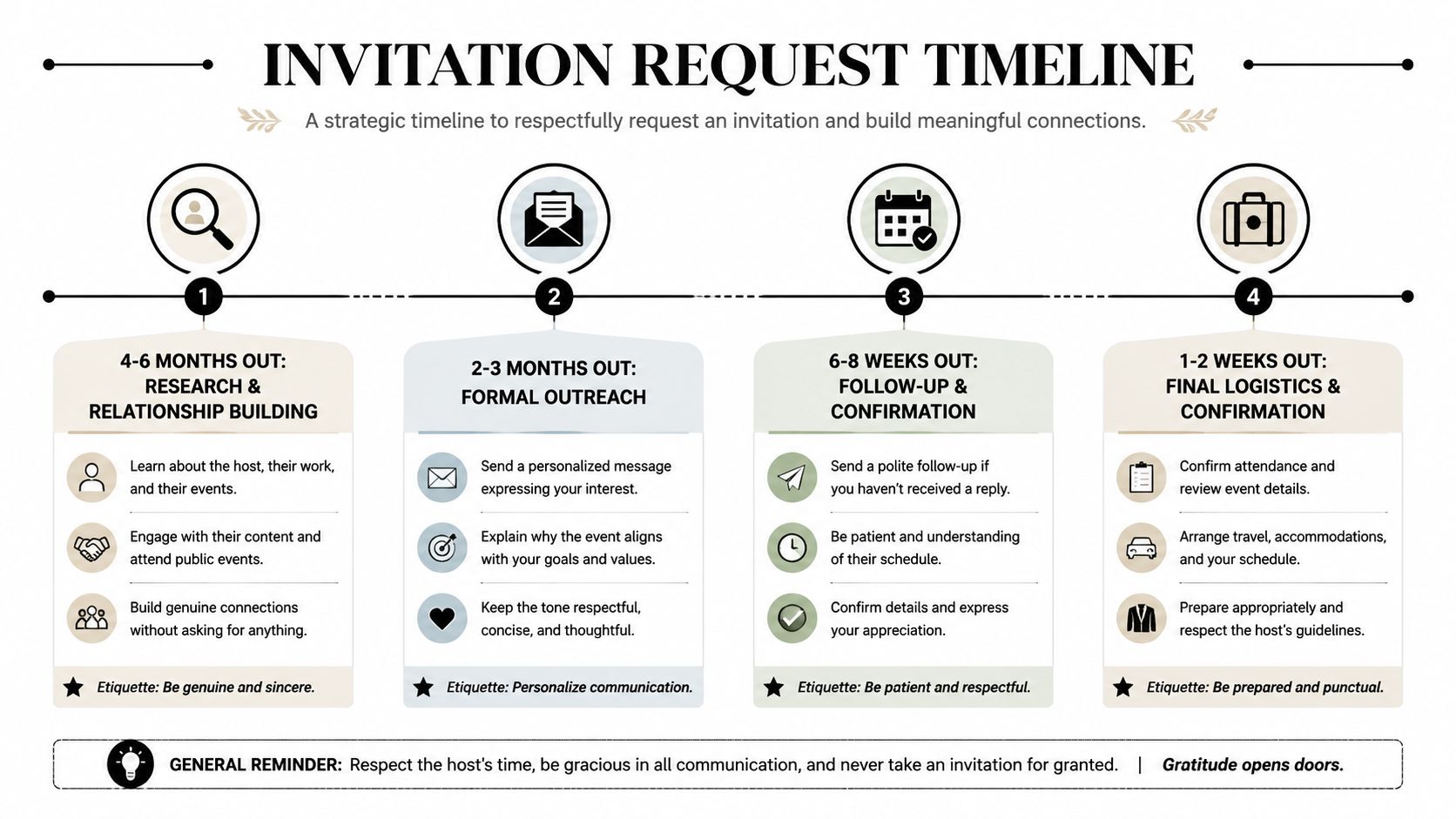
A practical working sequence looks like this:
1. Research the calendar and contacts: Confirm the city, house, format, and appropriate communications route.
2. Send a formal request: State your role, outlet or company, audience profile, prior coverage, and requested show.
3. Follow up once: Use a brief, courteous note and restate the specific ask.
4. Confirm the operational details: Clarify RSVP status, venue, arrival instructions, seating type, and whether the invitation is transferable.
5. Communicate changes immediately: If you can't attend, tell the house rather than creating an empty seat.
The timing framework shown in the HauteBlack executive networking playbook also applies here. Relationships are built before the request becomes urgent, not during the final rush around the venue.
Attendance is a separate operational problem
An invitation is not attendance. Brands using event-management technology reportedly achieved a 59% invitee-to-attendee rate versus 44% without it, a 15-point lift, according to Launchmetrics event-management data. The implication is straightforward: confirmation workflows, RSVP tracking, targeted reminders, and accurate guest information matter more than sending a larger volume of invitations.
Your reputation includes what happens after the invitation arrives. Confirm promptly, arrive when instructed, and never treat a seat as disposable.
Avoid vague asks, multiple follow-ups, exaggerated audience claims, and last-minute requests that force a PR team to solve your planning problem. Don't ask for “VIP access” without defining the experience you want. A runway seat, standing-room position, backstage access, presentation appointment, and after-party invitation are not interchangeable.
For Paris and Milan, treat each house as a separate application even if you hold federation accreditation. For Berlin, follow the individual-invitation model described by the official event guidance. For every city, keep a private tracking sheet with contacts, requests, responses, RSVP deadlines, seating information, and travel logistics.
Realistic Alternatives When Runway Invitations Are Out of Reach
A major runway invitation is only one version of fashion week access. If it's unavailable, choose the format that serves your actual objective. A buyer may gain more from a showroom appointment than a crowded runway. A creator may produce better work at a presentation. A traveler may value a private dinner, cultural visit, or carefully planned city itinerary over a seat that arrives without notice.
Compare the access models
| Route | Best for | What it offers | Main limitation |
|---|---|---|---|
| Industry accreditation | Press, buyers, and professionals | A recognized route to apply for specific opportunities | It doesn't guarantee a house invitation or seat |
| Brand showcases | Industry guests seeking focused access | Direct contact with selected designers and collections | Availability depends on individual applications |
| Public-facing passes | Fashion enthusiasts and travelers | Digital viewing, registration, and selected public opportunities | Access may not include the major invitation-only shows |
| Presentations and showrooms | Buyers, editors, and serious observers | More focused collection viewing and conversation | They're different from a runway spectacle |
| Cultural and hospitality programming | Luxury travelers and private clients | Networking, dining, and fashion-adjacent experiences | It may not provide runway seating |
Copenhagen Fashion Week's accreditation application allows press, buyers, and industry professionals to apply to specific brand showcases. That's a more realistic path than assuming general accreditation opens every door.
Australian Fashion Week 2026 introduced a public-facing Fashion Pass with free registration, livestream viewing access, and early ticket purchase opportunities for selected runway shows. This hybrid model matters because it recognizes that fashion week can include physical invitations, digital participation, and limited public access at the same time.
Don't underestimate the object itself
Invitation design has moved beyond administration. Fashion houses were already inviting clients to view biannual collections in the late 19th century, while by the 1980s invitations had become more creative and branded. The Palais Galliera now holds more than 11,000 fashion invitations, demonstrating how these objects became part of fashion history, as documented in this history of fashion invitations.
Recent invitation formats include boxes, miniature televisions, and other tactile pieces that function as collection teasers. You may not receive the object, but understanding its role helps you see the broader shift: the invitation is increasingly brand storytelling, while access may happen through a runway, livestream, showroom, or event around the show.
For a curated New York experience, consider fashion week travel planning that combines official events with dining, cultural programming, and private appointments. HauteBlack's New York Fashion Week experiences offer one route to structure that broader visit.
Your Fashion Week Access Strategy
Choose your route based on your professional position and your real objective, not on the prestige of the word “invitation.”
If you're press, secure accreditation first, then contact each house separately. Prepare a compact media profile with your outlet, audience, prior fashion coverage, and the specific shows you want to cover. Ask for the format you can use, whether that's a runway, presentation, backstage access, or showroom appointment.
If you're a buyer or stylist, lead with commercial or creative relevance. Identify the categories, clients, retailers, or editorial work connected to the house. A clear appointment request is stronger than a broad request for VIP access.
If you're a creator, make your public profile do the preliminary work. Your fashion focus should be obvious, your previous work easy to review, and your audience relevant to the brand. Don't rely on visibility alone. Explain the content you'll produce and where it will appear.
If you're an executive, investor, or luxury traveler, don't spend the season chasing disconnected inboxes. Use a trusted advisor, private membership network, or concierge relationship to coordinate introductions, hospitality, travel, and alternatives. The value lies in managing the entire experience while preserving discretion.
If you're a fashion enthusiast, select the most reliable public or hybrid option available. Look for ticketed shows, public-facing passes, livestream access, showcases, presentations, and fashion-adjacent events. You'll have a better trip with confirmed access than with an optimistic itinerary built around an unanswered request.
Keep your preparation practical. Research early, send targeted outreach, follow up once, confirm every detail, and treat every invitation as a relationship test. The people who open doors remember who was relevant, respectful, and dependable.
HauteBlack connects private members with bespoke travel planning, dedicated advisors, curated cultural experiences, and relationship-led introductions that can support a fashion week itinerary beyond a standard application. Visit HauteBlack to discuss a discreet, personalized route to fashion week access and the surrounding travel experience.
Frequently Asked Questions
Explore Our Guides


Signature Experiences