Haute Black Journal
Corporate Retreat Planning: A 2026 Guide for Executives

Marlene Azeez
Director, HauteBlack
View all articles →
# Corporate Retreat Planning: A 2026 Guide for Executives
Published August 11, 2026 by Marlene Azeez
You're probably staring at a calendar full of executive meetings, a CFO who wants a hard number, and an assistant trying to hold together venue options, flights, dinner plans, and a half-formed agenda. That's the moment corporate retreat planning stops being a perk project and becomes a leadership decision with real stakes. If the goal is to bring senior people together, sharpen decisions, and send everyone home with momentum, the retreat has to feel deliberate from the first invite to the last follow-up.
The problem is that most offsites are still planned like extended team lunches. They look pleasant on paper, but they don't produce the kind of alignment a C-suite expects. Luxury retreat planning has to do more than impress the room, it has to protect time, reduce friction, and create outcomes leaders can defend later.
The New Standard in Executive Retreat Planning
A forgettable retreat usually starts with a venue search. A successful one starts with a business problem.
A leadership team can spend three days in a beautiful property and still leave with nothing useful if the agenda is bloated, the attendees are underprepared, and no one agreed on the decision-making goal. That's the line between a nice trip and an executive investment. The modern standard is clearer now because retreats have become recurring operating rhythms, not one-off rewards. Emburse's 2025 offsites research found organizations now average 2.6 offsite events per year, up from 2.4 in 2019, while the share of companies running no offsites fell from 16% to 4%. The same report says 59% of companies have increased offsite budgets since 2019, and 54% now hold 1–2 events annually. Emburse's 2025 offsites research shows exactly why executives now treat retreat planning as a repeatable operating expense.

What high-performing retreats look like
The best executive retreats have decision density. People arrive with pre-work complete, the room is small enough for honest conversation, and the schedule leaves room to think. That's why luxury advisors and strategic planners work backward from outcomes instead of forward from amenities.
A practical planning brief should read like this, not like a wishlist. Do you need a new product direction, a leadership reset, a partner strategy, or a conflict resolution session that finally closes? If the answer isn't precise, the retreat won't be either.
For agenda inspiration that feels more substantive than a generic icebreaker list, agenda examples from United We Transform are worth reviewing alongside your internal objectives. They're useful because they help you think in outcomes, not just activities. For a broader view of the brand's executive travel and hospitality focus, Haute Black's corporate page shows the kind of high-touch service model that matters when every hour on site has to count.
Practical rule: if the retreat can't be explained in one sentence to the CEO, it isn't ready to be booked.
The 2026 benchmark is also clear on duration. A survey summary covering 210 companies reports an average retreat length of 3.78 days and a median of 4 days. The 2026 survey summary confirms what seasoned planners already know, executive retreats are no longer casual overnights. They require the same rigor you'd bring to a product launch or board meeting.
Setting Strategic Objectives Before You Book Anything
Start with the outcome, not the venue. If you reverse that order, the retreat starts serving the property instead of the business.
Book the villa first and the agenda will drift into convenience. Define the business result first and every decision tightens around it. A leadership team that needs to settle a product roadmap needs different space, pacing, and facilitation than a group repairing trust after a difficult quarter. The objective drives the format.
Build the brief backwards
Write down the exact result you want by the end of the retreat. Keep it concrete. Use phrases like approved roadmap, resolved operating conflicts, shared leadership narrative, or named owner for every major initiative. Then decide what has to happen before arrival so the onsite time is used for deciding, not discovering.
That requires pre-work. If your leaders need to evaluate strategy, ask for a short SWOT analysis or a concise strategic brief before they get on the plane. If they are coming from different regions or functions, give them the same pre-read and require everyone to show up with the same baseline knowledge. Otherwise, the retreat turns into a live document review session, and that is a poor use of high-cost time.
A strong sequence is simple:
1. Define the outcome.
2. Decide who must be in the room.
3. Assign pre-work.
4. Build the agenda around the decision points.
5. Leave space for reflection and synthesis.
The agenda should not be a wall of presentations. The most useful retreats include real pauses between sessions so executives can talk privately, digest what they have heard, and make actual decisions. Too much content drains the room quickly.
If networking or executive access is part of the brief, set that objective with the same discipline. A clear standard for who needs to meet whom, and why, belongs in the plan from the start. For a sharper view on that kind of C-suite relationship-building, review executive networking events and C-suite access.
Protect approval and authority early
Get the primary signatory involved before venue sourcing gets serious. That might be the CEO, the CFO, or both. Late approval is where schedules slip and preferred properties disappear, especially when the retreat needs a specific season, privacy level, or international travel setup.
The people who approve the retreat should also approve the outcome.
That sounds obvious, but many teams delegate planning without delegating authority. The result is predictable, the planner negotiates hard for a venue, then waits on a senior signature while the best dates vanish. If you want an executive retreat to run smoothly, identify decision authority at the start and keep it visible through the process.
Building a Luxury Budget That Delivers Measurable ROI
A luxury retreat budget should be written like a capital allocation memo, not a party estimate.
PlanRetreat's 2022 survey found the average total retreat cost was $220,000, the average budget per employee was $2,100, and 19% of surveyed companies spent over $0.5 million on a single retreat. PlanRetreat's 2022 survey makes one thing obvious, executive retreats are serious spend. The point isn't to be frugal. The point is to be intentional before the contracts start landing.
Set the cap before you source venues
A 2025 planning guide suggests a per-person, per-night framework of roughly €250-350 for basic retreats, €350-450 for mid-range, and €450+ for premium programs. The 2025 planning guide is useful because it forces a cap-first mindset. If you don't know the budget ceiling before you talk to venues, you'll get pulled into properties that look right and price wrong.
Here's the right order:
| Tier | Per Person Per Night | Typical Experience |
|---|---|---|
| Basic | €250-350 | Clean, efficient, functional |
| Mid-range | €350-450 | Strong comfort, polished service |
| Premium | €450+ | Highly tailored, elevated, high-touch |
That table is a starting point, not a verdict. A premium retreat may be worth it if the group is small, the leadership stakes are high, and the agenda depends on privacy and focus. What matters is that your cap reflects the decision value, not just the visual appeal of a property.
Measure ROI like a decision-maker
Most retreat content stops at satisfaction surveys. That's weak. Senior stakeholders want to know whether the retreat improved execution speed, alignment, or cross-functional collaboration.
A better approach is to define 2 to 3 measurable outcomes before the retreat, then compare them after the retreat within 1 to 4 weeks. Use pre-post baselining. Track something you can defend, like the number of decisions closed, how quickly the group moves on priority items, or whether cross-functional teams are collaborating more directly. The better examples in retreat ROI guidance point to post-retreat project launches, time-to-decision, and collaboration signals, not vague morale language. The ROI gap in retreat planning is exactly where luxury planning needs to grow up.
ROI isn't a feeling. It's a before-and-after comparison.
For a C-suite audience, the business case is simple. If the retreat doesn't change execution, it's hospitality. If it changes how leaders decide, align, and move work forward, it's strategy.
Choosing the Perfect Venue and Premier Partners
The property matters, but the relationship matters more.
Executives do not remember the room category. They remember whether the arrival felt handled, whether the team was treated like VIPs, and whether the advisor could secure access the hotel would never offer a stranger. That is why the right partner network often matters more than the prettiest brochure. Haute Black's Virtuoso-affiliated status through Andavo Travel gives access to over 500 properties, including Four Seasons, Aman, Rosewood, Belmond, and Ritz-Carlton, with benefits such as complimentary upgrades when available, resort credits, flexible benefits, and true VIP arrivals. Those details set the tone for an executive retreat before the first meeting starts.
Choose for access, not just aesthetics
The smartest venue criteria are practical. Favor centrally located destinations with direct-flight or train access so travel friction stays low and the group does not lose valuable time to transfers. Pick a property that supports both privacy and movement, because executive teams need quiet rooms, strong meeting infrastructure, and a few spaces that feel special enough for relationship building.
If you are comparing destination types, use plan your retreat with Madeira Remote as a directional reference point for how location can support different retreat styles. The value is in the thinking, not the decor. You are looking for a place that fits the work.
Here is the blunt truth. A five-star hotel with no meaningful partner benefits can be a worse retreat choice than a slightly less famous property with stronger access, better terms, and a more capable advisor. Executive travelers notice when they are being handled as repeat clients rather than anonymous bookings.
Use partner relationships to create moments
Premium access creates the moments that leadership teams remember. A private villa estate, a tucked-away cultural dinner, or a curated arrival can set the tone before the first session begins. For leaders, those details are not frivolous, they signal that the retreat has been planned with care and intent.
Haute Black's 7 elite executive retreat locations for 2026 is a useful internal starting point if you want a shortlist built around executive-level access rather than generic resort marketing. Use it as a filter, then pressure-test every option against flight access, privacy, and the actual meeting agenda. If you want a broader destination lens, use it alongside the guidance in plan your retreat with Madeira Remote and keep the decision tied to business objectives, not branding.
Designing Bespoke Programming for Unforgettable Experiences
Programming should feel like an extension of the strategy, not a break from it.
A good retreat gives people something to do. A great one gives them something to remember, and something to act on. That happens when wellness, food, and culture all support the same leadership goal. If the objective is alignment, then every activity should either deepen trust, sharpen thinking, or give the group a shared reference point.
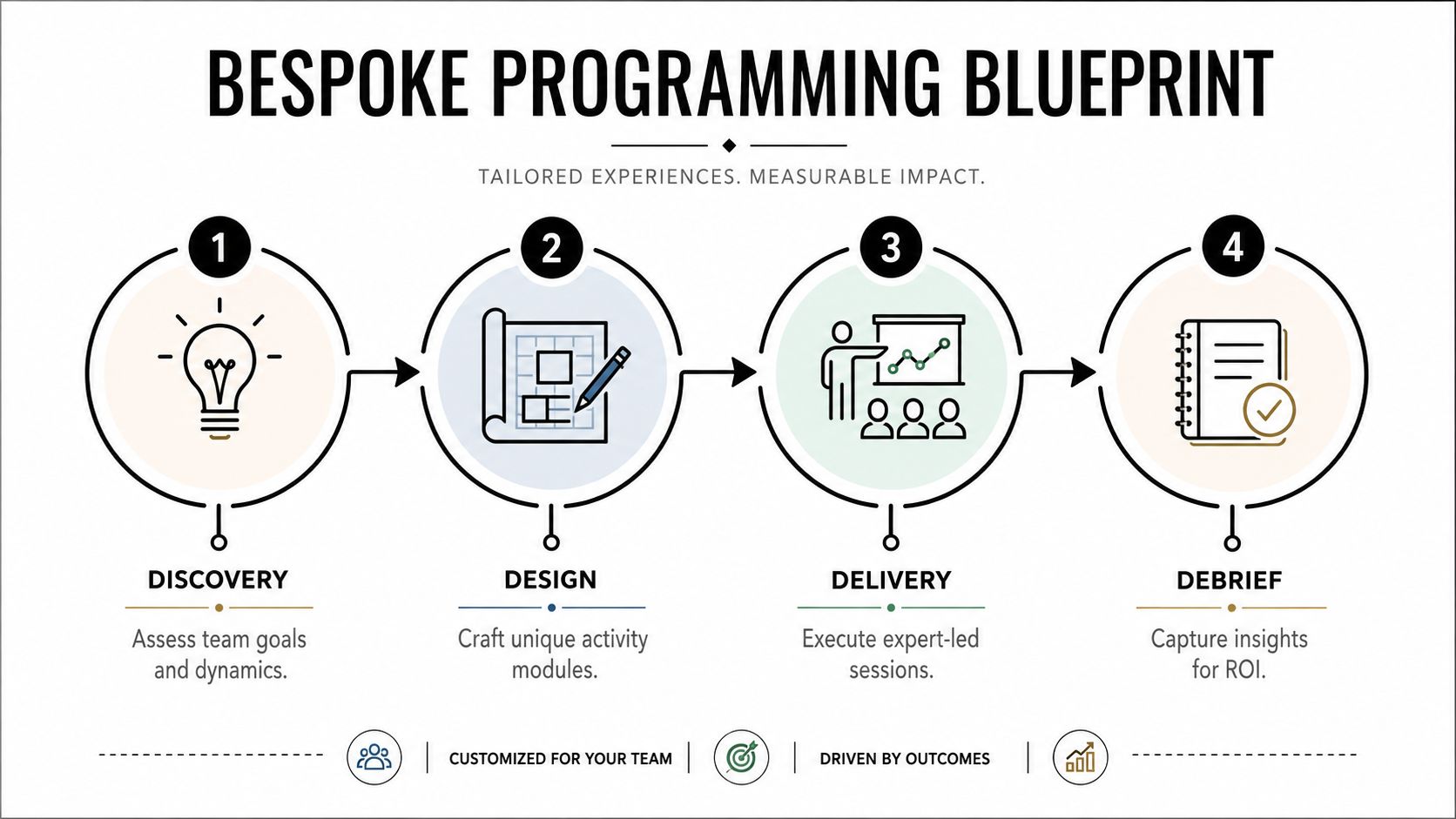
Build around three pillars
Start with wellness. Private yoga, guided breathing, mindful movement, and executive recovery sessions make sense when the leadership group has been under sustained pressure. The point isn't to turn a retreat into a spa weekend. The point is to reset attention so people can think clearly.
Next, use culinary programming as a strategic tool. A private chef dinner creates a different kind of room than a standard group restaurant reservation. Haute Black curates 80+ intimate events annually, including private chef dinners with names like Nobu, Daniel Boulud, and Thomas Keller. That matters because shared meals can become the most effective networking and trust-building moments of the retreat when they're designed with intention.
Then add cultural immersion. Private museum access, local tradition experiences, or a curated evening with a notable figure can give the retreat a sense of place. The goal isn't entertainment padding. It's to create a memory that anchors the business conversation.
Keep the agenda from getting bloated
Strategic retreat guides are right about one thing, too many passive presentations kill energy. If leaders spend the day being talked at, they stop participating. Use shorter blocks, build in movement, and let the schedule breathe.
Leave space for the room to do its own work.
That might mean a quiet coffee break after a hard session, a concierge-led walk before dinner, or a longer synthesis window before evening. Luxury isn't about packing in more. It's about removing friction and giving the right moments room to land.
Orchestrating Logistics with Impeccable Precision
The best retreat plan dies in a taxi line, a broken projector, or a supplier who never confirmed the final rooming list.
Logistics are not a back-office detail. They're the operating system of the retreat. The right timeline reduces the chance of expensive mistakes because venue, travel, and AV problems get harder, and more costly, to fix at the last minute. A phased approach is essential.
Run the timeline backwards from arrival
Nine to twelve months out, define objectives, budget, and dates. Six to nine months out, lock the venue and accommodations. Three to four months out, finalize the agenda and activities. Six to eight weeks out, collect dietary and rooming data. Two to four weeks out, confirm technology, transportation, and logistics. That sequence is the simplest way to protect both quality and sanity.
A few operational choices matter more than you might think:
- Lock decision-makers early. If the CEO or CFO is the final signatory, get them into the process before contracts move.
- Do a morning tech-check. Test microphones, projectors, and remote links at least two hours before the first session.
- Use one internal organizer channel. Keep the team handling logistics in a dedicated messaging thread so problems get solved before guests arrive.
- Negotiate the contract hard. Cancellation policies, force majeure clauses, and payment terms should be clear before anyone signs.
For a useful view on cross-border movement, payment coordination, and travel governance, corporate travel insights from Passport Premiere can help frame the kind of controls that matter when executives are flying in from different places. Treat travel policy like an enabler, not a constraint. Good rules make the retreat easier to run.
Make the arrival experience feel deliberate
Transportation sets the tone. For a luxury executive retreat, first-class transfers, private aviation, or helicopter arrivals can eliminate friction and signal that the event has been planned for people whose time matters. Haute Black's travel options include private jet charters, first class, and helicopter transfers, which are useful when arrival experience is part of the retreat narrative.
The same is true for checkout and departure. If the last morning is chaotic, the retreat memory gets diluted. Keep the final hours simple, send the recap quickly, and make sure the group leaves with clarity instead of clutter.
Your Next Steps for an Exceptional Retreat
The strongest executive retreats are designed backward from business outcomes, then supported by budget discipline, partner access, bespoke programming, and logistics that never call attention to themselves. That's the standard now. If you're still planning from the venue outward, you're giving away control.
Start by defining the one result the retreat must produce. Then cap the budget, choose partners who can provide real access, and build the program around decisions, not filler. If you want the retreat to feel effortless to the attendees and defensible to the board, the planning has to be stricter than the experience looks.
If you want a retreat that feels polished in the room and credible in the board deck, Haute Black can help source the venue, travel, and partner access that support that standard. Visit Haute Black to begin planning a corporate retreat that's built around VIP execution, not generic offsite logistics.
Explore Our Guides


Signature Experiences