Haute Black Journal
Ceylon Tea Trails Sri Lanka: A Luxury Guide

Marlene Azeez
Director, HauteBlack
View all articles →
# Ceylon Tea Trails Sri Lanka: A Luxury Guide
Published July 30, 2026 by Marlene Azeez
You've already decided on Sri Lanka, which is the hard part. The next decision is simpler and more important, where to base yourself in tea country so the stay feels private, luxurious, and worth the detour from the coast.
Ceylon Tea Trails is the name most travelers use for two different things, a world-class bungalow resort and, more loosely, the hill-country tea region around it. If you want the highest-level version of ceylon tea trails sri lanka, treat the resort as your base camp, then use it to access the estate rituals, the surrounding walking country, and the wider Pekoe Trail without turning the trip into a box-ticking exercise.
Arriving Above the Clouds at Ceylon Tea Trails
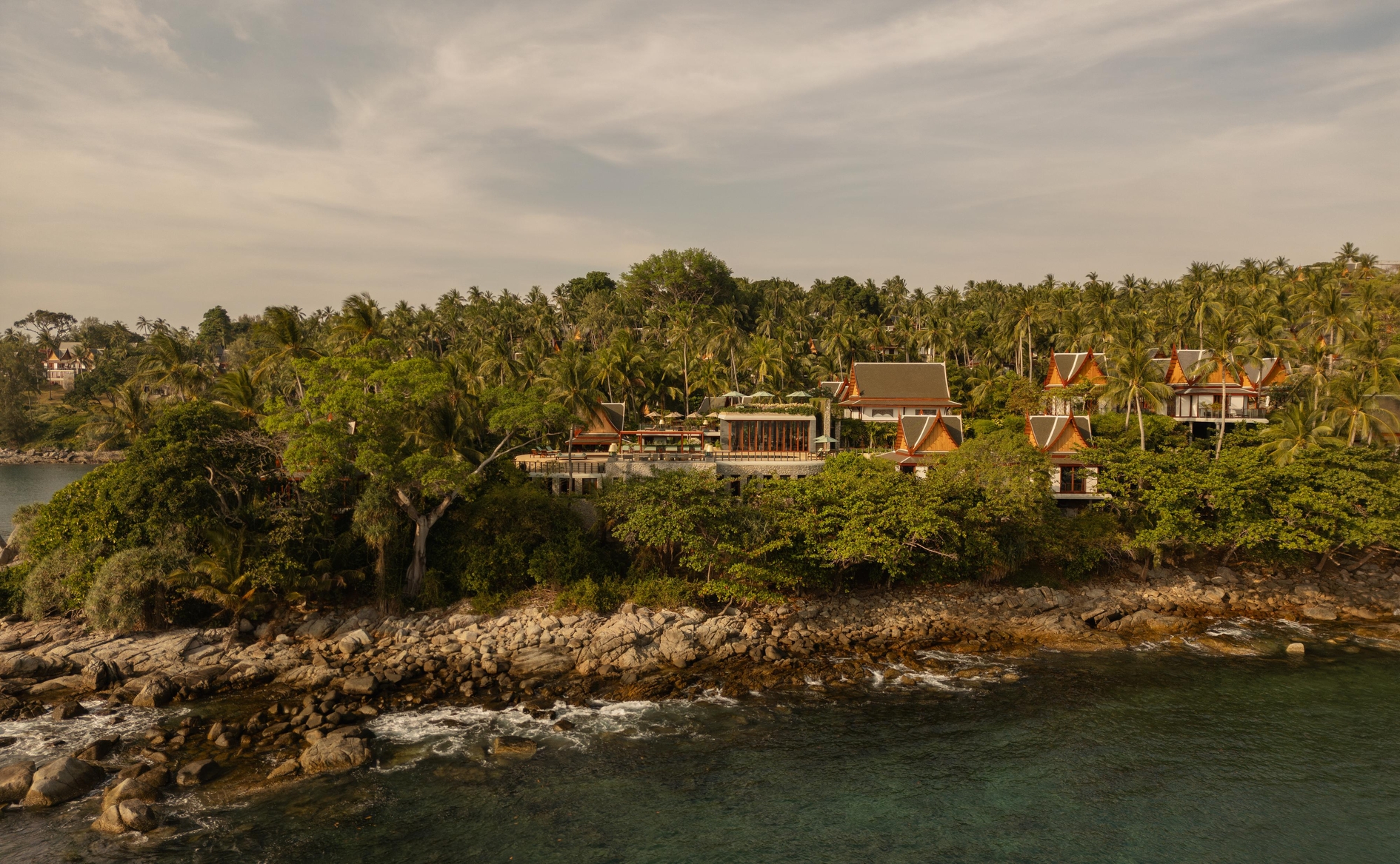
The first good move is to arrive in daylight, step out of the vehicle, and let the place work on you before you start talking logistics. The air is cooler up here, the ridgeline sits in and out of mist, and the bungalow verandah gives the whole arrival the feel of a private house party rather than a hotel check-in.
That's the point of Ceylon Tea Trails. It is the world's first tea bungalow resort and the first Relais & Châteaux property in Sri Lanka, with five restored colonial-era planters' bungalows and 27 rooms in total (history of Ceylon Tea Trails). The best way to use it is to slow down immediately, accept the butler-led rhythm, and have your first cup of estate tea where it belongs, on the lawn or verandah, not in transit.
Practical rule: book the trip so your arrival day is light. If you've come via a long-haul sector, a proper reset matters more than trying to squeeze in one more activity.
If your body is asking for a reset after the flight, a focused service like this guide to recovery after long flights is exactly the kind of thing to use before you head uphill. It's a better move than forcing a packed first day.
The rest of this guide stays practical. I'm separating the resort from the hiking route, showing how the tea country works, and then laying out how to book it at the right level, with the right transfer, in the right season.
What Ceylon Tea Trails Actually Is
If you're searching Ceylon Tea Trails Sri Lanka, be precise about what you want. The resort is a luxury stay inside a working tea estate. The Pekoe Trail is a separate public long-distance hiking route, and confusing the two leads to the wrong booking, the wrong expectations, and the wrong itinerary.
Draw the line between resort and route
The resort is a single, high-touch base made up of restored bungalows in the Bogawantalawa and Dickoya tea belt. The trail is the 300 km Pekoe Trail, a 22-stage long-distance network that runs through tea estates, villages, processing corridors, and hill-country communities (history of Ceylon Tea). They are closely related, but they are not the same product.
That difference matters. The resort gives you privacy, service, and a controlled pace. The trail gives you movement, access, and a wider view of the tea country beyond the bungalow gates. If you want a luxury base that can still touch the trail network, Ceylon Tea Trails is the stronger choice. Stay here, then day-walk selected sections instead of trying to cover the entire route.
The smart booking is hotel first, hiking second.
The property's own estate-guided walks and cycling fit that model better than a full trekking program. You stay in one place, use the butler and guides to shape the day, and let the walking stay optional rather than making it the whole purpose of the trip.
Why the confusion persists
Travel coverage blurs the phrase. Some writers mean the bungalow resort, some mean the trail, and many mention both without explaining the difference. That is why the search phrase keeps surfacing with mixed intent, especially for travelers who want active luxury without a backpacker-style hiking holiday (Suitcase Magazine).
Use one simple rule. If you want rooms, service, and all-inclusive comfort, book Ceylon Tea Trails. If you want an open hiking system across the hill country, the Pekoe Trail is the public network. If you want the best version of Sri Lanka's tea country, combine them, but keep the distinction clear.
The History Behind the Bungalows
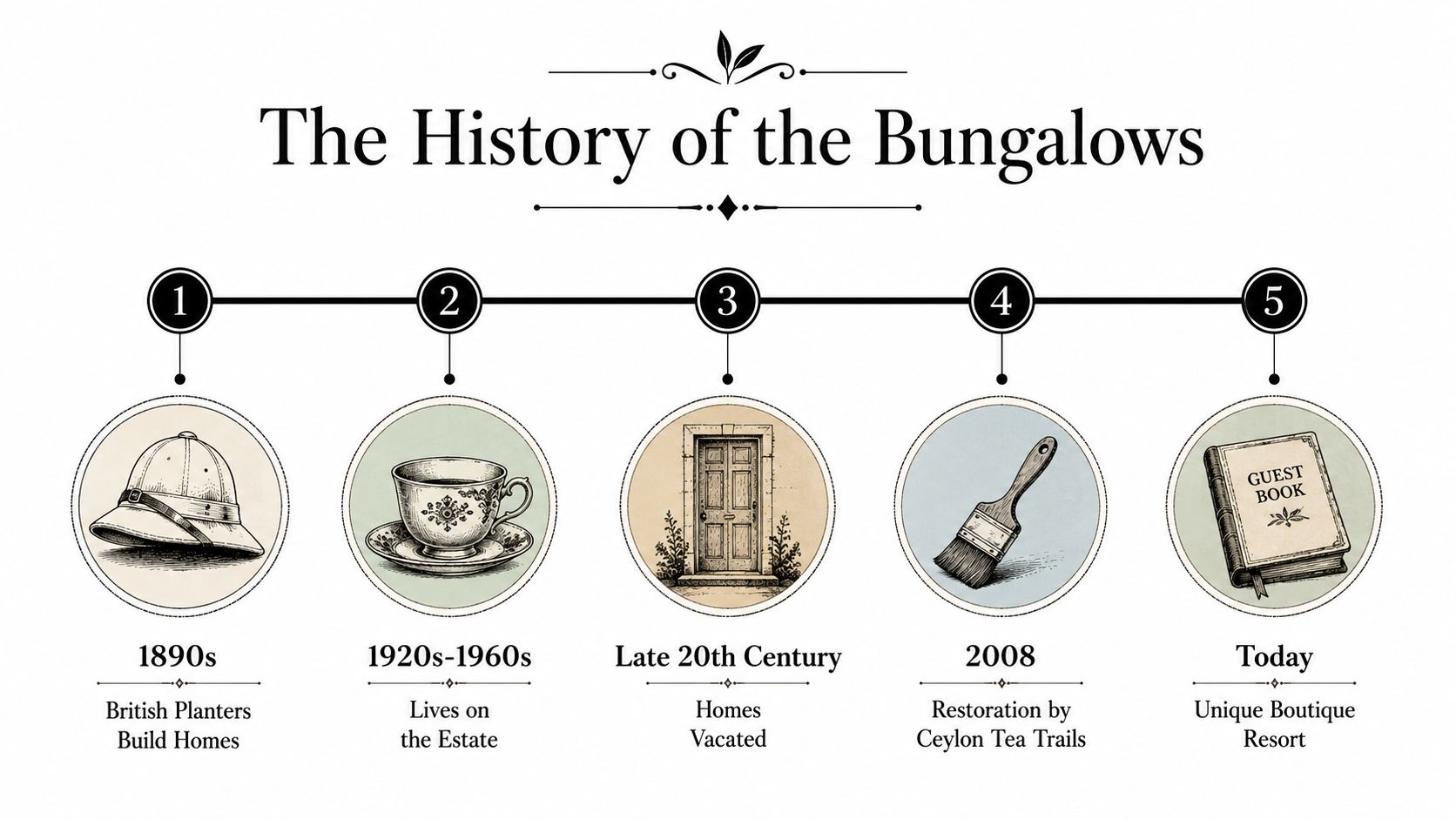
The strongest reason to stay here is simple. These houses were not invented as a resort concept. They came out of the plantation system that built Sri Lanka's tea reputation, and that gives the bungalows their authority, their scale, and their sense of place. You are staying in an occupied hill-country house, not a polished imitation.
The tea era that made the resort possible
Sri Lanka's modern tea story began in 1867, when James Taylor planted the first commercial tea clearing at Loolecondera Estate near Kandy on 20 acres (history of Ceylon Tea Trails). From that small start, the island's tea industry expanded rapidly, moving from 10 kilograms of early exports to 22,900 tonnes over the following three decades.
By 1888, tea had overtaken coffee in production, and by 1890 Taylor was trading with Sir Thomas Lipton, which tied Sri Lankan tea directly to European and U.S. markets. That commercial shift explains the bungalow legacy at Tea Trails. These houses were built for the managers and planters who lived inside that export economy, and they still carry that practical, working-country character.
The heritage here is not decorative. It is a restoration of a real plantation way of life, where the house, the estate, and the factory all belonged to one operating system. That is why the rooms feel grounded rather than staged.
Why the bungalow concept still works
The estates around the bungalows are still productive, so this is not a museum stay. You are sleeping inside tea country that still functions as tea country, with the old logic of plantation life still visible in the layout. The houses were placed for oversight of the fields, quick access to the factory, and a domestic scale that fits the hills.
That is the detail that matters. The bungalows were designed for management, not spectacle, so they have a clarity that newer hill-country hotels usually miss. The architecture stays modest, the setting does the talking, and the tea outside the window is still part of the estate's daily work. If provenance matters to you, this is the stay to book.
Why the Bogawantalawa Belt Produces Exceptional Tea
The tea here tastes different because the land does the heavy lifting. Altitude, climate, and slower growth all shape the cup, and Ceylon Tea Trails sits right in the middle of that system.
Altitude changes the tea, not just the view
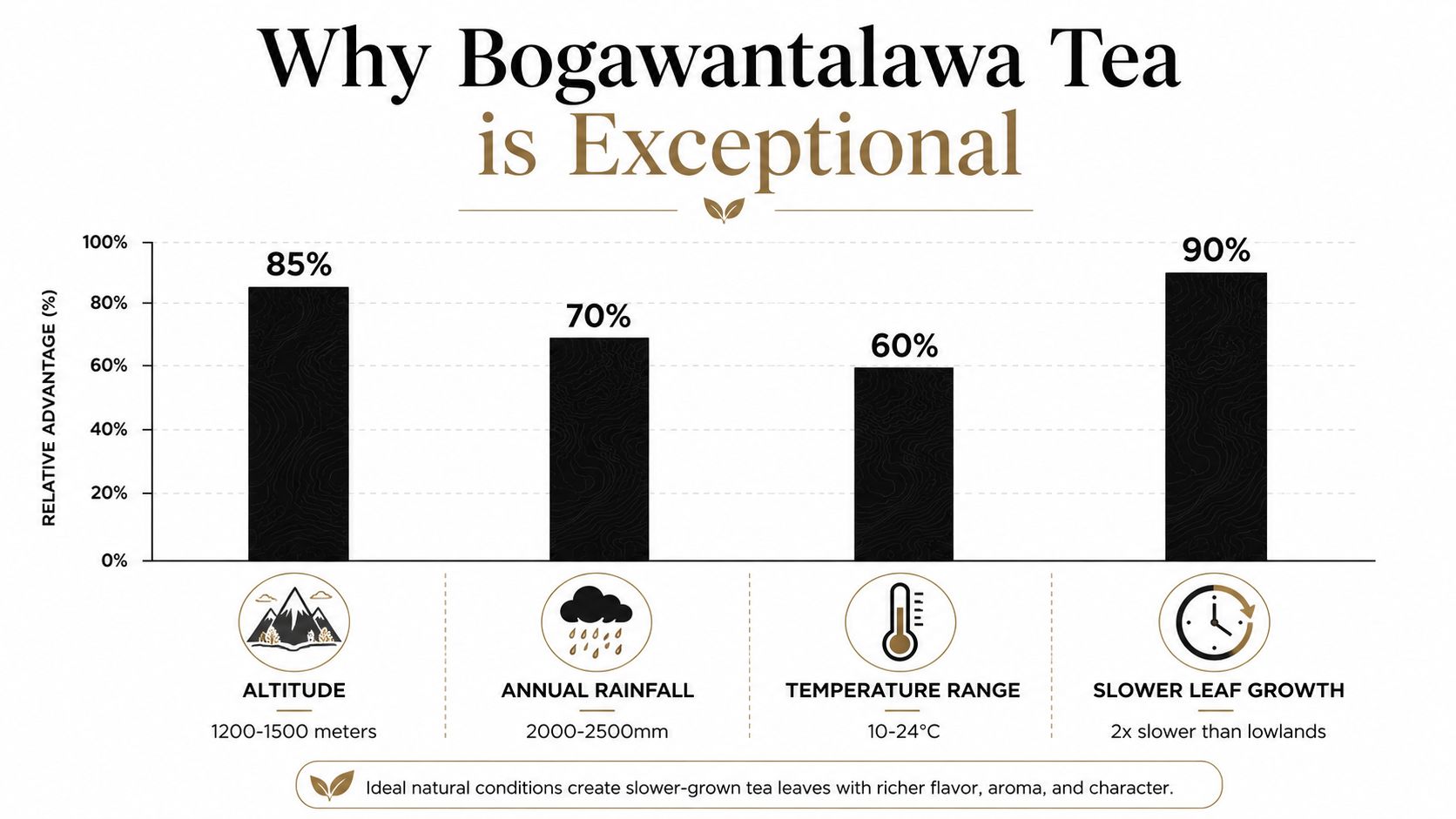
Ceylon Tea Trails sits in the Bogawantalawa and Dickoya belt at roughly 1,250 m to 1,800 m elevation, where cooler highland temperatures and mist reduce heat stress and slow leaf growth (property overview). In tea agronomy, that slower growth is linked to higher aroma concentration and the brisk character associated with premium Ceylon black tea.
You feel that difference in the day. Mornings are cooler, the reservoir looks more dramatic when the mist lifts, and the tea tastes brighter in the bungalow tasting sessions. The cup is not just “tea from Sri Lanka,” it's tea shaped by a very specific highland microclimate.
The broader scale of the industry matters. By 1960, Sri Lanka had more than 200,000 hectares of tea estates producing over 200,000 metric tons of tea, and tea later became one of the country's major foreign-exchange earners, accounting for about 17% of exports, supporting more than 1 million jobs, and contributing roughly $1.3 billion annually to the economy (history of Ceylon Tea). You're not in a symbolic tea zone. You're in one of the country's working economic engines.
What that means for the guest experience
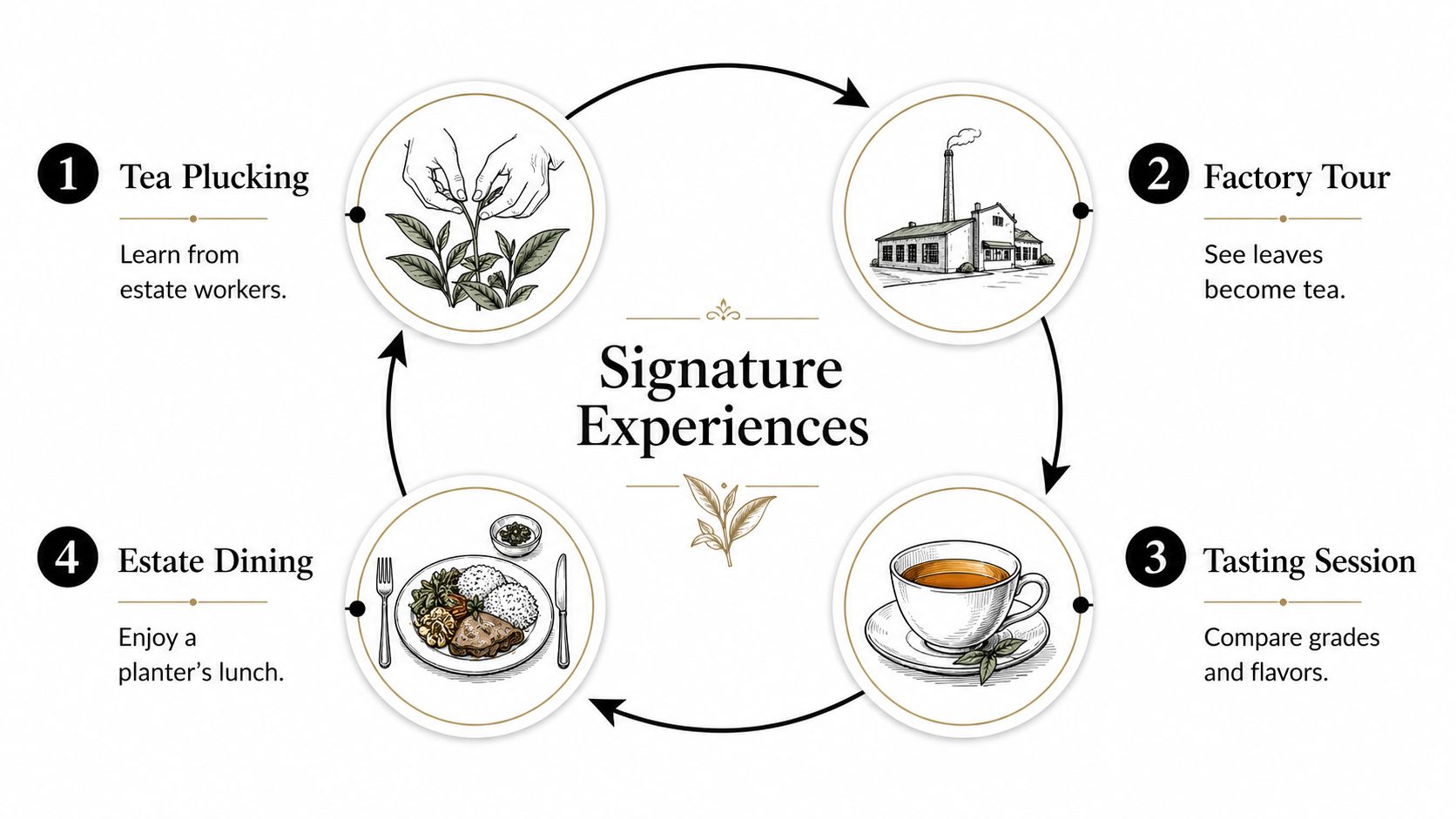
The best tasting sequence is simple. Start with plucking, move to the factory, then taste the grades while the flavor differences are still fresh in your head. If you've only ever had supermarket Ceylon, the category stops being abstract.
Guest rule: if the weather is misty, don't complain. That's part of the system that makes the tea good and the setting memorable.
The surroundings around the bungalows are agricultural, not ornamental. That's exactly why the stay lands so well for serious travelers, because the luxury is built around a real production environment.
Signature Experiences at the Resort
The strongest stays here are not packed. They're sequenced. Do the estate activities in the order the surroundings suggest, and you get a much better experience than if you try to treat the place like a standard activity menu.

A useful way to think about the stay is this. The morning belongs to the fields and factory, midday belongs to lunch and rest, late afternoon belongs to tea, and the evening belongs to private dining and conversation.
Start with plucking and the factory
Tea plucking is the best first activity because it gives context to everything else. Go in the cooler part of the day, wear closed shoes and something you don't mind brushing against leaves, and keep the session short if you're traveling with children or older family members. It's hands-on enough to feel genuine, but not so strenuous that it dominates the day.
The factory visit should follow immediately after. You want to see the leaf move through withering, rolling, oxidation, and firing while the plucking is still fresh in your mind. That sequence makes the process legible instead of abstract.
If you like to keep notes during tastings, a simple digital system is better than paper scraps. I'd use a tool like AI for tea note taking after the tasting so you remember what you preferred rather than relying on memory by dinner.
Build the middle of the day around tea and rest
The guided tea tasting is the hinge of the stay. Compare aroma, briskness, and finish rather than trying to sound technical. A good tasting here should make the estate's tea feel distinct from what you drank at breakfast, because the whole point is to understand why the tea country matters.
Lunch, high tea, and the verandah ritual should be slow. Don't schedule an aggressive workout in the middle of the day just to prove you can. The house style works best when you stay with it, read, nap, and let the butler shape the rhythm.
Use the grounds, not just the rooms
Walks and cycling through the plantation mosaic are best for travelers who want movement without committing to a full trek. Pick a naturalist guide if you care about birds, amphibians, or the broader ecology of the estate. Keep the pace easy, and let the guide set expectations based on the weather and trail surface.
The iconic hill-country train journey is the one exception to the slow pace. Use it as a scenic transfer, not as a hard day trip, and connect it to Ella or Hatton if that fits the larger itinerary. The train gives you a different lens on the environment, but the resort is still the anchor.
Getting There, Best Months, and What to Pack
Tea country logistics are different from the coast. If you get the transfer wrong, the whole stay feels longer than it should. If you get it right, the approach becomes part of the experience instead of the thing you complain about later.
Practical rule: for a short stay, prioritize the cleanest arrival you can afford. Comfort on the way in matters more than saving an hour or two.
Choose the transfer based on how you travel
The resort is about a 4 to 4.5 hour road transfer from Colombo (The Globe and Mail). That's acceptable if you enjoy overland travel and want to see the hill country unfold. It's not ideal if you're arriving after a long international sector and want to preserve energy.
A helicopter or seaplane-style transfer can cut the journey to roughly 30 minutes in reports (The Globe and Mail). For UHNW travelers, that changes the whole shape of the trip. It turns Tea Trails from a long transfer day into a clean arrival, which is exactly how I'd handle it if the stay is only three or four nights.
Book around the weather, not around hope
The driest and most reliable visitation window is generally December to April (The Globe and Mail). June and July, plus October and November, are wetter because of monsoon patterns, and that affects trail conditions and the visibility of Castlereagh Reservoir and the ridgelines (The Globe and Mail).
That doesn't mean you should avoid those months automatically. It does mean you should book flexible arrival timing and lean into estate-based activities rather than long hikes if the weather turns.
Pack for altitude, mist, and uneven paths
Bring layers, because the higher altitude changes the feel of the day. You want something light for daytime, something warmer for misty mornings, and something you can throw on at dinner if the breeze comes up. A compact day bag matters too, especially if you're moving between a Colombo arrival and a hill-country transfer.
For luggage, I'd use something structured and easy to handle, ideally a cabin-sized option from a guide like top-rated travel bags for women if you're building a lighter multi-stop trip.
Use this quick reference before you finalize the stay.
| Attribute | Detail |
|---|---|
| Access from Colombo | About 4 to 4.5 hours by road (The Globe and Mail) |
| Fast transfer option | Helicopter or seaplane-style transfer, roughly 30 minutes in reports (The Globe and Mail) |
| Best window | December to April (The Globe and Mail) |
| Wetter periods | June and July, October and November (The Globe and Mail) |
| Packing priority | Layers, walking shoes, sun protection, and a light day bag |
For private aviation and air travel coordination, I'd keep the option to coordinate air travel on the table if the rest of the itinerary is already moving at a high level.
Pairing Tea Trails with the Rest of Sri Lanka
Tea Trails works best as the calm, polished middle of a wider Sri Lanka circuit. Book it between the island's cultural sites and the coast, and the trip feels intentional rather than crowded.
The itinerary I'd actually book
Start with three nights in the Cultural Triangle at a heritage property, then handle Sigiriya, Polonnaruwa, and Anuradhapura with private guiding. After that, move to Tea Trails for three to four nights of estate immersion, one day on a selected section of the Pekoe Trail or a hill-country train outing, then finish with a beach stay on the south or west coast.
That structure works because each stop has a clear role. The Cultural Triangle delivers history, Tea Trails delivers atmosphere and service, and the coast gives you room to exhale. Anything beyond that starts to dilute the trip.
Add only the extras that sharpen the trip
If wildlife matters, fold in Yala or Wilpattu for a leopard-focused safari, but only if the routing stays clean. If Colombo is part of the flow, a private tea auction visit can be a sharp add-on before departure. A hot-air balloon over the Cultural Triangle at dawn also fits well before tea country if the weather and timing cooperate.
For more ideas on where else to go, see our guide to top places to visit in Sri Lanka for luxury journeys.
The public trail angle matters too. A curated day on the Pekoe Trail gives you the walking version of the tea country without turning the trip into a trekking holiday. That is the right balance for luxury travelers who want depth without roughing it.
The best Sri Lanka itineraries don't over-index on one region. They alternate texture, culture, and recovery.
The result is a trip that feels composed. You get history, tea, and beach in one clean arc, with no wasted nights.
How Haute Black Improves the Stay
Booking Tea Trails directly gets you the property. Booking through Haute Black changes the frame. As a Virtuoso-affiliated agency with preferred partner status at many top hotels, you get the advantages that are difficult to secure on your own, like complimentary upgrades when available, daily breakfast, possible resort credits, early check-in and late check-out, and VIP arrival treatment.
If you use Haute Black membership, the difference becomes even clearer. You get a dedicated advisor, waived planning fees for members, and private coordination that matters when you are stitching together transfers, bungalows, and a multi-region itinerary.
The itinerary I recommend
Start with the stay itself, then build outward. Book the bungalow that fits how you travel, then let Haute Black handle the transfer plan, the timing, and the onward routing into the hill country or the coast. That is the advantage here, not just access, but a properly managed stay that fits the rest of Sri Lanka instead of fighting it.
Private transfers, helicopter upgrades, first-class routing, and private aviation through Haute Jets are handled as part of the larger trip design, not as last-minute afterthoughts. Bespoke experiences, including private tea tastings and butler-curated verandah dining, can be arranged before you arrive, which is exactly how you should approach a property with such a defined rhythm. If you want the experience to feel polished from the first mile, book through Haute Black and let the advisor build the stay around your pace.
My booking advice
Decide these five things before you confirm. Travel window, bungalow preference, helicopter versus road, whether Tea Trails is part of a larger Sri Lanka circuit, and whether you want to activate membership benefits. Get those right and the rest falls into place.
For a traveler who already knows Sri Lanka is the destination, this is the cleanest way to do Ceylon Tea Trails. Use Haute Black to shape the trip around the right season, the right transfer, and the right pairing with the rest of the island. That is the difference between a pleasant tea-country stay and one that feels fully considered.
Explore Our Guides
Signature Experiences