Haute Black Journal
The 9 Essential Landmarks of Indonesia: A Luxury Guide

Marlene Azeez
Director, HauteBlack
View all articles →

# The 9 Essential Landmarks of Indonesia: A Luxury Guide
July 11, 2026
Indonesia rewards precision more than spontaneity. For travelers who expect privacy, exact timing, and privileged access, this archipelago is one of Asia's strongest luxury itineraries. The appeal is obvious. Temple complexes of real historical weight, active volcanic regions, and remote island waters all sit within one country. The challenge is getting between them well.
That is where poor planning shows immediately. A landmark can feel extraordinary or disappointingly public based on one decision: flight timing, road positioning, berth selection, guide quality, or whether access has been arranged before general opening hours. I advise clients to treat Indonesia as an access exercise first and a sightseeing list second. The right sequence preserves energy, protects privacy, and keeps long transfer days from diluting the experience.
Java, Komodo, Bali, Flores, and Raja Ampat each operate on different logistical terms. Some demand helicopter or private air coordination. Others are best handled by chartered yacht, escorted overland transfers, or resort teams with enough local influence to secure quieter arrival windows. This guide focuses on those practical differences. It covers the landmarks that justify the effort, then addresses how to reach them with discretion, comfort, and proper pacing through Haute Black's network.
The goal is not to collect monuments. It is to experience Indonesia at its highest level, with smooth transitions, bespoke support, and access that feels private rather than performative. If the landmark matters, the arrival matters just as much.
1. Borobudur Temple
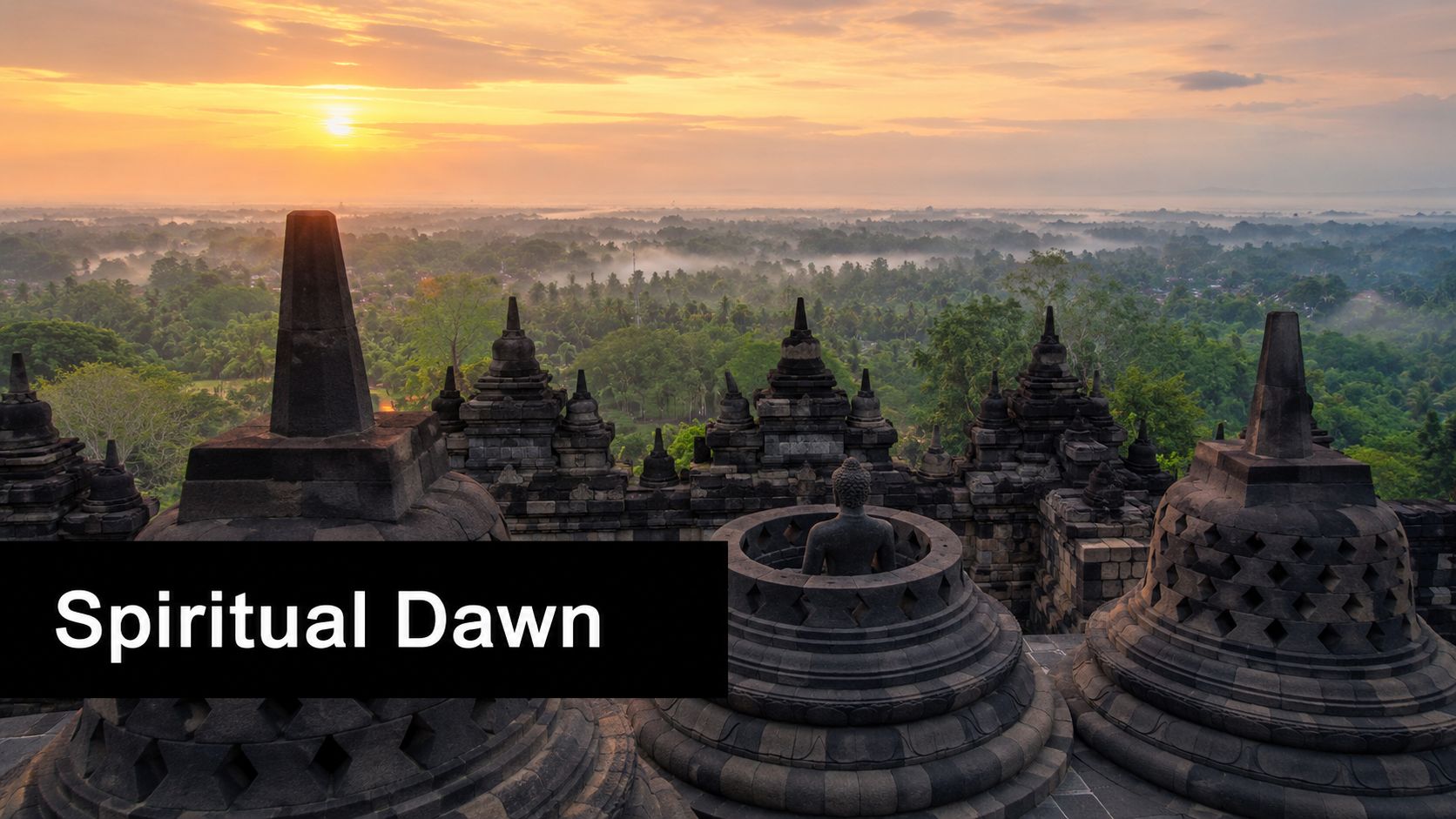
Borobudur belongs at the top of any serious ranking of the landmarks of Indonesia because scale and symbolism meet in one place. It is a 9th-century Mahayana Buddhist monument with 504 Buddha statues and a central dome measuring 34 meters in diameter, and it is recognized as the world's largest Buddhist temple. That scale is impressive on paper. In person, what matters more is how you approach it.
The standard mistake is arriving after breakfast, moving with the main flow, and treating the temple as a one-stop photo stop. That works for a casual trip. It doesn't work for clients who want stillness, interpretation, and strong visual conditions. The right play is a tightly timed pre-dawn departure, a private guide briefed in advance, and a driver held on standby so the transition back to your resort remains smooth.
How to do Borobudur well
A polished Borobudur visit starts the night before. I prefer to pair the temple with a nearby luxury base that can coordinate early access logistics, temple-ready breakfast packs, and a guide who can explain relief panels without turning the experience into a lecture. The best mornings feel effortless, but they're choreographed carefully.
- Book early guidance: Reserve a private cultural guide at least two days in advance so you aren't assigned whoever is available.
- Pair nearby sites intelligently: Add Mendut and Pawon if you want a fuller sacred area rather than a single headline stop.
- Protect the light: Go early. Late morning flattens both mood and photography.
Practical rule: Borobudur is at its best when you give it silence, not speed.
For Haute Black clients, the premium version includes bespoke cultural dinners at partner properties, photography-led mornings, and a deeper archaeological lens rather than a surface-level temple walk. That's what separates a famous monument from a memorable encounter.
2. Komodo National Park
Komodo rewards precision and exposes lazy planning immediately. This is one of the few Indonesian landmarks where the difference between a good visit and an exceptional one comes down almost entirely to access. Arrive by shared speedboat on a tight schedule, and the park feels crowded, hot, and transactional. Arrive by private charter with the right permits, ranger coordination, and a captain who knows where to anchor for privacy, and Komodo becomes one of the most refined wilderness experiences in the region.
I rarely recommend a same-day Bali run for clients who value comfort. It burns too much time in transit and leaves no margin for weather, park traffic, or the slower tempo that makes the area special. The stronger plan is to enter through Labuan Bajo by private air arrangement, board a well-crewed yacht, and treat the park as a short expedition rather than a checklist stop. Haute Black clients usually get the best results from two to four nights on the water, with island sequencing built around light, tides, and the ranger schedule rather than convenience alone.
How to do Komodo properly
The best Komodo programs combine serious field logistics with polished hospitality. That means a naturalist or top-tier local guide on dragon walks, a vessel with credible safety standards, and service that still feels measured after a long morning ashore. Privacy matters here, but so does discipline. Rangers set the tone on Komodo and Rinca, and any operator worth using respects that structure.
I tailor the route to the traveler.
- For couples: Use a private yacht with a strong deck setup, quiet moorings, and sunrise beach landings arranged away from the busiest traffic.
- For families: Slow the pace, shorten the walks, and build in shaded recovery time, cold towels, child-friendly meals, and clear medical contingencies.
- For divers and expedition travelers: Prioritize marine time, with reef planning based on current strength, visibility, and experience level rather than ambition.
Water access defines the experience as much as the dragons do. Padar's viewpoints, Pink Beach, manta sites, and the calmer anchorages all require careful timing if you want beauty without the crush of day-boat movement. This is also one of the clearest examples of how Haute Black's luxury safari planning applies beyond Africa. The same standards matter. Expert tracking, controlled access, strong outfitting, and operators who understand that exclusivity is built through planning, not branding.
Families should still keep field basics in view, especially with younger children moving between tenders, trails, and open decks. The practical habits in Hiccapop's national park parenting advice are sensible, but in Komodo I would add private shade setups, refrigerated drinks, spare clothing on every landing, and pre-briefed evacuation protocols.
Komodo works best as a private expedition with luxury standards, not a rushed island hop dressed up as one.
3. Prambanan Temple
Prambanan has a different energy from Borobudur. It is vertical, dramatic, and sharper in profile. The compound is a cornerstone for travelers who want Hindu architecture and Yogyakarta's courtly cultural atmosphere in the same movement.
The common error is treating Prambanan as a quick add-on after Borobudur. That shortchanges it. Prambanan deserves its own time window, ideally later in the day when the light turns more sculptural and the site feels less exposed. Evening visits are especially effective for clients who care about atmosphere over checklist touring.
Why Prambanan rewards patience
This is a place for detail. Intricate stone reliefs, strong silhouettes, and a more theatrical visual rhythm all come forward when you're not hurrying. It's also one of the easier landmarks of Indonesia to enhance through programming. Think private cultural interpretation, dinner with temple views, or a guide who understands cosmology rather than reciting memorized dates.
I usually recommend one of three approaches depending on the traveler:
- For couples: Schedule an evening visit followed by a private dinner overlooking the illuminated complex.
- For culture-led travelers: Bring in a specialist guide with real command of Hindu symbolism and Javanese history.
- For photographers: Return twice if timing allows, once for soft daylight and once for night illumination.
Prambanan works beautifully when linked to Yogyakarta's more refined side. Private transfers, strong hotel partnerships, and a guide who knows when to speak and when to leave space make all the difference. The site has grandeur. Your logistics should match it.
4. Raja Ampat Islands
Raja Ampat is the anti-rush destination. You go for remoteness, marine beauty, and the feeling that distance itself is part of the luxury. It doesn't belong on a hurried Indonesia sampler. It belongs on an itinerary built around scarcity.
The practical challenge is access. That's why this destination filters out casual planners. Remote air connections, vessel quality, weather windows, and dive capability all need to line up. When they do, Raja Ampat becomes one of the most compelling landmarks of Indonesia for travelers who value privacy as much as scenery.
Access is the luxury
The strongest Raja Ampat journeys are vessel-led or anchored by a high-touch eco-resort. In both cases, you need route planning that protects your energy. Don't stack too many transport segments into a single day. Don't underestimate the value of a private charter connection if your schedule is tight. And don't choose a boat based only on cabin aesthetics. Crew quality and operational discipline matter more.
This is also where private island thinking becomes useful, especially for travelers who prefer seclusion over social resort life. Haute Black's perspective on private island resorts and remote luxury stays is relevant here because Raja Ampat is at its best when your environment feels intentionally limited rather than publicly accessible.
- Prioritize the operator: The right liveaboard team can make a remote journey feel smooth. The wrong one will turn logistics into the story.
- Match the itinerary to the traveler: Divers, snorkelers, and non-diving companions need different pacing.
- Build recovery time: Add a soft landing night before and after remote marine travel when possible.
Raja Ampat isn't for everyone. It is for travelers who understand that exceptional beauty often asks for more planning, more patience, and better infrastructure behind the scenes.
5. Mount Bromo
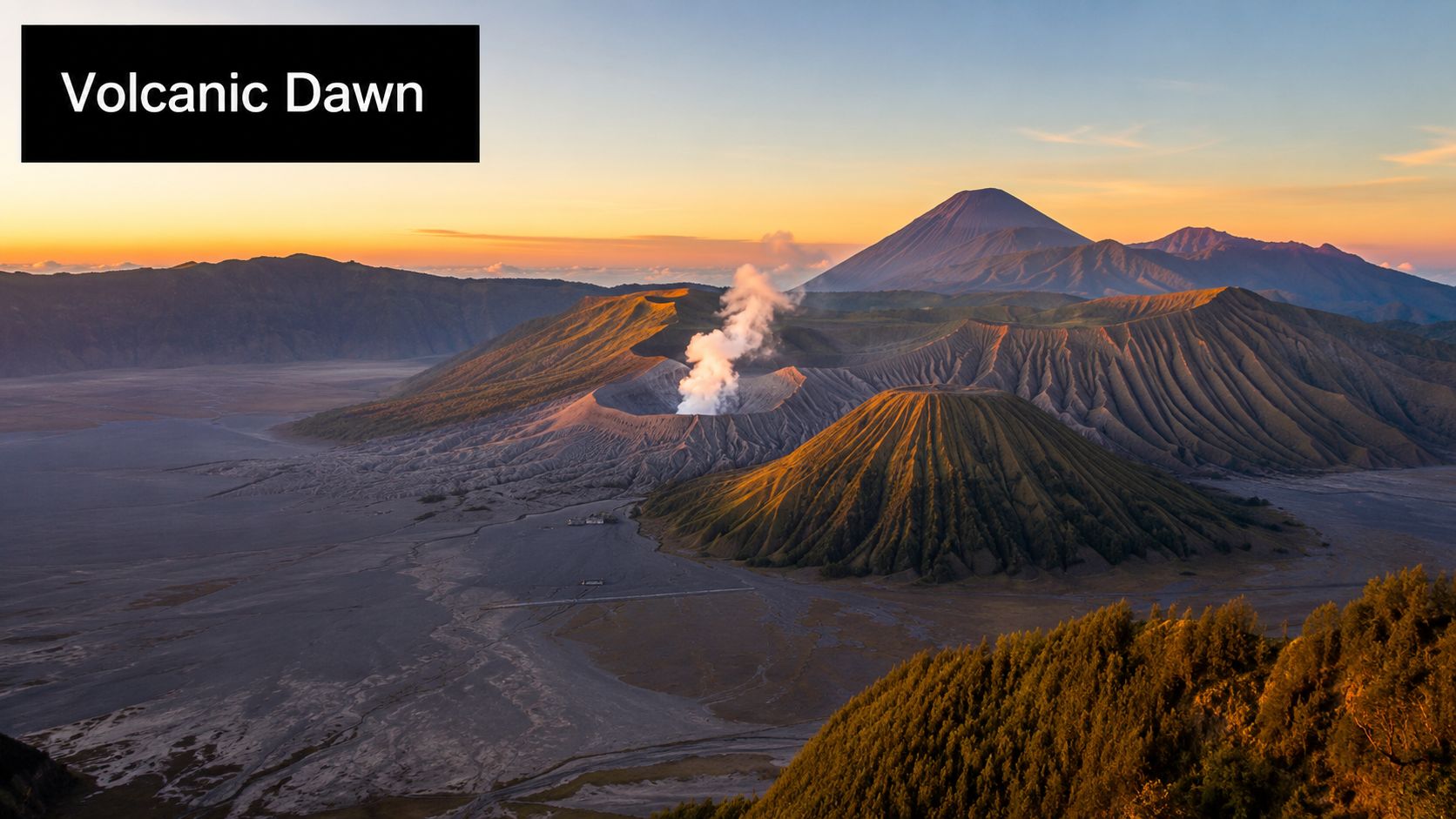
Mount Bromo is one of the few Indonesian icons that can feel spectacular or surprisingly mediocre, depending almost entirely on access design. The standard experience is public, congested, and operationally clumsy. The refined version requires tighter timing, better vehicles, and local coordination that protects privacy from the moment you leave your hotel.
Bromo's appeal is visual and atmospheric. You come for the caldera at first light, the shifting cloud cover, the ash plain, and the sightline toward Semeru. What many travelers underestimate is how quickly the magic disappears once you are parked in a long line of jeeps with hundreds of other visitors.
For luxury clients, I treat Bromo as a logistics exercise first and a sightseeing stop second. The goal is not merely to reach a viewpoint. The goal is to control departure timing, choose the right approach, and secure a guide and driver who can adapt if weather, traffic, or visibility changes an hour before sunrise. Through a well-structured network, that can mean private air arrival into East Java, a discreet overland transfer, premium lodge positioning, and access to quieter viewing points that avoid the main crush.
Get the timing right
The common mistake is assuming every sunrise plan is interchangeable. It is not. A weak plan gets you to Bromo at the same moment as everyone else. A strong one stages you properly, keeps the vehicle comfortable, and gives your team options if conditions shift.
- Start with the right base: Stay close enough to avoid an exhausting transfer, but choose a property with service standards that can handle very early departures well.
- Use a dedicated 4x4 and driver: Shared jeep arrangements save money and dilute the experience immediately.
- Book a guide with judgment: Local knowledge matters more than commentary. The best guides know which viewpoint works best in specific weather conditions.
- Prepare for exposure: Temperatures can be sharp before dawn, and volcanic dust is real. Cashmere alone is not a strategy. Bring proper outerwear and face protection.
Advisor's note: Bromo rewards precision, not spontaneity.
The strongest itineraries also build in recovery. A pre-dawn wake-up call, altitude, cold air, and dusty conditions can feel draining if the rest of the day is overpacked. I usually recommend a late breakfast back at the lodge, followed by a slower afternoon or onward transfer handled privately. That pacing keeps Bromo in the memory as a privilege, not a logistical chore.
Done well, Mount Bromo delivers one of Indonesia's most cinematic mornings. Done poorly, it feels like queue management at altitude.
6. Gili Islands
The Gili Islands offer a different kind of landmark value. They are lighter, slower, and more leisure-driven than the volcanic and temple sites. If your Indonesia trip needs a decompression chapter after cultural touring or expedition travel, the Gilis do that well.
Their appeal isn't monumentality. It's rhythm. Car-free movement, turquoise water, easy marine access, and villas that suit travelers who want their days to feel open rather than programmed. That said, not all three islands serve the same traveler.
Choosing the right Gili
Gili Trawangan is livelier. Gili Meno is better for seclusion. Gili Air sits comfortably in between. The mistake is choosing based on photos alone. I always match the island to the traveler's social appetite, not just the suite category.
For a refined stay, the priorities are simple:
- Pick the island before the hotel: Location defines the mood more than interiors do.
- Use private boat transfers: Shared transfers break the spell quickly.
- Program the water well: A private snorkel boat, sunset catamaran, or guided reef outing will do more for the stay than overloading dinners and spa appointments.
The Gilis are particularly effective for honeymooners and couples who want bare-foot ease without sacrificing service. They also work for families if transfers are well managed and villa setups are generous. Keep expectations aligned, though. This is understated luxury, not urban polish.
7. Sumatra's Lake Toba
Lake Toba has gravitas. It feels expansive and inward at the same time, which is rare. The scenery softens the pace of an Indonesian journey and gives cultural travelers a chance to engage with North Sumatra beyond the usual quick-stop logic.
What makes Toba compelling in a luxury context is perspective. This isn't a destination you do for nightlife or status signaling. You do it for scenery, cooler air, and a more reflective style of travel. It suits clients who like their landmark experiences to feel grounded and culturally textured.
Why Lake Toba works for private travelers
A strong Toba itinerary uses space well. Helicopter arrivals can transform the sense of scale. A carefully chosen lodge or resort on or near Samosir allows for privacy, while Batak cultural experiences add the local dimension that prevents the journey from becoming merely scenic.
I'd structure it around a few deliberate anchors:
- Base yourself well: Lake views matter, but so do quiet grounds and easy access to cultural visits.
- Use specialist local guides: Batak interpretation should be intelligent and respectful, not theatrical.
- Pair it wisely: Toba combines naturally with a broader Sumatra trip for travelers who want a more unusual Indonesian route.
This is one of the landmarks of Indonesia that rewards travelers who don't need every destination to perform loudly. If you want room, calm, and a sense of place that hasn't been over-polished for mainstream tourism, Toba delivers.
8. Bali's Tegallalang Rice Terraces
Tegallalang is often underestimated because it looks so accessible. In reality, it requires careful timing to feel special. Go at the wrong hour and you'll spend more energy navigating traffic and crowds than appreciating the scenery. Go early, with the right access point and a proper follow-on plan, and it becomes one of Bali's most elegant short experiences.
Its appeal lies in texture and tradition. The terraces read beautifully in changing light, and they work especially well as part of a larger Ubud day built around private dining, wellness, or low-key cultural visits.
Turn a simple stop into a polished experience
Tegallalang is not a half-day destination by itself for seasoned luxury travelers. It's a component. The move is to secure a pre-dawn or early-morning window, bring a guide or photographer who knows the quieter angles, and then continue to a private breakfast, estate lunch, or spa program nearby.
For travelers shaping a more complete Bali plan, Haute Black's guide to luxury experiences in Bali complements this stop well because Tegallalang works best when folded into a full day with coherent pacing.
- Go early: This is essential for finding serenity.
- Book dining privately: A meal overlooking the green folds of the terraces can transform a brief visit into a full memory.
- Avoid overprogramming: One scenic stop, one meal, one adjacent experience is enough.
Some places don't need more access. They need better timing. Tegallalang is one of them.
9. Flores' Kelimutu Crater Lakes
Kelimutu is one of the most distinctive volcanic landmarks of Indonesia because it offers color, altitude, and spiritual resonance in one compact experience. Flores itself already attracts travelers who lean toward the more exploratory side of luxury. Kelimutu gives that journey a visual centerpiece.
It's especially strong for clients who like scenic photography, unusual geology, and travel that still feels slightly off the obvious path. You can approach it by road and hiking, or enhance the experience with helicopter routing if your itinerary is already charter-based through eastern Indonesia.
Best approached with precision
Kelimutu depends on light and weather more than many travelers realize. Morning visibility matters. So does local handling on the ground. The best experiences are simple in concept but precise in execution: early wake-up, clear route planning, and enough schedule flexibility to avoid forcing the visit under poor conditions.
Here's a useful visual preview before committing to route design:
Kelimutu also pairs naturally with a wider Flores circuit and, for travelers with time, a marine extension onward to Komodo. That combination works especially well for guests who want one itinerary to hold both volcanic terrain and yacht-led island access.
- Fly private if time matters: Flores rewards charter flexibility more than fixed schedule rigidity.
- Keep the morning protected: Don't crowd the day before or after.
- Use it as part of a narrative: Kelimutu shines most when it's part of a thoughtfully sequenced eastern Indonesia journey.
Top 9 Indonesian Landmarks Comparison
The right Indonesian landmark is not just the one with the strongest visuals. It is the one that fits the level of access, privacy, and operational precision you want from the trip. For Haute Black clients, the primary distinction is rarely beauty alone. It is how each stop performs once you factor in private aviation, charter feasibility, after-hours access, yacht positioning, and tolerance for early starts or remote infrastructure.
| Destination | 🔄 Complexity (logistics & access) | ⚡ Resource requirements (cost & gear) | ⭐ Expected outcomes (experience quality) | 💡 Ideal use cases | 📊 Key advantages |
|---|---|---|---|---|---|
| Borobudur Temple | Moderate, timed entry, multi-level walking | Moderate, private guide, hotel concierge, sunrise permits | ⭐⭐⭐⭐, deep cultural and photographic value | Cultural tours, sunrise photography, VIP temple access | UNESCO status, extensive reliefs, private-access options |
| Komodo National Park | High, boat transfers, permits, seasonal windows | High, yacht charters, dive equipment, expert guides | ⭐⭐⭐⭐, exceptional wildlife and diving encounters | Wildlife photography, private yacht expeditions, diving safaris | Endemic Komodo dragons, world-class dive sites, private charters |
| Prambanan Temple | Moderate, evening scheduling, restoration constraints | Moderate, guides, lighting coordination, hotel partnerships | ⭐⭐⭐⭐, outstanding evening illumination and architecture | Evening cultural programs, architectural study, photography | Tall central tower, restored temples, illuminated night displays |
| Raja Ampat Islands | Very high, remote access, multi-leg travel | Very high, private aircraft, liveaboards, dive support | ⭐⭐⭐⭐⭐, world-leading marine biodiversity and serious privacy | Elite diving expeditions, conservation-focused luxury trips | Rich coral ecosystems, pristine reefs, limited-access feel |
| Mount Bromo | Moderate, early starts, some hiking, volcanic restrictions | Moderate, jeep transfers, guides, mountain lodges | ⭐⭐⭐⭐, dramatic sunrise landscapes and cultural immersion | Sunrise photography, accessible volcano visits, cultural experiences | Striking caldera, Tengger community interactions, panoramic views |
| Gili Islands | Low–Moderate, short boat rides, car-free logistics | Moderate, private villas, boats, water-sports equipment | ⭐⭐⭐, relaxed luxury, excellent near-shore snorkeling | Romantic getaways, family resorts, snorkeling excursions | Car-free tranquility, shore-access reefs, upscale island resorts |
| Sumatra's Lake Toba | High, long transfers, remote planning | High, helicopter options, lodge bookings, cultural programming | ⭐⭐⭐, cool-climate relaxation and cultural depth | Wellness retreats, Batak cultural immersion, geothermal spas | Largest volcanic lake, unique Batak culture, cool mountain climate |
| Bali's Tegallalang Rice Terraces | Low, easy Ubud access but high crowds | Low–Moderate, guides, photographers, private dining | ⭐⭐⭐, iconic landscapes and accessible cultural scenes | Photography sessions, private dining, short cultural excursions | Traditional subak system, proximity to Ubud luxury resorts |
| Flores' Kelimutu Crater Lakes | Moderate–High, early/heli access, remote roads | High, helicopter charters, specialist guides, limited lodging | ⭐⭐⭐⭐, unique color-changing lakes and photography | Geological and photography trips, combined Eastern Indonesia itineraries | Distinct tri-colored lakes, spiritual significance, lower crowding |
A few patterns matter immediately.
Borobudur and Prambanan suit travelers who want high cultural return without committing to expedition-level complexity. Komodo and Raja Ampat reward clients willing to spend more time and capital on routing. Bromo and Kelimutu deliver strong visual drama, but both depend heavily on weather, timing, and disciplined overnight planning. Tegallalang and the Gilis are easier additions, though neither carries the same sense of privileged access unless handled very selectively.
For privacy-first travelers, Raja Ampat, Komodo, and parts of Flores usually justify the effort. For clients who prefer polished ground handling with less operational exposure, Java and selected Bali experiences tend to perform better. Lake Toba sits in an interesting middle ground. It offers scale, atmosphere, and cultural substance, but only if you accept longer transfer chains or choose helicopter support to keep the journey comfortable.
The practical decision is simple. Choose one or two anchor experiences that merit premium logistics, then let the rest of the itinerary support recovery, pacing, and contrast. That is how these landmarks shift from a standard sightseeing list to a properly customized Indonesian journey.
Orchestrating Your Indonesian Journey
The difference between an ordinary Indonesia itinerary and an exceptional one is logistics. In this country, access defines the experience. A sunrise entry at Borobudur, a same-day transition from Java to a private yacht in Komodo, or a helicopter arrival that avoids a punishing overland transfer can turn a complicated routing plan into a trip that feels polished from start to finish.
Indonesia rewards ambition, but it also punishes casual planning. Distances are long, airport standards vary, weather can close options with little notice, and the gap between what is technically possible and what is comfortable is wide. For high-net-worth travelers, the right question is rarely which landmark to see. It is how to arrive privately, at the right hour, with the right escort, and without wasting energy on avoidable friction.
That is why the best itineraries are built around transitions first. I usually start with access windows, aircraft availability, marina logistics, and protected downtime, then place the headline experiences around that framework. The result is better pacing and better use of premium spend. There is little value in securing a spectacular suite in Bali if the route into it requires an exhausting chain of commercial hops, delayed baggage, and a three-hour road transfer.
Indonesia also rewards selectivity. Not every stop deserves top-tier transport spend. Borobudur and Prambanan pair well with strong ground handling and carefully timed private guiding. Komodo and Raja Ampat often justify charter aviation and yacht-based planning because the privacy dividend is substantial. Lake Toba, Bromo, and Kelimutu require honest conversations about comfort thresholds, start times, and backup plans if conditions shift.
Conservation matters here as well. These places remain compelling because they are ecologically and culturally sensitive, so operator choice has real consequences. Better journeys rely on vetted boats, measured visitor pacing, guides who understand local protocol, and partners who reduce unnecessary traffic rather than adding to it.
Recent heritage recognition in Yogyakarta is another reminder that Indonesia is still evolving as a destination. The classic icons remain strong, but the country's cultural story is broader than the usual checklist, and the most rewarding itineraries leave room for private interpretation, not just attendance.
Haute Black approaches Indonesia with that level of precision. Private aviation, helicopter transfers, priority airport handling, villa and yacht buyouts, after-hours or low-traffic access planning, and discreet guide networks all matter more here than in simpler one-island destinations. The objective is not merely to reserve the finest room. It is to coordinate every arrival, crossing, and encounter so the trip feels deliberate, calm, and distinctly privileged.
For travelers who want Indonesia at its most refined, Haute Black designs routes that change how these landmarks are experienced. Temple visits can be timed around privacy rather than crowds. Komodo can be explored from a fully staffed yacht instead of rushed day boats. Multi-island journeys can run by private jet, helicopter, and first-class support where commercial schedules would otherwise erode the trip. That is how a list of famous places becomes a properly orchestrated Indonesian journey.
Explore Our Guides
Signature Experiences