Haute Black Journal
Sao Tome and Principe Travel: The Ultimate Luxury Guide

Marlene Azeez
Director, HauteBlack
View all articles →
# Sao Tome and Principe Travel: The Ultimate Luxury Guide
June 19, 2026
The most surprising thing about São Tomé and Príncipe isn't how remote it feels. It's how little traffic it receives relative to the quality of the experience. The country recorded 8,000 international tourist arrivals in 2010 and 34,900 in 2019, according to the U.S. International Trade Administration's tourism overview. In luxury terms, that matters. Low volume changes everything: beaches stay quiet, guides aren't cycling through bus groups, and privacy comes from geography rather than velvet ropes.
That said, remoteness only feels glamorous when the logistics are solved. Otherwise, it's just friction in a beautiful setting.
São Tomé and Príncipe rewards travelers who want space, unspoiled natural beauty, and a sense that the world has not yet been over-processed for tourism. The islands carry African, Portuguese, and Creole influences at once. You feel it in the architecture, in the cadence of daily life, and in the way old cocoa estates still shape the visual identity of the country. Volcanic peaks rise abruptly from rainforest. Roads can turn from easy coastal cruising to rougher, slower inland segments. Service can be warm and generous, but it isn't built around instant gratification unless someone has orchestrated it properly in advance.
That's why Sao Tome and Principe travel works best as a carefully engineered escape. The islands are a superb antidote to performative luxury. Time moves differently here. App-based convenience does not run the show. A strong trip plan does.
An Introduction to The Last Eden
Luxury travelers often assume exclusivity comes from price. In São Tomé and Príncipe, it comes from scarcity, access, and restraint.
The archipelago still feels like a place discovered through referral rather than algorithm. The pace is famously leve leve, slowly, gently, without hurry. For the right traveler, that's not an inconvenience. It's the point. The islands offer the kind of disconnection that many polished resort destinations promise and very few deliver.
Why the destination feels different
These islands don't overwhelm with spectacle every hour. They accumulate power gradually. A black-sand beach at the edge of thick forest. A colonial roça half reclaimed by tropical growth. A road that bends and suddenly reveals a volcanic ridge in cloud. The appeal is composure, not excess.
Culturally, the mix is part of the draw. Portuguese heritage is visible, but the destination doesn't read as European outpost. It feels islanded, Creole, equatorial, and authentically local. That matters because many travelers looking at Sao Tome and Principe travel want more than a polished villa and a view. They want a place with its own internal rhythm.
São Tomé and Príncipe is one of the few destinations where slowing down doesn't feel like settling. It feels like access to a better version of luxury.
Who should come, and who shouldn't
This destination suits travelers who value privacy, nature, and highly curated service in a setting that remains intentionally light on mass infrastructure. It does not suit anyone who expects every whim to be solved on the spot by a dense local service economy.
A strong fit looks like this:
- Couples who want distance from the obvious and prefer rainforest, cocoa estates, and quiet beaches over social-scene resort circuits.
- Families who travel with planning discipline and understand that smooth experiences in remote places are built before departure.
- Conservation-minded travelers who care where their spending lands.
The economic case for thoughtful travel is real. Tourism revenue reached USD 47.52 million in 2022, and the sector accounted for 11% of GDP, according to Worlddata's São Tomé and Príncipe tourism profile. In a country this small, a well-structured high-value journey does more than buy comfort. It supports a fragile tourism economy and the natural features that make the destination worth visiting.
Decoding Leve Leve The Allure of the Chocolate Islands
The phrase leve leve gets repeated in nearly every conversation about the islands. Most guides treat it as a slogan. In practice, it's a filter. Travelers who understand it tend to love São Tomé and Príncipe. Travelers who fight it usually leave admiring the scenery but frustrated by the tempo.
Slowness as a luxury asset
On these islands, the premium isn't velocity. It's the absence of pressure. Breakfast stretches. Roads invite detours. Lunch can arrive on island time. If your life is run by assistants, alerts, and hard starts, that shift can feel more luxurious than another generic oceanfront suite.
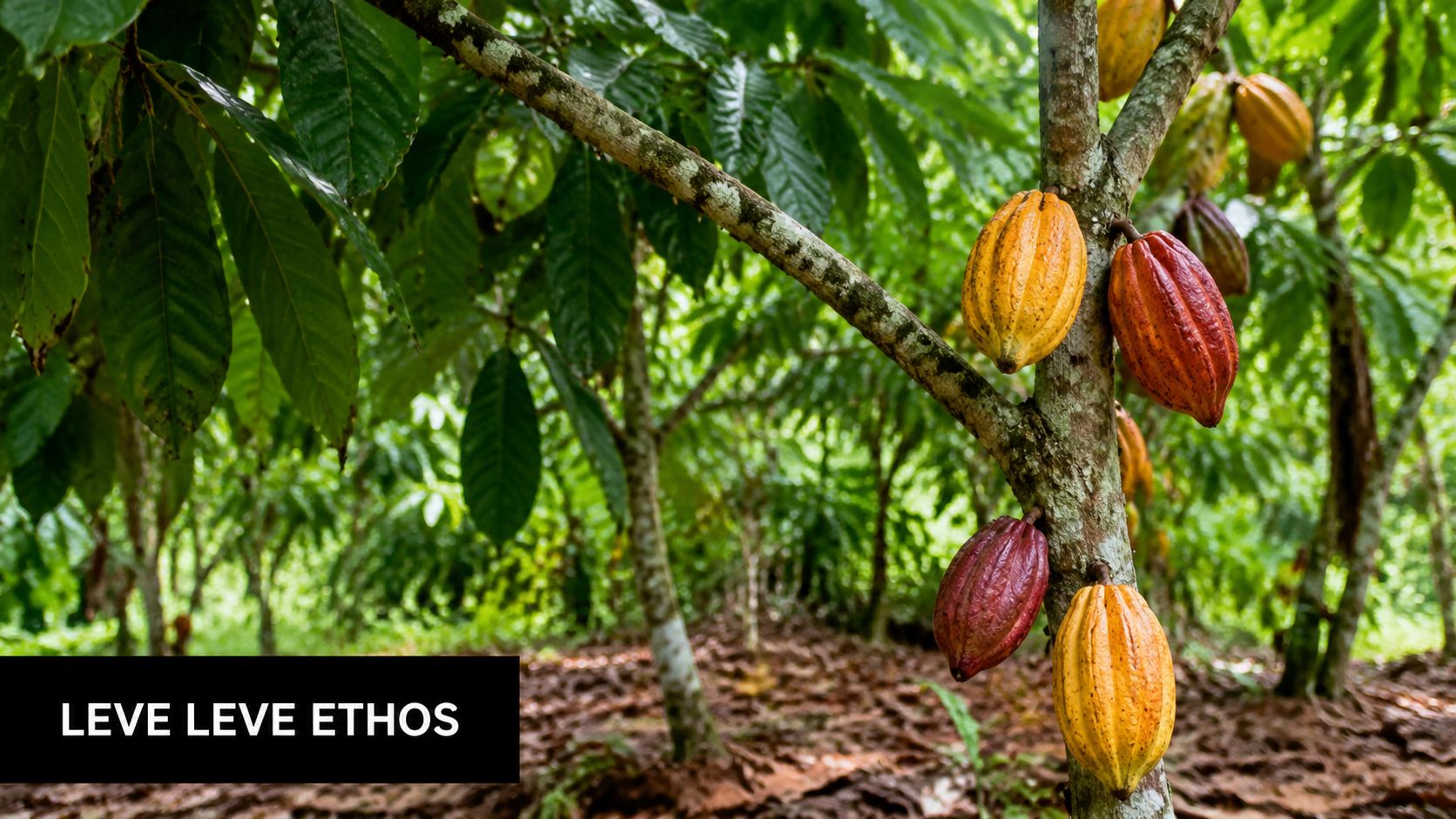
The sensory cues are what stay with people. The smell of fermenting and drying cocoa near old plantations. Sea air mixed with wet earth after a brief shower. The soundscape of insects, birds, and surf replacing traffic and notifications. This is one of the rare destinations where silence has texture.
The “Chocolate Islands” identity is not branding theater. Cocoa history is stitched into the built environment through the roças, the plantation estates that still define many of the country's most evocative settings. Some are atmospheric ruins. Some have been adapted. All of them remind you that São Tomé and Príncipe offers beauty with historical weight.
What luxury looks like here
Conventional luxury often means abundance on demand. Here, the stronger model is selective abundance. You want a small number of experiences executed beautifully: a private tasting in a restored estate, a guided rainforest walk timed around weather and trail condition, lunch by the sea with the right wine already chilled, a transfer that arrives when it says it will.
That's also why conservation matters in the luxury conversation. In São Tomé and Príncipe, high-value tourism isn't separate from preservation. It can reinforce it when itineraries are built with intention, local partnerships, and realistic expectations around place.
A visual sense of the destination helps. This short film captures the atmosphere well:
What works, what doesn't
A few practical truths shape the experience more than brochures admit.
- What works is leaning into the islands' natural strengths. Think guided nature, cocoa heritage, sea-based excursions, and long stays in a small number of properties.
- What doesn't is trying to over-schedule. These islands punish rigid timing and reward breathing room.
- What works is choosing hosts and properties that can bridge remoteness with real service.
- What doesn't is assuming “eco” automatically means polished operations.
The best Sao Tome and Principe travel plans don't chase variety for its own sake. They create ease in a place that values rhythm over speed.
Seamless Arrival Private and Commercial Logistics
Arrival is where many São Tomé and Príncipe trips either settle into elegance or start shedding time, patience, and control. This is not a destination where you wing it at the curb.
Commercial routing done properly
Most commercial itineraries are built through a major gateway and then tightened carefully around baggage, connection tolerance, and onward transfer timing. The key is to treat the final approach as fragile. Don't schedule critical commitments immediately after landing, and don't assume airport-side improvisation will save a weak plan.
For clients flying commercially, I prefer to build the arrival day around three principles:
1. Protect the long-haul segment first. The journey to São Tomé is already niche. Recovery options are narrower than in larger markets.
2. Use meet-and-assist on arrival when possible. The value isn't glamour. It's speed through small frictions.
3. Pre-book the road transfer and hotel communication. A good property should know exactly when you land and who is receiving you.
If the trip continues to Príncipe, the handoff becomes even more important. Tight island connections look efficient on paper and stressful on the ground. In remote destinations, “reasonable buffer” almost always beats “perfectly optimized.”
Private aviation and the real luxury standard
Private aviation can remove much of the uncertainty, but only if the ground handling, permissions, baggage management, and onward island transfer have all been addressed in advance. Otherwise, you've only moved the complexity into a more expensive lane.
For clients considering a jet itinerary, the question isn't limited to whether the aircraft can land. The question is whether the entire chain is coherent: permissions, handling, customs flow, crew coordination, and next-step transfer to lodge or inter-island aircraft. That's where a specialist matters. If you're reviewing options for private air travel support, treat it as a logistics exercise first and a luxury upgrade second.
Practical rule: In São Tomé and Príncipe, premium air planning only counts if the ground sequence is equally strong.
The cash issue that catches people off guard
The islands require cash-first trip planning. Card acceptance is limited outside top properties, foreign-currency ATMs aren't available, and wider travel should be planned with liquidity in hand, as detailed in this practical pre-trip planning guide for São Tomé and Príncipe. For a luxury traveler, that affects more than tips. It shapes guides, drivers, incidental purchases, and backup flexibility.
I treat cash planning like a core arrival task, not an afterthought. That means calculating not only expected spend, but contingency spend for weather changes, delayed transfers, or itinerary pivots.
A clean pre-departure file also matters. For families and executive travelers, I often advise using systems that securely organize documents with Family Folder so passports, flight records, entry paperwork, insurance details, and emergency contacts are retrievable by the right people without frantic searching.
Inter-island movement without chaos
The move between São Tomé and Príncipe should feel like a continuation, not a second travel day crisis. What works is simple:
- Private coordination of check-in and luggage so the client isn't negotiating every handoff personally.
- Property-to-property communication before wheels up, not after landing.
- Vehicles matched to the actual road conditions rather than generic sedan assumptions.
What doesn't work is trying to assemble drivers, cash, baggage, island flights, and hotel readiness in real time. That's how a destination known for tranquility starts feeling operationally sloppy.
Strategic Timing When to Visit São Tomé and Príncipe
Seasonality matters here, but not in a simplistic beach-destination way. The right timing depends on what you want the islands to do for you.
The main dry season for active travelers
Bradt identifies two key dry windows, June to September and December to February, with the main dry stretch from June to September especially favorable for movement-heavy travel. The same Bradt destination guidance for São Tomé and Príncipe notes this period is ideal for hiking, birdwatching, and similar activities because conditions are drier and more comfortable.
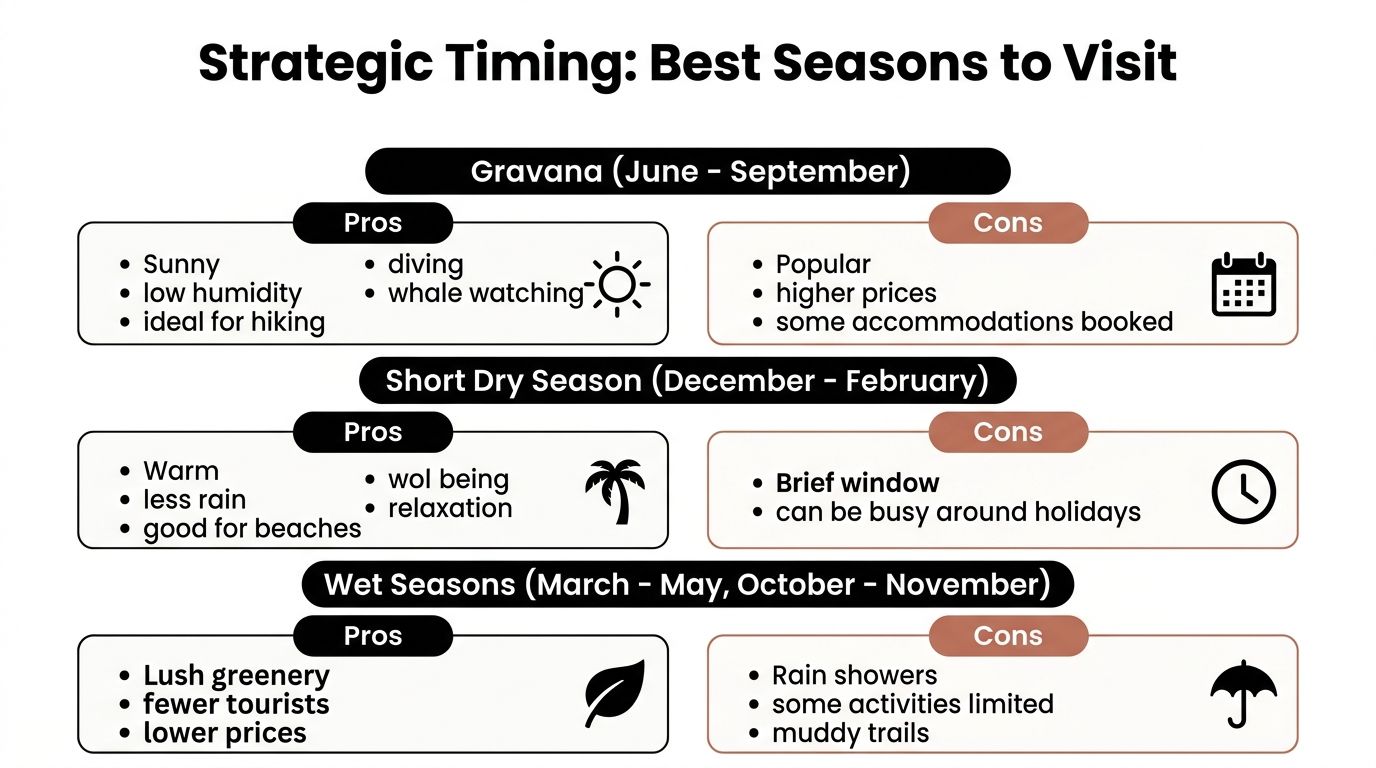
For clients who want to move, this is the cleanest answer. Trails hold up better. Wildlife observation tends to be easier. Road logistics usually become more predictable. If the trip includes rainforest walking, kayaking, or a meaningful amount of overland exploring, this is the window I'd start with.
The shorter dry window for softer pacing
The shorter dry period from December to February can work well for travelers who care more about beach time, easier weather, and a gentler island rhythm than they do about ambitious inland activity. It's a good fit for honeymooners and anyone planning a shorter reset rather than a layered expedition.
The trade-off is psychological as much as climatic. The shorter window feels less like a full exploration season and more like a refined leisure season. That's not worse. It's just different.
A simple decision framework
Use this as a practical guide:
| Travel priority | Better fit |
|---|---|
| Hiking and rainforest access | June to September |
| Birdwatching and nature-focused touring | June to September |
| Beach time and relaxed pacing | December to February |
| Flexible value-seeking itinerary | Wet periods, if you can tolerate weather variation |
The wet periods can still appeal to some travelers. Scenery becomes lush, the atmosphere turns moodier, and crowd pressure drops further. But the compromise is real. Trails can become muddy, sea conditions may limit some outings, and day-by-day flexibility becomes essential.
If you need certainty, don't book the islands for a rigid checklist trip. Book them for a well-timed, well-buffered stay.
For most luxury clients, the strongest answer remains June through September. The weather profile aligns best with the destination's real strengths rather than forcing it into a generic sun-and-sand template.
Elite Sanctuaries Luxury and Conservation Accommodations
The central accommodation question in São Tomé and Príncipe isn't whether luxury exists. It does. The real question is whether the luxury is operationally mature enough for travelers who are used to privacy, precision, and strong recovery when something shifts.
The Príncipe standard
Príncipe is where the conversation gets serious. It is also where many mainstream travel articles become too vague to be useful. They praise wilderness, mention sustainability, and stop there. That's not enough for a traveler who wants to know whether a property can execute private dining elegantly, manage last-minute weather pivots, handle dietary precision, or coordinate discreet transfers without repeated reminders.
That gap matters because, as this Príncipe-focused luxury overview notes, the primary issue for high-end travelers is the availability of private chefs, 24/7 concierge service, and smooth private transfers rather than generic eco-lodge language.
What to look for beyond the brochure
When I vet properties in destinations like this, I'm not asking whether they have beautiful rooms. I'm asking whether they can produce a coherent stay for a demanding client profile.
The right screening questions are:
- How private is the setting, in practice? Privacy isn't a marketing adjective. It's sight lines, pathways, staff discretion, and room placement.
- How capable is the concierge team? Can they solve, or do they only confirm?
- How strong is food and beverage customization? Remote islands can do excellent dining, but only if expectations are discussed early.
- How resilient is the property operationally? Service quality in remote destinations is often defined by how calmly a hotel handles weather, power interruptions, supply limits, and transport changes.
If you want help comparing options, a curated hotel planning process such as Haute Black's hotel service is relevant because the issue here isn't inventory. It's fit.
What works for UHNW travelers
The best properties on these islands understand that conservation and comfort are not opposing ideas. They don't try to mimic urban five-star hotels. They translate luxury into this setting.
That usually means:
- Accommodation with genuine seclusion, not just stylish design.
- Strong pre-arrival communication around dining, transfers, and preferences.
- Staff who can personalize unobtrusively, without turning every interaction into theater.
- A conservation ethos that shapes the stay rather than functioning as decoration.
The trade-offs you should accept, and the ones you shouldn't
Some compromises are part of the charm. Menus may be narrower than in Paris or Dubai. Inventory can be affected by shipment timing. Spa programming may be lighter than in a large resort market. Those are acceptable trade-offs if the property is honest and graceful.
Other compromises are not acceptable at this price point. Vague transfer planning, slow response to guest requests, weak room maintenance, or concierge teams that cannot coordinate beyond the property boundary are not “part of the destination.” They are service failures.
Remote luxury should feel edited, not underbuilt.
That distinction is important for Sao Tome and Principe travel. The right property turns remoteness into serenity. The wrong one turns it into excuse-making.
Curated Journeys Bespoke Itinerary Examples
The islands are small enough that a trip can look simple on paper and still feel radically different depending on the client profile. That's why I prefer itinerary design by travel personality, not by generic sightseeing list.
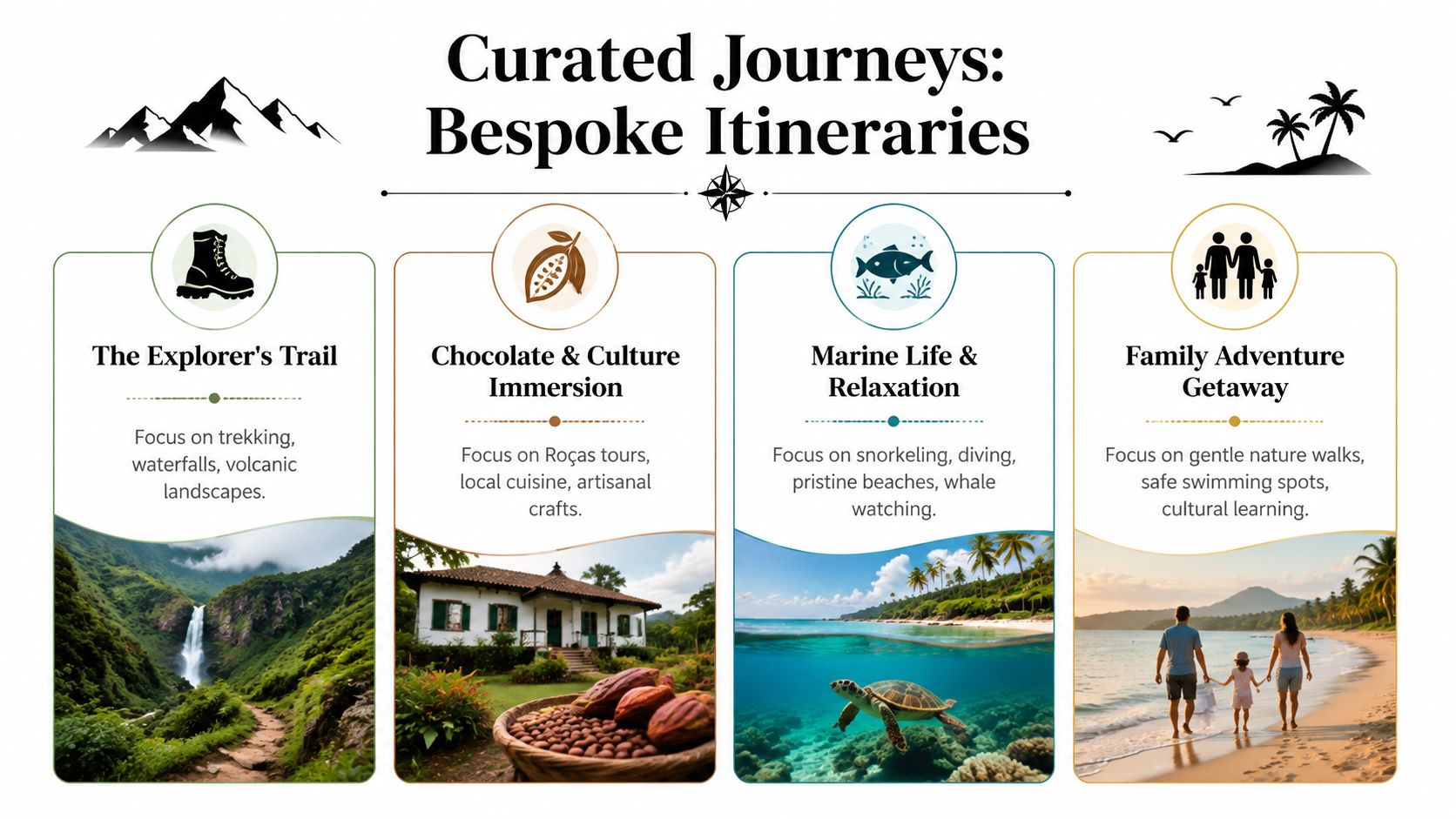
For readers comparing formats, customized package tours are useful shorthand, but São Tomé and Príncipe performs best when the “package” is really a bespoke operating plan.
The ultimate honeymoon
This version starts on Príncipe. The first days should be light: private arrival, slow lunches, one guided soft adventure, and evenings that prioritize privacy over programming. A honeymoon here isn't about doing more. It's about removing intrusions.
Mid-stay, add one standout experience. That could be a boat day to quieter bays, a private dinner in a heritage setting, or a guided nature excursion timed around the couple's energy rather than a group departure. End on São Tomé with one or two nights that add cultural texture, perhaps a roça visit and a more social dining setting before departure.
What works is intimacy with pacing. What doesn't is trying to combine romance with an over-engineered island-hopping marathon.
The multi-generational family journey
Families do well here when the trip has operational softness. That means fewer hotel changes, vehicles that can accommodate comfort and gear, and activity sequencing that alternates movement with downtime.
A good family itinerary splits priorities. One day favors light walking and wildlife. Another centers around beach time and easy swimming conditions. A cultural day might involve cocoa heritage and food, but with built-in breaks and flexible timing for grandparents or younger children.
The family version should also include redundancies:
- A backup indoor or property-based plan if weather shifts.
- Advance meal planning for mixed dietary preferences.
- Clear communication on walking difficulty, especially at roças and nature sites.
The thrill-seeker's island expedition
For clients who want edge, the islands can deliver. The key is to define “adventure” correctly. This isn't adrenaline packaged as amusement. It's terrain, weather, sea conditions, and genuine remoteness.
An expedition-style itinerary might emphasize guided hikes, coastal exploration, boat days, and longer overland movement. The reward is a deeper sense of place. The risk is fatigue from underestimating travel time and environmental conditions.
This profile needs stronger operational framing than any other. Early starts, proper vehicles, cash planning already handled, and realistic recovery windows are essential.
The conservation immersion
This is the most intellectually satisfying version of the trip. It favors properties and experiences where ecological protection, local livelihoods, and natural interpretation are part of the stay.
The rhythm is different here. Days may include naturalist-led exploration, cocoa and plantation history viewed through land use and labor history, and slower conversations with people who understand the islands beyond the usual tourism script. Luxury in this format comes from access, context, and calm.
The most memorable itinerary on these islands is often the one that leaves some empty space in it.
Across all four models, the common principle is selective design. São Tomé and Príncipe is not a destination to stuff. It's a destination to sequence.
The Essential Briefing Health Safety and Cultural Nuances
A smooth trip here depends on respecting the islands as they are, not as a fantasy version of tropical luxury. That starts with health, extends to infrastructure, and ends with manners.
Health and medical preparation
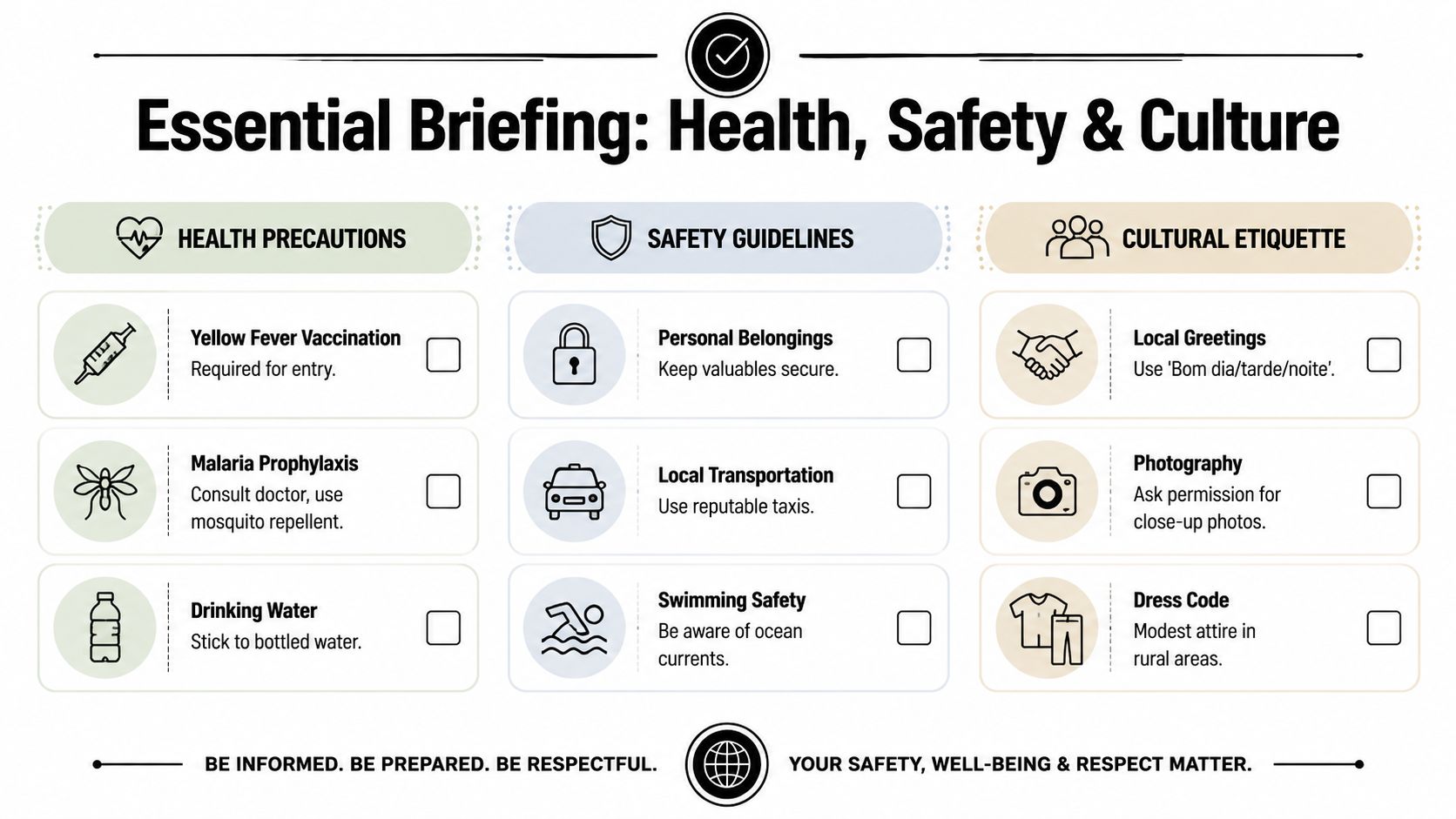
For São Tomé and Príncipe, health planning should be physician-led and completed before departure. Travelers commonly prepare around yellow fever documentation, malaria prevention strategy, insect protection, and conservative water habits. In practice, that means getting professional advice early, carrying your own core medications, and not assuming you'll source niche items easily once on the islands.
If a client has meaningful medical complexity, I recommend treating the trip like an expedition-lite journey. Carry documentation, prescriptions, and emergency contacts in duplicate. Confirm any special dietary, mobility, or refrigeration needs with the property well before arrival.
Safety in the real-world sense
The broad safety picture is reassuring. The more nuanced concern for luxury travelers is not street crime. It's operational resilience. The U.S. travel advisory for São Tomé and Príncipe is often cited for noting that serious crimes are extremely rare, but that doesn't answer the questions high-end clients pose.
Those questions are different:
- What happens if the power drops at a remote lodge?
- How is a medical issue escalated from an isolated property?
- Can the hotel respond with competence, or only sympathy?
That's why I look closely at generator capability, communications backup, staffing maturity, and medevac logic before I'm comfortable recommending a remote stay. In a destination like this, the property is not just a hotel. It is part of the risk-management system.
Cultural ease and social intelligence
Socially, the islands reward good manners. Greetings matter. Asking before photographing people is basic respect. Dress can be relaxed, but in rural or community settings, restraint reads better than display.
A few habits make a noticeable difference:
- Greet before asking for anything. It changes the tone of every interaction.
- Be patient with service rhythm. Rushing people rarely improves outcomes here.
- Use your property team wisely. Local relationships often solve more than forceful insistence.
Connectivity, power, and expectation management
Experienced travelers learn to separate romance from realism. You may have strong connectivity in one property and weak connectivity in transit. You may enjoy stable power in one setting and backup-dependent reliability in another. None of that is automatically disqualifying. It just has to be planned for.
If you need uninterrupted communications, work around that need before arrival. If you need complete digital silence, the islands can offer that too. The mistake is assuming you'll decide in the moment and the environment will accommodate you perfectly.
Good Sao Tome and Principe travel planning is not about removing every variable. It's about controlling the important ones before they become your problem.
The destination is forgiving to travelers who arrive informed, flexible, and properly supported. It is much less forgiving to those who confuse remoteness with simplicity.
São Tomé and Príncipe suits travelers who want privacy, beauty, and distance from the overexposed luxury circuit, but it only feels effortless when the right details are handled early. Haute Black arranges bespoke travel and concierge support for clients who want that level of planning discipline, from air and hotel coordination to on-the-ground pacing in remote destinations like this one.
Explore Our Guides


Signature Experiences


