Haute Black Journal
Panama Weather in February: A Luxury Travel Guide

Marlene Azeez
Director, HauteBlack
View all articles →

# Panama Weather in February: A Luxury Travel Guide
May 15, 2026
Most advice about panama weather in february is too simplistic. “Go in dry season” is accurate, but it's not enough for a high-stakes trip where every transfer, suite, boat day, and dinner reservation needs to land perfectly.
February is Panama at its most reliable. It is not Panama at its most uniform.
That distinction matters. A client who wants rooftop dinners in Panama City, yacht days off the Pacific coast, and cool mornings in Boquete shouldn't plan with a single weather assumption. The right trip uses February's strengths with precision. The wrong one treats the entire country as one climate and leaves comfort, access, and timing to chance.
Why February is Panama's Premier Travel Month
February deserves its reputation. It sits in the heart of Panama's dry season, and that creates the cleanest window for a polished luxury itinerary. You get the conditions most travelers want, but critically, you get the conditions that make complex travel plans work.
That means outdoor commitments can be scheduled with confidence. Private island lunches, terrace cocktails, beach clubs, canal-facing helicopter routes, and villa stays all become easier to execute when the weather is stable. The month's appeal isn't just sunshine. It's operational clarity.
The mistake affluent travelers make
Many travelers hear “February is ideal” and stop there. I wouldn't. Panama rewards travelers who understand its variations, and February is when those variations are easiest to turn into an advantage rather than a complication.
A refined trip in Panama should feel edited, not improvised. You use the warmer coasts for sea days and open-air dining. You use the highlands when you want relief from heat, a slower pace, and a different visual language entirely.
February is the month to do more, not just to hope for better weather.
That's why it belongs on any serious shortlist of places to go in February. Not because it is generically pleasant, but because it allows a multi-stop journey to hold its shape.
Why it commands premium attention
Peak season pricing exists for a reason. February offers the kind of predictability that luxury travel depends on. If you're chartering a boat, reserving a standout suite, or building a trip around outdoor experiences, reliability is part of the value proposition.
For discerning travelers, that's the true focus. Panama in February gives you a strong weather foundation. Expert planning turns that foundation into a memorable, fluid trip.
Panama's February Weather By The Numbers
Ignore the lazy headline that calls February "dry season." For a luxury traveler, the point is precision. According to Weather2Travel's February Panama climate data, the Pacific side typically sees 13mm to 48mm of rainfall, just 3 to 6 rainy days, daytime highs around 31°C to 32°C (88°F to 90°F), nights near 22°C to 23°C (72°F to 74°F), sea temperatures of 26°C (79°F), and roughly 8 hours of sunshine a day.
That profile matters because it supports expensive plans that need weather cooperation. Yacht days, rooftop dinners, island transfers, and long outdoor sightseeing windows all perform better in these conditions.
Recent climate irregularities across the region make that distinction more important, not less. Average figures still point you in the right direction, but smart travelers use them as a base layer, then plan around Panama's local variations instead of assuming the whole country behaves the same way.
Panama weather in February at a glance
| Metric | Pacific Coast Average | Caribbean Coast Average |
|---|---|---|
| Rainfall | 13mm to 48mm | More variable, with periodic showers |
| Rainy days | 3 to 6 days | Intermittent wet spells remain possible |
| Daytime temperatures | 31°C to 32°C (88°F to 90°F) | Can feel hotter and heavier in some areas |
| Nighttime temperatures | 22°C to 23°C (72°F to 74°F) | Warm tropical evenings |
| Sea temperature | 26°C (79°F) | Warm for swimming and boating |
| Sunshine | About 8 hours daily | Good sun, with more cloud interruptions |
What the numbers mean in practice
Pay the February premium if your trip depends on timing, service choreography, and outdoor access. This is the month when Panama is easiest to execute well.
Use these conditions for the experiences that justify a luxury itinerary:
- Private boating days: Calm planning conditions and warm water suit full-day charters.
- Terrace dining: Evenings stay warm enough for open-air tables without turning uncomfortable.
- Tight multi-stop itineraries: Lower rain risk reduces the chance of weather-related reshuffling.
- High-value beach stays: Oceanfront suites make more sense when beach hours are consistently usable.
Advisor's rule: In February, Panama gives you weather that supports commitment. Book the experiences that require confidence, not contingency.
Navigating Three Climates in One Country
Do not treat Panama as a single weather bet in February. That is the mistake. Treat it as three separate climate plays, and the trip becomes sharper, more comfortable, and far more rewarding.
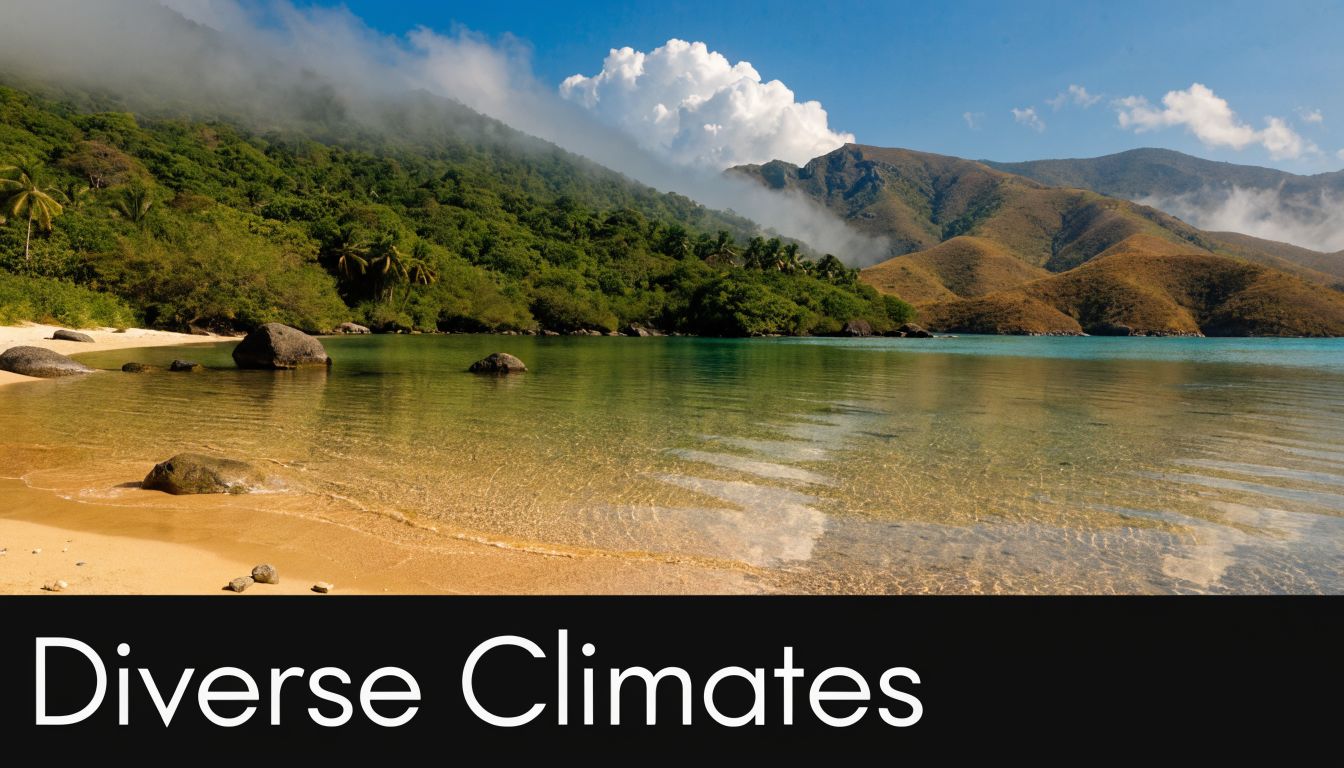
Panama's real February advantage is range. You can move from dry Pacific light, to a more humid Caribbean mood, to highland air that feels almost restorative, all within one itinerary. Standard weather guides flatten that difference. A well-built luxury journey depends on using it.
The Pacific coast for reliable execution
The Pacific side is where I would place the fixed points of the trip. Rough Guides' overview of Panama in February notes warmer, drier conditions on the Pacific coast, while the Caribbean stays more variable and the highlands run cooler, especially at night.
That matters because the Pacific is where timing-heavy experiences work best. Panama City touring, terrace lunches, private yacht departures, and full-day island plans all benefit from a climate that usually behaves as expected. If a client wants the cleanest odds for polished days and fewer weather interruptions, I anchor the itinerary here first.
Recent climate anomalies have made this regional split more important, not less. Even in a strong dry-season month, short bursts of unseasonal cloud or showers can appear. On the Pacific side, they are usually a scheduling nuisance. On the Caribbean side, they can change the character of the day.
The Caribbean coast for travelers who prize atmosphere over certainty
Bocas del Toro and the broader Caribbean coast deserve a more selective approach. February can still be beautiful there. It is less predictable, with periodic showers and heavier air.
Use the Caribbean for the right reasons. Overwater views, vivid color, slower afternoons, and a more relaxed social rhythm all land well here. I would not place your most expensive sun-dependent charter day or your tightest transfer sequence on this coast unless the rest of the itinerary has enough flexibility to absorb a change of plan.
That is also where logistics matter. If you are moving between regions on a tight schedule, arrange private ground transportation between key Panama stops so the handoffs stay controlled and the weather remains a variable, not a disruption.
For a quick visual sense of the destination, this overview helps frame the country's variety:
The Western Highlands for temperature relief and tonal contrast
The Western Highlands change the trip completely. Boquete, Volcán, and other higher pockets bring cooler mornings, fresher evenings, and a quieter tempo than the coasts.
This region earns its place after several warmer days. You feel the difference immediately. Walks become more pleasant, coffee estates make more sense in the morning, and dinner finally invites a proper layer. Luxury travelers often underestimate how useful that contrast is. A Panama itinerary with no altitude shift can feel visually varied but climatically repetitive.
The highlands also absorb recent climate irregularities better than many beach plans do. If the coast turns hazier or more humid than expected, a few nights at elevation often improve the trip.
How to assign each region a job
Do not pack one wardrobe and hope for the best. Do not give every destination equal weight, either. Each region should serve a clear purpose.
- Pacific coast: Put your fixed reservations here. City stays, marina departures, island days, and outdoor dining perform best in this zone.
- Caribbean coast: Use it as a mood-driven addition, not the backbone of the trip. It suits travelers comfortable trading some certainty for character.
- Western Highlands: Reserve this for the final reset. It works best for wellness, coffee country, cool evenings, and a more composed finish.
Panama in February rewards clients who plan by microclimate, not by map. Get that decision right, and one country delivers three distinct moods without forcing a compromise in standards.
A Bespoke Itinerary for the Discerning Traveler
A strong February itinerary in Panama should move with intention. You don't stay in one setting and call it depth. You use the country's contrasts to create momentum.
I'd build a ten-day trip in three acts. City first. Then sea. Then altitude.
Days one through three in Panama City
Start in Panama City with a stay in Casco Viejo or a polished luxury base that gives you easy access to both the historic quarter and the city's modern skyline. A property such as Sofitel Legend Casco Viejo fits the tone well because it lets the first days feel urbane rather than transitional.
Use these opening days for late lunches, architecture, art, and evenings that stay outdoors. February supports the kind of city schedule that works best when you're not constantly managing weather interruptions.
The city should not feel like a stopover. It should feel like the opening statement.
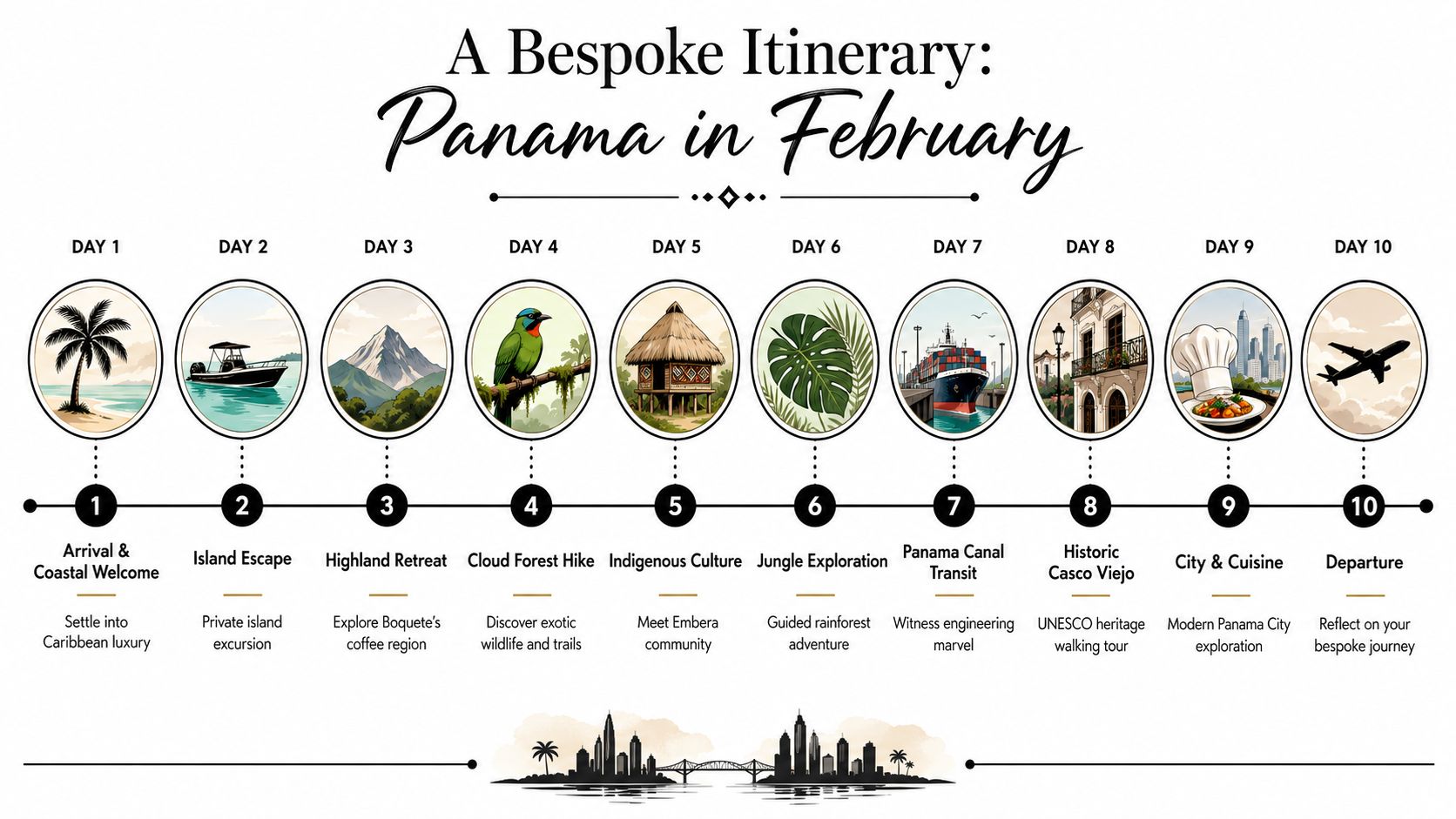
Days four through seven by the water
Then move offshore or toward a secluded coastal stay. February earns its reputation during these moments. The dry-season rhythm supports long sea-facing days, private lunches, and uninterrupted time at a villa or resort where the focus remains on privacy rather than activity volume.
The transition matters almost as much as the destination. I'd avoid anything that feels commercial or crowded. A helicopter or tightly coordinated private transfer changes the tone immediately, and that's where premium ground transportation planning becomes more than a convenience. It protects the mood of the trip.
Days eight through ten in the highlands
Finish in Boquete or another refined highland setting. The trip gains its final layer here. The air is cooler. The pace drops. Dining becomes more intimate, mornings more active, and afternoons more restorative.
A highland finale is especially effective for couples and multi-generational families because it slows the cadence without flattening it. The trip ends with texture rather than exhaustion.
The best Panama itinerary in February doesn't chase every region. It chooses three contrasting moods and lets each one do its job.
Why this sequence works
This order is deliberate.
1. City first: You arrive with energy and use it for culture, design, and dining.
2. Coast second: Once you've adjusted, you shift into space, water, and privacy.
3. Highlands last: You finish in a setting that feels restorative and distinct.
A weaker itinerary does this in reverse and loses momentum. The stronger version keeps building contrast, then lands softly.
Exclusive Experiences Unlocked by February's Climate
Weather is never just scenery. In Panama, it determines which luxury experiences are worth attempting and which ones should wait for another month.
February is the month when premium outdoor experiences become easier to plan with confidence. That matters because the highest-value moments in Panama are often the most weather-sensitive.
What becomes possible
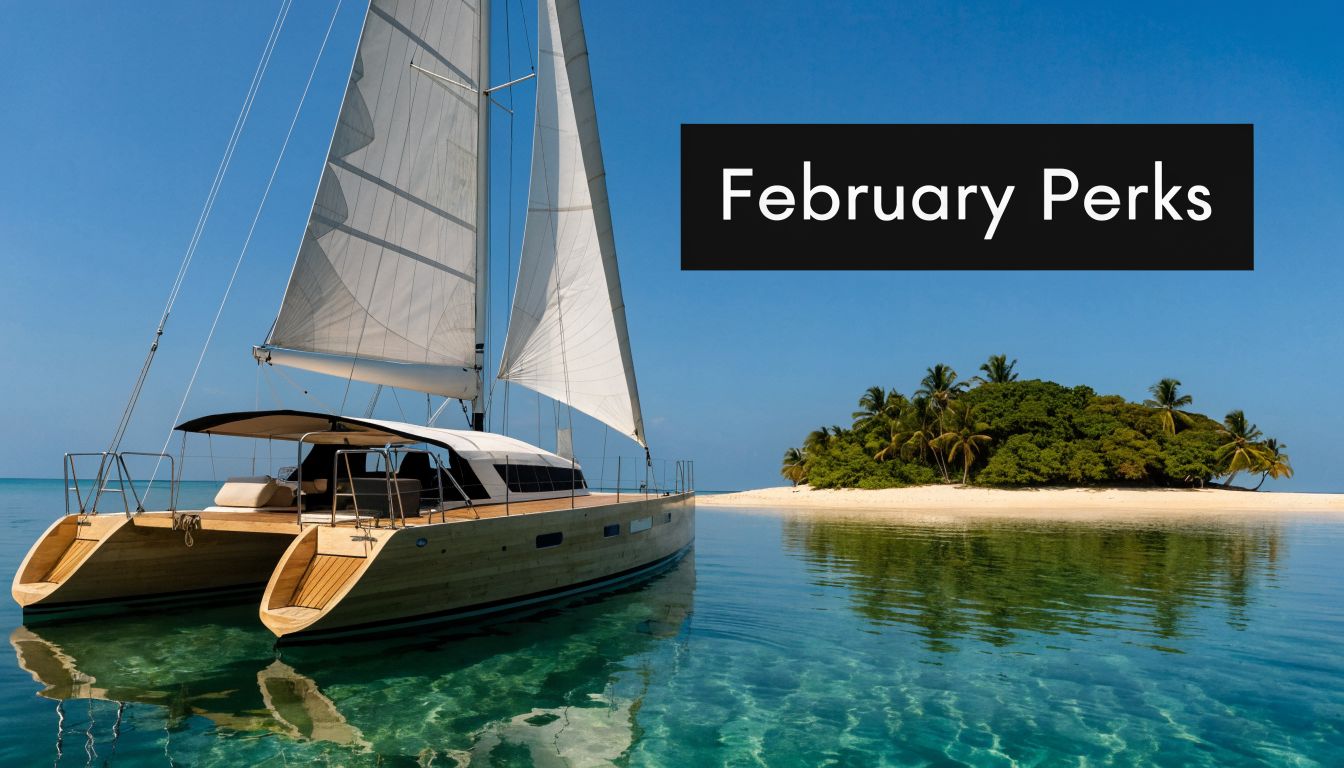
A private yacht day is far more compelling when you can plan for calm, bright conditions rather than hope for them. The same goes for island hopping, beach setups, and long lunches that are meant to unfold outdoors from start to finish.
Helicopter sightseeing is another obvious example. Visibility matters. So does confidence in takeoff windows, timing, and route quality. If you're paying for a panoramic aerial view of the Panama Canal, coastline, or jungle edge, you want the odds tilted in your favor before you ever leave the ground.
February also supports the kind of dinner that sounds simple on paper but is hard to execute well in less stable weather. Think a private chef on a terrace, a long table on the sand, or a candlelit celebration at a villa where no one is watching the sky.
My strongest recommendations
I'd prioritize the experiences that gain the most from dry-season stability:
- Private boating on the Pacific side: This is the cleanest use of February's predictability.
- Helicopter touring over the canal corridor and coast: Best done when visibility is likely to cooperate.
- Remote beach dining: Worth arranging only when the weather window is strong.
- Highland outdoor lunches and garden settings: Better at the end of the trip when cooler air feels like a reward.
What I wouldn't overcommit to
I wouldn't build an entire February trip around the Caribbean side if the client's main objective is guaranteed sun-dependent luxury. Bocas del Toro can be beautiful, but it should be approached as a nuanced choice, not a default luxury beach answer.
A polished itinerary uses February to reduce risk on expensive experiences. That is where the month delivers its real value.
That is why panama weather in february matters so much at the top end of the market. It doesn't just improve comfort. It protects experiences that are difficult, expensive, and disappointing to salvage when conditions shift.
VIP Planning and Packing for Every Microclimate
Pack for Panama in February as if you are crossing three countries, not one. Clients who treat it as a simple hot-weather trip look underdressed in the city, overheated on transfers, and mildly miserable by nightfall in Boquete.

The goal is range without bulk. Your wardrobe should handle salt air, polished lunches, urban evenings, and cooler mountain temperatures without looking improvised. That takes restraint and planning, not a larger suitcase.
What belongs in the suitcase
On the Pacific side, build around breathable fabrics with structure. Linen, fine cotton, elegant swimwear, leather sandals, and serious sun protection work best. Choose pieces that can move from yacht deck to lunch terrace without a costume change.
Panama City demands sharper editing. The heat is real, but top tables still reward a composed silhouette. Bring evening clothing with shape, proper footwear, and accessories that read intentional. Beachwear belongs at the beach.
Boquete catches people off guard. Pack one or two real layers. A light sweater, cashmere wrap, or soft jacket is the difference between feeling prepared and spending dinner focused on the temperature instead of the room.
A smart February wardrobe should cover four settings:
- Pacific coast: Refined resortwear, polished swim layers, sunglasses, and light fabrics that hold their shape.
- Caribbean side: Quick-dry clothing, a stylish cover-up, and footwear with grip for wet docks and sudden showers.
- Highlands: A proper outer layer for evenings and early mornings.
- Transit days: A travel look that stays crisp through flights, road transfers, and boat connections.
If you are splitting time between city, coast, and hills, hotel choice affects your packing almost as much as climate. Start with a sharper review of Panama luxury hotel planning by region and travel style.
Why contingency planning matters now
Standard February guidance is too blunt for high-end travel. Historical dry-season patterns still make this the strongest month to go, but recent anomalies have made the edges less predictable, especially for Caribbean showers and sharper urban heat. WeatherSpark notes that February in Panama remains broadly favorable while still showing the kind of temperature and rainfall variation that matters when your trip includes private boats, outdoor dining, and helicopter transfers (WeatherSpark's February Panama weather analysis).
I plan around that reality. Averages are useful. They are not a strategy.
Weather confidence and weather complacency are different decisions.
The right operational mindset
Build the trip so small shifts in conditions do not weaken the experience. Put the least flexible experiences into the strongest windows. Keep one indoor or low-exposure option in reserve in every destination. Give transfer days breathing room.
Use these standards:
- Schedule exposed outdoor lunches and beach setups earlier if the day is trending hotter than expected.
- Keep the Pacific coast as the operational anchor for sea-dependent plans.
- Treat the Caribbean as a style decision, not a reliability decision if the client wants atmosphere without weather stress.
- Protect mountain and intercity transfer days with margin so fog, heat, or passing rain do not disrupt the evening.
That is how panama weather in february should be handled at the top end of the market. Pack precisely. Plan for variation. Let the trip feel effortless because the preparation was not.
Securing Your Extraordinary Panama Journey
February gives Panama its best stage lighting. Dry skies, warm water, strong sunshine, and meaningful regional contrast make it one of the smartest winter escapes in the Americas. But the weather alone doesn't create a great trip.
Execution does.
The travelers who get the most from Panama in February don't book a single beach and call it done. They use the Pacific for reliability, the highlands for relief, and the country's compact geography to create a journey with shape. They also choose hotels with care, because the right base changes how each climate feels and functions. If you're selecting between city icons, island hideaways, and retreat-style mountain stays, start with a sharper look at luxury hotel planning.
A flawless Panama trip in February should feel inevitable once you're in it. Quiet transfers. The right suite. The right coast. The right temperature at the right moment. That level of precision doesn't happen by accident.
If you want a Panama itinerary that uses February intelligently, Haute Black can arrange the kind of journey where climate, access, and extraordinary hospitality work together from the first arrival to the final departure.
Explore Our Guides


Signature Experiences


