Haute Black Journal
Maldives Beach Holidays: A Bespoke Luxury Guide

Marlene Azeez
Director, HauteBlack
View all articles →
# Maldives Beach Holidays: A Bespoke Luxury Guide
Most advice on maldives beach holidays is lazy. It treats the destination as if every five-star resort offers the same turquoise water, the same villa, the same service, and the same outcome.
That was never true. It’s especially false now.
The Maldives grew from a niche surf and dive destination into a global luxury machine, with visitor arrivals rising from 1,000 in the 1970s to 1 million by 2015 and 2.046 million in 2024 according to tourism in the Maldives. Tourism also contributes nearly 30% to GDP and over 60% of foreign exchange in the country, which tells you exactly what the islands are built to do. Serve high-value travelers at a serious level.
Scale changed the game. Once a destination reaches this level of visibility, luxury stops being a category and becomes a sorting problem. The question isn’t which resort has the prettiest photography. The question is who can secure the right geography, the right villa, the right transfer chain, the right privacy conditions, and the right pacing for your particular trip.
That’s the difference between a good booking and an extraordinary one.
For travelers who want a marine-heavy trip, practical trip notes from Kona Honu Divers' travel to Maldives are also useful because they reflect the destination as an operational reality, not just a fantasy backdrop.
The Art of the Maldivian Holiday
The Maldives rewards decisiveness. If you approach it like a generic beach destination, you’ll get a generic result.
A serious Maldivian holiday starts with one principle. Luxury here is logistical, not decorative. Plenty of resorts can give you a beautiful bed, a pool, and white sand. Far fewer can give you the sense that no friction ever existed between your home, your aircraft, your transfer, your villa, your dining preferences, your privacy threshold, and your time on the water.
What most travelers get wrong
They shop by brand name first. That’s backwards.
Brand matters, but it comes after the architecture of the trip. Start with these questions instead:
- Privacy threshold: Do you want a villa with neighbors nearby, a detached estate hidden in landscaping, or no adjacent guests at all?
- Marine access: Is the reef the point, or is the beach the point?
- Transfer tolerance: Will a shared seaplane kill the mood, or is it acceptable if the island is exceptional?
- Travel style: Are you taking one island and disappearing, or using the Maldives as one chapter in a longer journey?
The Maldives can feel intimate or theatrical. The wrong choice usually comes from picking a room category before deciding how you want to live for the week.
What excellent planning looks like
An excellent trip in the Maldives feels quiet. That’s not because nothing happened. It’s because someone solved the complicated parts before you noticed them.
That means selecting the right atoll before selecting the resort. It means treating villa positioning as a major decision, not a minor request. It means understanding which stays work for couples and which work for families who need space, shade, and operational flexibility. It also means recognizing when the standard one-island honeymoon model is too narrow for your specific desires.
Choosing Your Atoll Geography and Seasonality
Resort rankings distract from the decision that shapes the entire trip. Geography does the work.
The Maldives spans 26 atolls, but clients booking at the top end do not need a geography lesson. They need to know what each atoll buys them. Some buy convenience. Some buy reef quality. Some buy the kind of distance that keeps other guests, shared transfers, and operational noise out of your holiday.
North versus south
Northern and central atolls suit travelers who want shorter transfer chains, easier flight coordination, and a more polished first impression from the moment they land. They are often the right answer for shorter stays, milestone trips with little tolerance for delay, and itineraries that pair the Maldives with Dubai, Abu Dhabi, or Europe.
Southern atolls serve a different client. Choose them for stronger remoteness, fewer visual reminders of neighboring islands, and better odds of a holiday that feels protected from the standard resort circuit. That distinction matters if you are considering a villa estate, a partial island takeover, or a full private island buyout where privacy only works if the surrounding geography supports it.
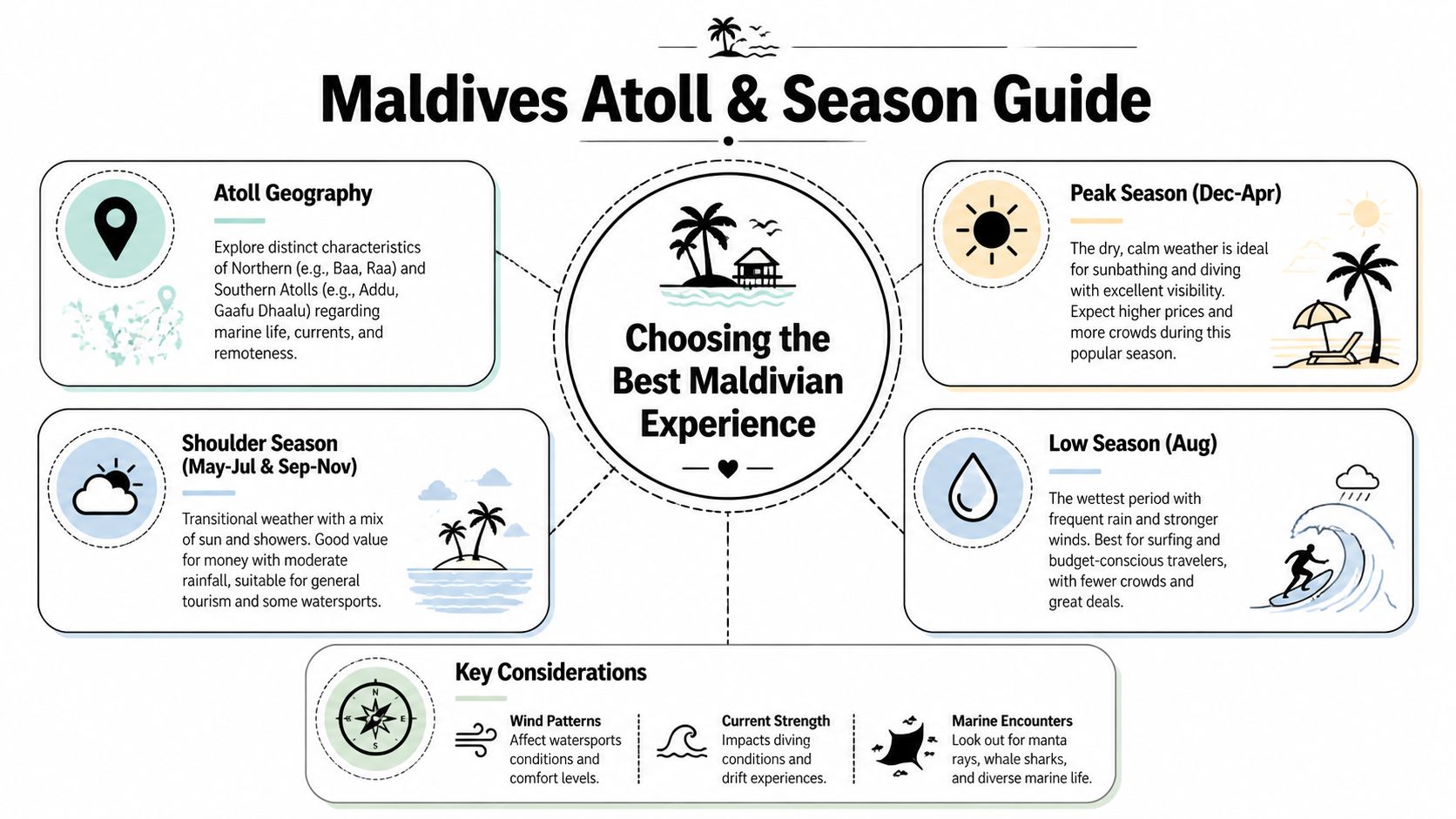
According to The Points Guy on the best times to visit the Maldives, southern atolls see less seasonal rainfall variation than many northern areas. The same source also notes that the wetter months can bring lower rates and stronger marine activity. I use that split constantly. Sun-focused clients and reef-focused clients should not travel on the same calendar.
For a fuller timing breakdown, Haute Black’s best time to visit the Maldives guide is a useful planning reference.
How to choose by priority
Start with the trip you want to live, not the resort you want to name-drop.
| Priority | Better fit | Why |
|---|---|---|
| Classic beach weather | Dry season travel | Calmer conditions usually suit long beach days, cleaner light, and smoother outdoor dining plans |
| Marine encounters | Wet season windows | Plankton-rich conditions often improve sightings of larger marine life |
| Surf focus | Atolls exposed to Indian Ocean swells | Seasonal swell matters more than branding |
| Remote feel | Southern atolls | Longer transfer chains often create real psychological distance |
This is also where insider planning starts to matter. If you are building a two-island stay, combining a yacht charter with a resort, or securing high-privacy movement for principals, family offices, or security-conscious travelers, atoll choice affects every transfer that follows. Poor geography creates friction. Good geography disappears into the background.
Seasonality that matters
Most Maldives advice reduces timing to dry season versus wet season. That is lazy.
The dry northeast monsoon from November to April suits clients who want calm water, reliable beach setups, easy boating, and evenings that stay outdoors without constant weather revisions. If the holiday is built around aesthetic perfection, celebrations, or first-time expectations of the Maldives at its most photogenic, book this window and move on.
The southwest monsoon from May to October is for travelers who care more about the water than the postcard. Conditions are less consistent, but marine life improves, rates often soften, and the best trips in this period are planned around experience rather than rigid beach choreography. As noted earlier, The Points Guy guide also says wet-season squalls are often brief, which is why I do not dismiss these months for the right client.
Practical rule: Choose dry season for visual perfection and operational ease. Choose shoulder or wetter months for marine access, sharper value, and a trip designed around the sea.
My recommendation
For first-time maldives beach holidays, I recommend one of two clear strategies.
- Polished first impression: Dry season, an accessible atoll, excellent beach and reef balance, and a villa placement that avoids compromise if weather shifts.
- Privacy and marine depth: Shoulder or wetter months, a more remote atoll, strong reef access, and an itinerary planned around water time, transfer control, and real separation from other guests.
The wrong move is treating every atoll and every season as interchangeable. They are not. In the Maldives, true luxury starts with choosing the right piece of ocean.
Your Private Sanctuary Villas Estates and Islands
The room decision is where many expensive Maldives trips go wrong. People obsess over whether they want a beach villa or an overwater villa. That’s a beginner’s question.
The right question is this. What level of privacy, marine access, and operational control do you need?
The overwater case
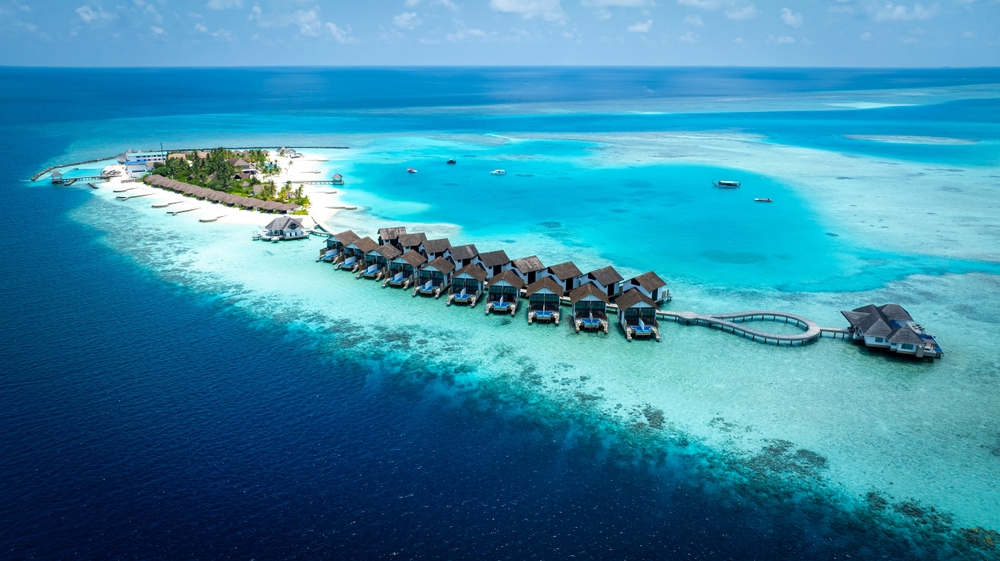
For marine-focused travelers, overwater villas aren’t just iconic. They’re practical.
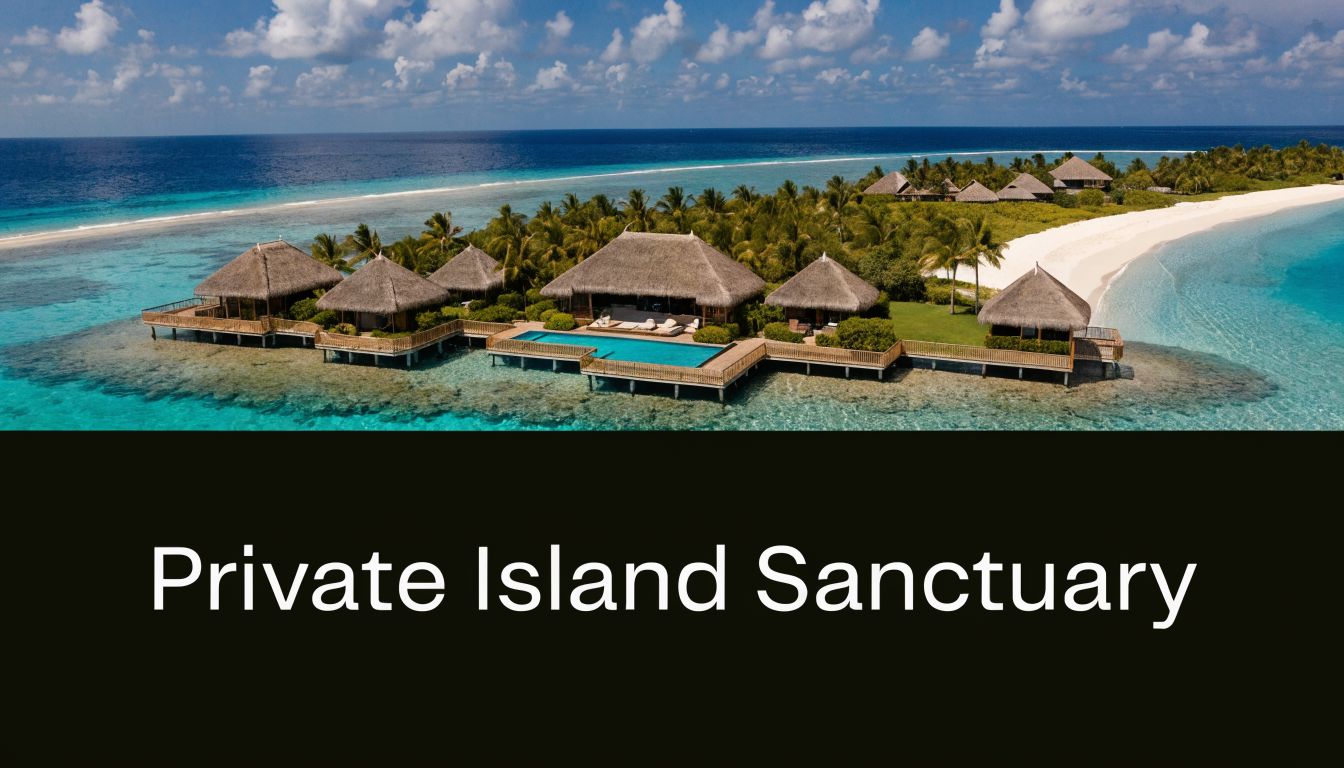
According to British Airways Holidays on the Maldives, overwater villas can improve snorkeling efficiency by 40 to 60% compared with beach villas because you can step directly into the lagoon or house reef instead of staging a separate outing. The same source notes that these stilted structures help preserve visibility of over 30 meters, and that sighting probabilities for manta rays and whale sharks peak at 70 to 90% during plankton blooms from June to October.
If you wake up and want to be in the water before breakfast, overwater wins.
The beach villa case
Beach villas suit a different client.
They’re better for travelers who want direct sand underfoot, more intuitive indoor-outdoor living, and stronger suitability for children or older relatives. They also tend to feel more grounded and more private from a visual standpoint, particularly when thick planting creates a genuine buffer from the rest of the island.
What I like most about a strong beach villa is psychological privacy. A good one feels like a hidden residence. An average one feels like a hotel room near the beach. That distinction matters.
A simple decision framework
Choose your accommodation type based on behavior, not fantasy.
- You’ll spend hours snorkeling every day. Pick overwater, ideally on a jetty with good reef positioning.
- You want toddlers, grandparents, or easy beach play. Pick a beach villa or beach estate.
- You want no compromise. Do a split stay.
- You don’t want to see other guests at all. Skip standard villa categories and ask for an estate, reserve, or exclusive-use setup.
Here’s where that private-access conversation becomes relevant. Public resort websites rarely explain how to secure an isolated arrangement. If that’s your brief, private island options in the Maldives are the right category to investigate rather than upgrading to the largest published villa.
Where privacy becomes real
There are four distinct levels of privacy in the Maldives.
Standard villa privacy
This is what most travelers book. It can be lovely, but it’s still resort privacy. You may have neighboring decks, visible pathways, and shared beach frontage somewhere in the equation.
Signature villa or estate privacy
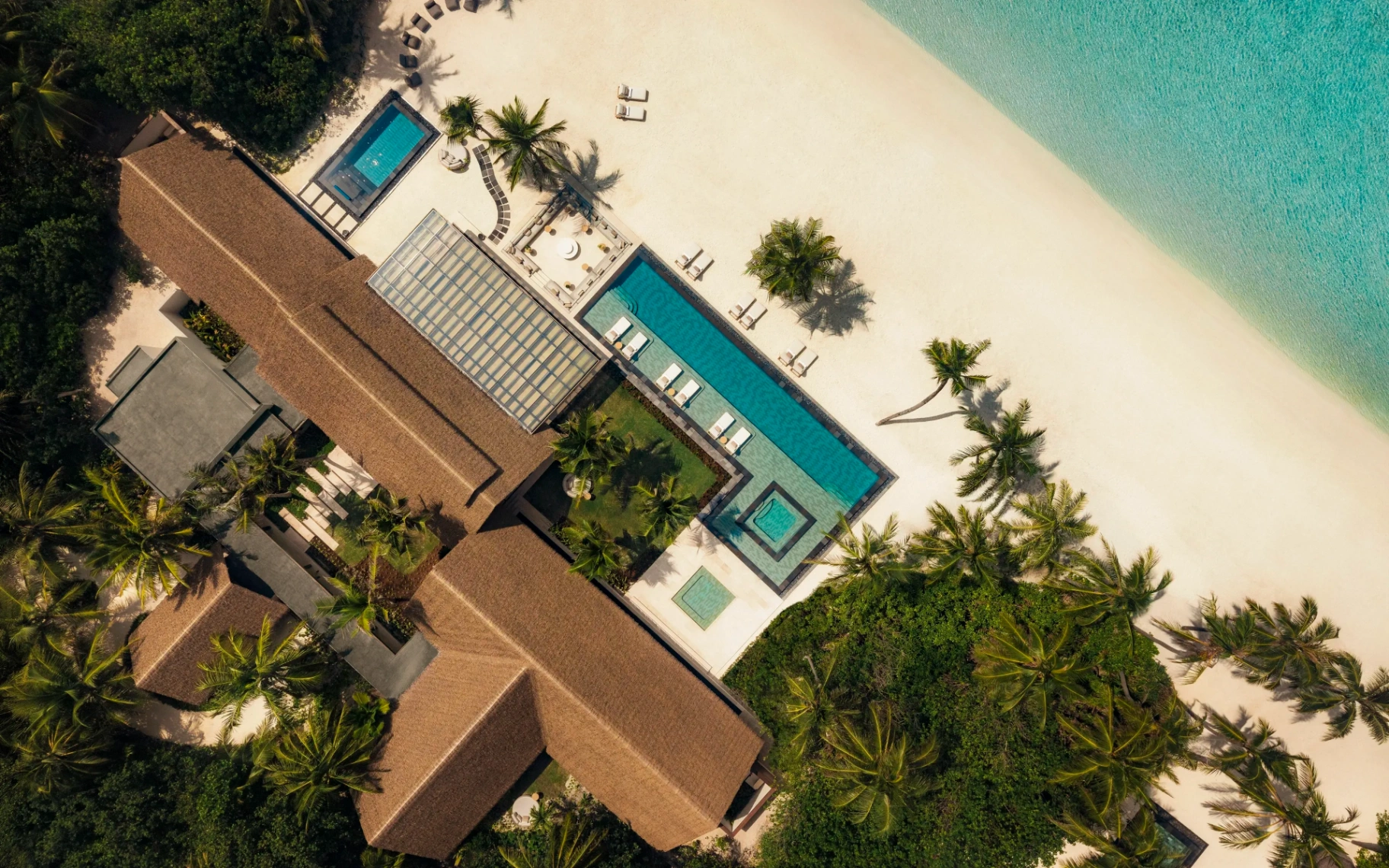
The island begins to work for you, rather than just host you. Look for detached compounds, meaningful landscaping, separate staff access, and dining areas that allow you to stay invisible if you choose.
Multi-villa reserve privacy
This works well for families and small groups. Several villas can be grouped into one controlled zone with shared entertaining space, private dining cadence, and enough room for everyone to spread out.
A proper reserve solves a problem that standard villa bookings can’t. It lets a family travel together without living on top of one another.
To get a better visual sense of how the villa typologies and island layouts differ, this short film is useful.
Private island privacy
This is the highest level. You’re no longer selecting a room. You’re selecting an operating environment.
At that level, details change. Dining can happen where you want rather than where the resort schedules it. Spa, fitness, childcare, water sports, marine activities, and security protocols can be arranged around your party rather than around the island’s general flow.
If privacy is the point, don’t let a hotel website define the ceiling of what’s possible. Published inventory is only part of the conversation.
What to ask for specifically
Don’t tell an advisor you want “something special.” That produces vague results. Give the brief shape.
Ask for details like:
- Villa orientation: sunrise, sunset, protected side, breezier side
- Jetty placement: far end for privacy, near center for convenience
- Reef quality: swimmable from the villa versus reachable by boat only
- Family practicality: stroller-friendly, shallow entry, multiple bedrooms, kitchen access
- Lifestyle features: retractable roof, slide, gym room, children’s sleeping area, spa pavilion, screening room, private chef setup
The Maldives rewards precision. The clients who get the most from it usually know exactly how they want to feel on the island. The accommodation should answer that, not the other way around.
Crafting Bespoke Maldivian Itineraries
The old Maldives formula was simple. Fly in, take a seaplane, spend a week on one island, leave with a tan.
That still works. It’s just not the most interesting version of the destination anymore.
According to Madly Maldives on underwater hotels and luxury travel trends, affluent travelers increasingly want a multi-scene escape that combines the Maldives with nearby destinations such as Dubai or Sri Lanka, rather than treating the country as a single-resort honeymoon stop. I agree with that shift. For many clients, one aesthetic for an entire trip is too flat.
Three itinerary models that actually work
The romantic escape
Start with a short city stop to reset from long-haul travel, then move into the Maldives for stillness.
A strong version looks like this: arrive in Dubai for one or two nights, recover properly, take meetings if needed, then continue to the Maldives for a split stay. Begin in a beach villa for privacy and long dinners on sand. Move halfway through the trip to an overwater villa for direct lagoon access and a change in mood.
I’d build the days around rhythm, not volume. Private sunset sailing one evening. A marine-biologist-led snorkel the next morning. A castaway sandbank lunch when the weather is right. One free day with no timetable at all.
The family holiday
Families need flow. A villa may be stunning and still be wrong if daily life is awkward.
For this kind of trip, I prefer a beach estate first. Parents get practical access to sand and shade. Children can move naturally. Grandparents don’t need to walk long jetties. Mid-trip, if the children are older and confident in the water, shifting to a multibedroom overwater residence can add novelty without compromising the week.
Use the island actively. Schedule guided snorkeling, gentle boat outings, and private dining in locations that don’t require the family to perform “formal vacation” every night. The best family trips in the Maldives are elegant but not rigid.
The multi-generational gathering
The Maldives becomes difficult if booked casually, and exceptional if structured properly.
You need separation and togetherness at once. That usually means a reserve, estate cluster, or private-use island arrangement. Build the itinerary around optionality. Early risers can dive or snorkel. Children can move into supervised activities. Older family members can stay onshore without feeling excluded. Meals should alternate between communal and flexible.
A good multi-generational Maldives trip also benefits from an extension. Sri Lanka works well if the family wants culture and natural beauty after beach time. Dubai works if the group wants shopping, dining, and urban ease before flying home.
The strongest itineraries don’t pack the days. They control energy. Every move should either deepen the mood or refresh it.
My recommendation
For maldives beach holidays longer than a few nights, I strongly prefer either a split stay within the Maldives or a Maldives-plus-one itinerary. The destination is too rich, and your time is too valuable, to reduce it to one static week unless that stillness is the explicit objective.
The Seamless Journey from Arrival to Departure
The Maldives does not forgive lazy logistics. A beautiful villa cannot rescue a poorly built arrival, and the highest nightly rate in the atoll means very little if your trip begins with queues, uncertainty, and shared transfer chaos.
Serious luxury here is operational. It shows up in who meets you at the aircraft door, how quickly you clear formalities, whether your bags disappear into the right hands, and whether your onward movement follows your plan rather than the resort’s default schedule. This is the part many public guides skip. They compare villas and reef quality. They rarely explain how privacy is protected, or lost, between Malé and the island.
The transfer hierarchy
Your transfer choice shapes the tone of the stay before you see the villa.
| Transfer type | Best for | Trade-off |
|---|---|---|
| Speedboat | Closer-in resorts, fast access, simpler handling | Limited to specific atolls and less useful for deep-privacy buys |
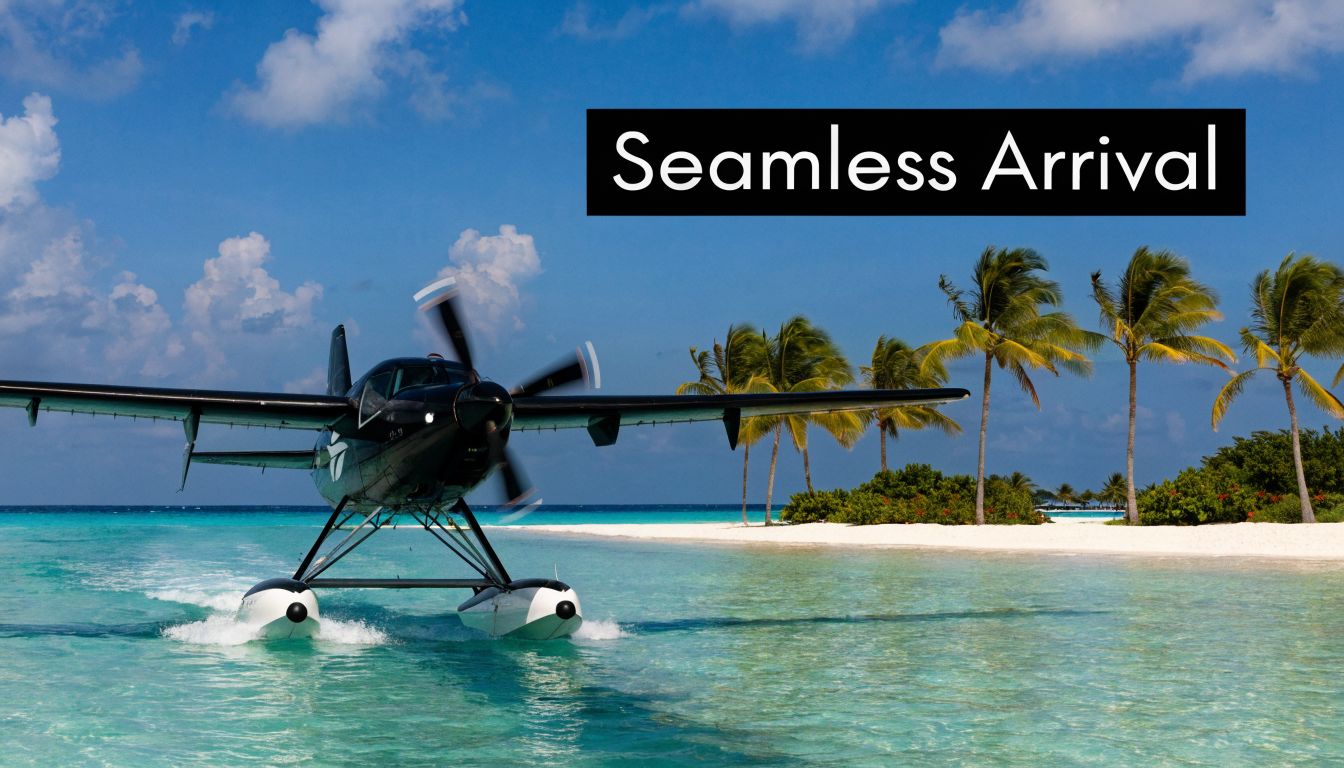
| Seaplane | Remote islands and classic aerial arrival | Shared schedules, lounge waits, and less control |
| Helicopter | Clients prioritizing direct routing and tighter timing | Restricted availability and property-specific setup |
| Private jet plus onward private transfer | Full control, reduced exposure, and clean coordination across multiple stops | Requires advance orchestration across every leg |
If you are combining resorts, adding a yacht movement, or arriving from another destination by private air, treat the aviation plan and island booking as one decision. Private and premium air travel support matters here because the right island can become the wrong choice if the transfer chain is poorly configured.
What a well-run arrival looks like
A polished arrival is quiet. Nobody asks you the same question twice. Nobody improvises in front of you. Nobody “finds out” where your bags went.
Look for four things:
- Direct host continuity: the resort or handling team should know your final routing, party composition, preferences, and villa assignment before touchdown
- Controlled waiting: if a seaplane is unavoidable, use private lounge space or tightly managed timing, not open-ended public waiting
- Invisible baggage handling: once priority bags are identified, the mechanics should disappear from your day
- Arrival-day room strategy: early landings need confirmed access, not hopeful promises at reception
This becomes even more important with children, older family members, high-profile travelers, or clients shifting between business obligations and beach time.
Advisor’s rule: In the Maldives, the transfer is part of the hotel. Judge the property by the handoff as much as the suite.
On-island service that improves the stay
Good island service is not theatrical. It is precise.
The best properties anticipate your rhythm and remove repetitive choices that erode the holiday experience. I want private dining structured as a series, not a single staged dinner for the sake of photographs. I want spa practitioners booked around your daily routine. I want boat access held with enough flexibility to respond to weather, energy, and last-minute changes. Families should be able to shape children’s activities privately rather than bending around standard club hours. Marine outings should follow conditions, not a generic printed schedule.
Packing deserves more discipline than many travelers give it. Aircraft changes, soft bags, humid air, and boat transfers punish excess. For a useful framework, HYDAWAY’s guide to packing light for Hawaii translates well to island travel even though the destination differs.
Departure should be planned with the same care
The final day decides the aftertaste of the trip.
Too many Maldives departures collapse into dead time, half-packed luggage, and awkward waiting between checkout and transfer call. Fix that in advance. Hold a day room or late-use villa if flight timing is poor. Protect one final proper meal. Arrange showers, pressing, and wardrobe access. For remote atolls, build weather tolerance and realistic buffers into the schedule instead of pretending every connection will run perfectly.
The clients who get this right leave the Maldives feeling composed, not processed. That difference is rarely accidental. It comes from private-use thinking, strong local relationships, and detailed control of every movement from runway to runway.
Decoding the Cost of Maldivian Luxury
Clients often ask the wrong cost question. They ask why the Maldives is expensive. The better question is what, exactly, they’re paying for.
You’re not merely paying for a room over water. You’re paying for a remote operating environment where almost everything must be delivered, staffed, maintained, and protected on an island that exists because someone makes it function at a high level every day.
Why the premium exists
The environmental context matters. According to this guide to facts about the Maldives, over 90% of islands suffer severe coastal erosion, and projections indicate that 80% could be uninhabitable by 2050 because of rising seas. That reality changes how I evaluate luxury here.
In the Maldives, paying more often means buying into better island management. Higher-end resorts on nourished, better-protected islands tend to invest more seriously in shoreline resilience, operational upkeep, and conservation of the environment that guests are flying in to enjoy.
Value is not the same as rate
The cheapest published villa can be the most expensive mistake if the island doesn’t match your priorities.
I look at value through a different lens:
- Geographic fit: Are you paying for the right marine conditions and transfer pattern?
- Villa fit: Does the category support your privacy, family, or water-access goals?
- Operational fit: Can the resort handle bespoke dining, flexible schedules, and unusual requests without strain?
- Resilience: Is the island managed in a way that protects the guest experience over time?
A badly matched “deal” wastes money. A well-matched premium stay can feel efficient.
Where clients often overspend
They overspend in three places.
First, they book too much room and not enough privacy. A very large villa isn’t the same as an intelligently positioned one.
Second, they ignore transfer friction. Saving on one line item can create hours of avoidable dead time.
Third, they choose a resort because it photographs well but underinvests in the things that matter after day two. Shade, reef access, dining flexibility, room orientation, and service maturity matter more than social media appeal.
Expensive isn’t the problem. Misaligned is the problem.
My recommendation on cost
Spend decisively on the island and villa structure. Be selective, but not timid, on transfers. Don’t economize on the part of the trip that determines how you live each day.
If a client wants ethical and practical value in the Maldives, I’d rather see them choose a strong, well-run island with real environmental stewardship than chase a lower headline rate that ignores the fragility of the destination.
The Haute Black Difference Beyond Booking to Bespoke Curation
The Maldives does not reward guests who start with a resort shortlist. It rewards guests who start with control.
At this level, the primary question is not which island looks best in photos. It is who can secure the version of that island the public booking engine never shows you. Privacy in the Maldives is built through structure, timing, and relationships. That includes private island buyouts, tightly held villa clusters, protected arrival and departure flows, and staff briefed before you land.
What private access means
Public guides usually stop at room categories and restaurant counts. That is surface-level planning.
According to Goway’s piece on extravagances in a Maldives vacation, top-end Maldives travel increasingly centers on private, non-shared island experiences, including full island buyouts at places such as Soneva Jani or Naladhu. Those arrangements can be available through Virtuoso-affiliated channels, but they are rarely explained in public trip guides.
That matters because the published product is often only part of the product.
Website inventory serves the standard guest well enough. A client who wants a protected arrival, a cluster of villas for family or staff, private-use dining zones, or full island exclusivity needs more than inventory access. They need the right contacts, clear priority, and someone managing the request from both sides.
What a high-level booking process should solve
A well-run booking process fixes problems before they reach the guest.
Privacy architecture
Privacy is not a villa category. It is a layout decision.
You need to know whether sightlines are exposed, whether neighboring villas can affect the mood, whether beach traffic passes your frontage, and whether dining, spa, and movement around the island can be ringfenced for your party. For some clients, the right answer is one exceptional villa. For others, it is a connected estate, a villa cluster, or a full buyout.
Multi-stop choreography
The Maldives often sits inside a larger trip, and that is where weak planning shows. A stay combined with Dubai, Sri Lanka, East Africa, or a Mediterranean leg has to be built as one sequence, not as separate reservations stitched together at the end.
Flight timing, jet lag, baggage handling, seaplane cutoffs, recovery windows, and visual contrast between stops all need to be arranged in advance. Otherwise, a trip that should feel calm feels overworked.
Recognition on property
Real VIP treatment is quiet. It shows up in how little you have to repeat yourself.
The team should know your pace, meal preferences, security expectations, boat use, celebration plans, and tolerance for interruption before check-in. Preferred partner networks help because the conversation starts long before arrival, and the property knows the booking carries context.
One practical route for this kind of planning is Haute Black, which operates as a Virtuoso-affiliated luxury travel company with preferred partner relationships across major hospitality brands, private air support, and tailor-made journey design. For Maldives travel, that matters as operating infrastructure, not marketing gloss.
The strongest Maldives trips are usually built by clients who structure access well, not by clients who simply choose a famous resort.
Why this matters more in the Maldives than elsewhere
The Maldives looks simple from afar. It is not.
Every decision has a downstream effect. A mistimed transfer can cost half a day. The wrong villa position can erode the privacy you thought you paid for. The wrong island can leave a serious snorkeler with weak reef access, a family with an impractical beach, or a couple surrounded by more activity than they want.
This is also why bespoke planning matters more here than in many other beach destinations. In the Maldives, true luxury is less about comparing one resort against another and more about controlling the mechanics behind the stay. The clients who get the best outcome usually begin with the life they want to lead on the trip, then build the island, villa, transfers, and access around that brief.
If you want to plan maldives beach holidays with sharper attention to privacy, routing, villa strategy, and multi-stop design, start a conversation with Haute Black. The right trip usually begins with a precise brief, not a resort shortlist.
Explore Our Guides
Signature Experiences