Haute Black Journal
Limelight Sun Valley Idaho: A Bespoke Luxury Travel Guide

Marlene Azeez
Director, HauteBlack
View all articles →

# Limelight Sun Valley Idaho: A Bespoke Luxury Travel Guide
Published August 9, 2026 by Marlene Azeez
You're probably trying to decide whether Limelight Sun Valley Idaho is a smart luxury base for a real ski trip, or just a stylish hotel with a good website. That's the right question. In this market, the difference between a polished base camp and a well-run stay shows up fast, in transfers, room comfort, dining rhythm, and whether the hotel can handle a mountain guest who wants things done without friction.
Limelight sits in a category that's easy to underestimate if you only compare it to the grand old Sun Valley Lodge. It's more contemporary, more central to Ketchum, and far more useful for travelers who care about walking out the door and moving through town like a local. It also sits inside a ski system with real historical weight, not just pretty scenery. That matters, because the hotel's value changes depending on whether you're here for winter logistics, summer wandering, or a high-touch family escape that needs to feel from touchdown to departure.
What Limelight Sun Valley Idaho Is
A traveler rolls into Ketchum after a transfer from the airport and has one immediate question, where does this hotel fit in the rhythm of Sun Valley? Limelight answers that fast. It sits in downtown Ketchum on Main Street, and the hotel's own listing places it less than 5 minutes' drive to the lift and less than 5 minutes to Sun Valley Village (destination listing). That location is the point. It is a practical base, not a ceremonial arrival.
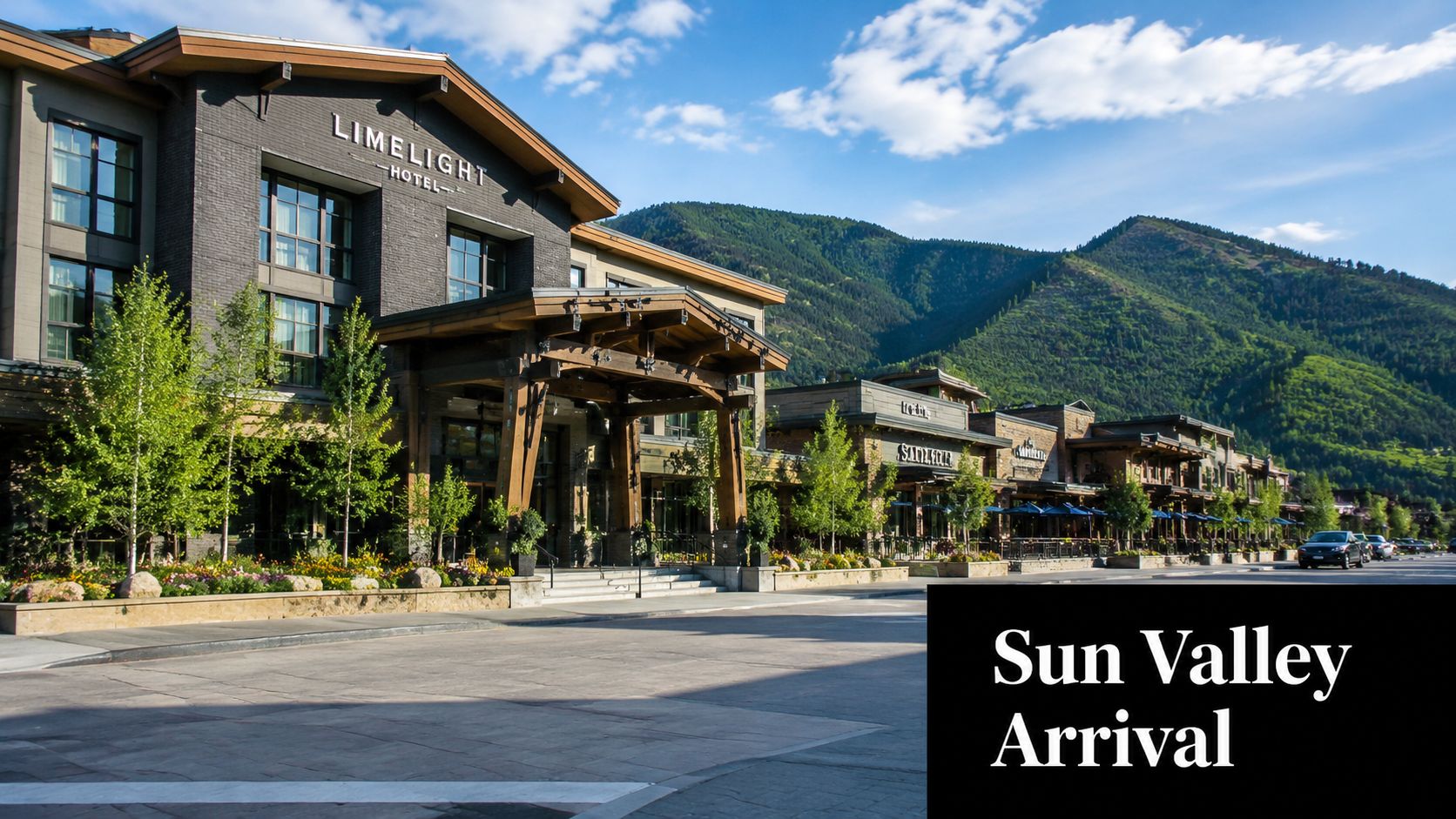
A brand with real ski lineage
Limelight is a mountain hotel brand with a real local foothold, because Aspen Skiing Co. brought it to Sun Valley as its first expansion beyond Colorado (Aspen Skiing Co. press coverage). That matters. The company did not drop a generic lodge into Idaho and hope the setting carried it. It arrived with a ski-hotel operating model already shaped by mountain guests who care about logistics, pacing, and access.
The name also carries local weight. Sun Valley Magazine places Limelight among the runs where freestyle skiing, then called “hot dogging,” was pioneered in the late 1960s, alongside Baldy's Exhibition and Lower Holiday, and notes that Sun Valley hosted the first U.S. Freestyle Championships in 1973 (Sun Valley Magazine). That gives the brand more than a borrowed alpine aesthetic. It sits in a resort culture that helped shape modern ski identity, and that history still shows up in how people talk about the mountain.
Sun Valley opened on December 21, 1936 (Sun Valley history). The resort's scale gives the property context, and Bald Mountain at 9,150 feet with 3,400 feet of vertical drop makes clear why serious skiers treat this destination differently from a decorative winter town (Bald Mountain terrain page). If you are booking through a Virtuoso-affiliated advisor like Haute Black hotel services, that context matters because the stay can be shaped around lift timing, room priority, and the kind of arrival details that spare you avoidable friction.
I would use Limelight as a strategically placed operating hotel, not as a trophy address. If you want old-school ceremony, the Lodge still owns that lane. If you want a lower-friction, walkable base in the center of town, Limelight is the smarter choice. It also pairs naturally with guests who are looking at premier large luxury cabins nearby and want a hotel that handles the town side of the trip cleanly.
Rooms, Residences, and the Engineering Behind the Stay
Limelight's build tells you almost everything about the guest it was designed for. A separate report describes it as a 99-room hotel with 14 residences on the upper floors, and says the first 44 hotel rooms opened in phases along with the lobby lounge, bar, and restaurant (phased opening report). That's not a trivial detail. Phased openings usually expose whether a hotel team can deliver consistency, or whether it's still improvising.
What that layout means in practice
The stacked hotel-plus-residence format usually creates two distinct guest experiences. Hotel rooms should feel efficient and social, with quick access to public spaces, while residences should feel more private and better suited to families, longer stays, or travelers who want space to settle in. That split is exactly why Limelight can work for couples on a ski weekend and also for multi-generational groups who want a softer landing than a standard luxury suite setup.
The mechanical system matters too. Glumac's project page says the building uses a four-pipe fan coil system with high-efficiency air-cooled chillers and high-efficiency condensing boilers (Glumac). In plain English, that means different zones can heat and cool at the same time, which is a serious advantage in a mountain climate where sun, shade, and occupancy can swing room temperatures quickly. It also reduces dependence on water-intensive cooling infrastructure.
Practical rule: in a mountain hotel, the engineering is part of the luxury. If the climate system is weak, you feel it at 6 a.m. and again after skiing.
That's why I care about this stuff more than lobby style. A hotel can look polished and still fail at comfort consistency. The right mechanical setup won't make the room glamorous, but it will make it easier to sleep, dress, dry gear, and move from ski day to dinner without temperature drama.
For travelers comparing lodging styles, think of Limelight less like a classic lodge and more like a modern hospitality platform. If you're used to sprawling private inventory such as premier large luxury cabins, you'll notice Limelight's strengths are different. It's about centrality, flexibility, and easier operational control, not the detached seclusion of a standalone estate. If you want a house-like footprint, book a house. If you want a hotel that can run smoothly in mountain conditions, this is the more disciplined choice.
For direct hotel strategy and booking structure, I'd use a dedicated hotel booking service only if you want the stay handled with the kind of detail that prevents avoidable friction.
On-Site Dining and Wellness Versus the Rest of Ketchum
Limelight's social center is not hidden. It's the lobby lounge, the bar, and the restaurant, the spaces where guests naturally default after skiing or before heading out into town. That's useful, because Ketchum is walkable and the hotel is best used as an anchor, not an island. The smart move is to decide whether you want the hotel to absorb most meals, or whether you'd rather treat Main Street as part of the experience.
Inside the hotel versus outside the door
| Category | Inside Limelight | Within a Short Walk on Main Street |
|---|---|---|
| Social atmosphere | Lobby lounge, bar, and restaurant create an easy after-ski base | Independent dining rooms and bars with a more local feel |
| Morning routine | Simple start without leaving the property | Coffee stops, breakfast counters, and town errands |
| Wellness and recovery | Hotel fitness and recovery-minded convenience | Outdoor movement, galleries, and town walking |
| Dining flexibility | Best for casual reliability and low-friction meals | Better for variety, reservations, and a wider culinary range |
The hotel also has a guest-facing ethos that's more grounded than it first appears. Community reporting notes Limelight distributed $31,740 to nine nonprofit organizations through its community fund (community report). I like that because it suggests a property that is trying to participate in the place, not just occupy it. That doesn't replace service quality, but it does tell you something about the kind of hotel team operating there.
How I'd eat and move here
If you're staying two or three nights, don't lock yourself into every meal on property. Use the hotel for the easy anchor meals, then walk Main Street for dinner when you want more personality. If you're traveling with children or a group that values convenience, keeping one or two meals on-site is the right call, especially after a ski day when nobody wants a complicated plan.
For travelers who want a higher-touch dining plan, private dining support is more useful than trying to improvise reservations after arrival. That matters in Ketchum because the best nights tend to disappear quickly once weather is good and the town fills up.
Stay in Limelight for the convenience. Leave for dinner when you want Ketchum to feel like a town, not a resort corridor.
Best Seasons and How to Match the Calendar to Your Trip
Sun Valley changes fast with the season, and Limelight makes the most sense when you match the trip to the calendar instead of pretending every month offers the same experience. Winter is obvious, but the shoulder seasons are where a lot of travelers make bad assumptions. If you want the hotel to feel animated and the mountain to be the main event, winter is your answer. If you want room to breathe, you need to look harder at the quieter windows.
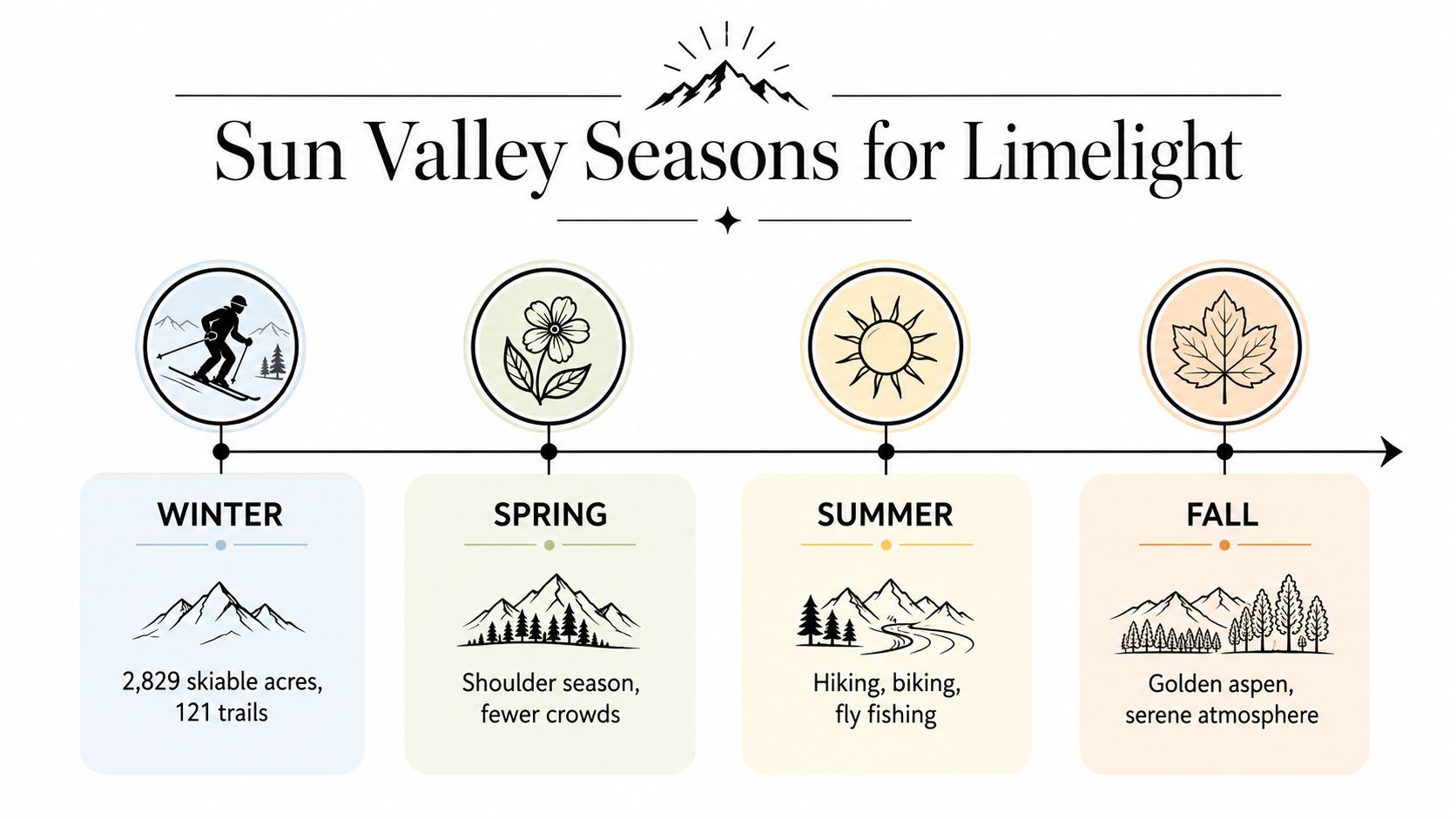
Winter first, because the numbers matter
Sun Valley reports 2,829 skiable acres, 121 trails, and 17 lifts with a stated lift capacity of 29,717 skiers per hour (resort figures). Those numbers matter because they create real movement pressure on peak days. Ski-in/ski-out style efficiency, timing your departure, and staying close to town become materially more important than they would in a smaller mountain market.
For winter, I'd plan around early lift logistics and late-afternoon flexibility. Limelight works because it reduces the amount of planning needed between breakfast, ski storage, town dinner, and downtime. You're not chasing a complicated transportation chain every time you leave the room.
Shoulder season and summer need different expectations
If you want fewer crowds, calmer pacing, or better value relative to the ski period, shoulder season is the smarter bet. For practical perspective on timing, shoulder season travel advice is worth reading before you commit to dates. Spring can be quiet, summer opens the door to hiking, biking, and fly-fishing, and fall gives the valley a more serene atmosphere.
Best fit by season: winter for ski-first travelers, summer for active explorers, shoulder season for people who want the town without the crush.
I'd be blunt here. Don't book Limelight in winter if you're not going to use the mountain. Don't book it in summer if you expect the same ski-town energy that defines January. The property is good at being a base for a specific kind of trip, and it gets more useful when you stop asking it to be everything.
Private Experiences and Local Attractions Within Reach
The best Limelight stays don't happen by accident. They're built around a clean day plan, a driver who knows timing, and a hotel that keeps the logistics easy enough that you can say yes to more than one thing. A good example is a three-day stay built around Bald Mountain, one private dinner, and a single off-mountain escape. The hotel becomes the launch point, not the destination.
A day that actually works here
Start with a private guide on Bald Mountain if you want to ski with intention rather than just follow trail maps. Add heli-skiing or cat-skiing if the goal is to get beyond the resort circuit, and keep the afternoon open for recovery back in town. Sun Valley's terrain and guided access options make it easy to escalate the day without turning it into a planning project.
For a different pace, shift the day to the Big Wood River for fly-fishing, then move to horseback riding in the surrounding high desert. If you have five days instead of three, work in the Sawtooth National Recreation Area, a stop at one of the local hot springs in the Wood River Valley, and one cultural evening around galleries or summer symphony programming.
A private advisor earns their keep here because the challenge isn't finding things to do. It's sequencing them so they feel effortless. The transfer has to land on time, the guide has to know your pace, dinner has to fit after the activity, and nobody should be left making calls from a trailhead.
Use the hotel as a logistics hub
That's also why Limelight works better for some travelers than a more secluded property. You can sleep in Ketchum, leave early for the mountains, and still come back to town without feeling isolated from the local circuit. For families, it's especially useful because the hotel keeps the day from becoming a shuttle puzzle.
If you want the best version of Sun Valley, don't try to cram every classic activity into one day. Pick one mountain day, one water or trail day, and one town night. That rhythm makes the trip feel polished instead of overstuffed.
Travel Logistics and Where Limelight Falls Short
Getting to Sun Valley is not difficult, but it does require planning. The cleanest route is Friedman Memorial Airport in Hailey, and Sun Valley's own planning materials note it is about 25 minutes away with direct winter flights from eight major cities (Sun Valley resort planning). Private aviation into Hailey is the obvious upgrade if you're traveling on your own schedule, while Boise remains the backup option for a longer ground transfer.
What to expect on arrival and departure
Mountain weather can interrupt the cleanest itinerary in winter, so I always build slack into arrival and departure windows. If you're connecting through a hub, keep your first night light. If you're flying private, ask for ground transport that can absorb timing changes instead of assuming the airport handoff will be frictionless.
Limelight's location in town helps once you've landed. The bigger issue is what the hotel does not fully solve for very high-end travelers who want a more private, more individualized, and more staffed environment. That's where the trade-off becomes clear.
Where the property falls behind ultra-luxury alternatives
Compared with true ultra-luxury mountain inventory, Limelight is not the strongest choice for travelers who want butler service, private chef programming, highly individualized suite service, or deep in-room theatricality. The phased build created a smart operating hotel, but it doesn't automatically equal the privacy level many ultra-high-net-worth guests expect from a fully staffed residence-style stay. In plain terms, it's polished, but not overbuilt for maximal discretion.
That doesn't make it weak. It just means you need to choose it for the right reasons. If your priority is direct access, a central Ketchum location, and a hotel that works hard without pretending to be a private estate, Limelight is a good fit. If your priority is seclusion, layered residential privacy, and white-glove coverage in the room itself, you should look at other options in the Sun Valley orbit.
The advantage of understanding the gap is that you don't arrive disappointed. You're not booking a fantasy. You're booking a practical luxury hotel with a strong location and a few real compromises.
How Haute Black Turns a Limelight Stay Into a VIP Experience
Limelight becomes a better hotel when it's booked through a channel that knows how to press the right advantages. Haute Black works as a Virtuoso-affiliated luxury travel option with access to complimentary upgrades when available, resort credits, daily breakfast, early check-in and late check-out flexibility, and VIP recognition on arrival. That matters here more than at many other mountain hotels, because the property's value is partly in timing and convenience, not just the room itself.
What the stay looks like when it's handled properly
Use a four-night example. You arrive with an airport transfer already arranged, check in with room-category preference if inventory allows, and start with breakfast covered. The next morning is a private guide day on Bald Mountain, followed by a heli-skiing add-on if conditions and appetite line up. One evening becomes a private dinner instead of a last-minute search for reservations.
That's the compound effect. Each perk saves time, but the value is that the trip stops feeling assembled at the margin. Haute Black also brings a dedicated advisor, waived planning fees for members, two decades of relationships, and the ability to layer in private aviation, villa rentals, and member events through the same travel relationship (Haute Black services). That's the right structure for travelers who want the hotel, the transfer, and the experiences to behave like one itinerary.
If you're deciding between direct booking and an advisor, my view is simple. Direct works if you only want a room. Advisor booking matters when you want the trip to function at a higher level than the hotel's standard public-facing promise. Limelight is good at being a base. Haute Black helps turn that base into a properly managed luxury stay.
If you want the trip planned with the right room strategy, transfer timing, and activity sequencing, book through Haute Black and have a dedicated advisor build the Sun Valley stay around how you travel. For Limelight in particular, that's the difference between a decent mountain hotel stay and a polished VIP arrival with the logistics already handled.
Explore Our Guides


Signature Experiences


