Haute Black Journal
Arctic Treehouse Hotel: Luxury Stays & Aurora Guide

Marlene Azeez
Director, HauteBlack
View all articles →

# Arctic Treehouse Hotel: Luxury Stays & Aurora Guide
May 29, 2026
You're probably looking at Arctic TreeHouse Hotel for the same reason most discerning clients do. You want Lapland without compromise. You want the stillness, the snow, the aurora, and the design, but you don't want to feel like you've checked into a theme park, a bus-tour outpost, or a rustic lodge dressed up as luxury.
That instinct is correct.
Arctic TreeHouse Hotel works when the trip is curated properly. On its own, it's a compelling property. Handled badly, it becomes just another photogenic stay with logistical friction around it. Handled well, it becomes the center of a highly controlled Arctic immersion. The difference is rarely the room. It's the orchestration.
The New Vision of Arctic Luxury
The old model of winter luxury was distance and excess. A sprawling lodge. Heavy interiors. A fire so oversized it tried to compensate for everything else. It was comfortable, but it often placed you against nature rather than inside it.
The Arctic treehouse concept does the opposite. It narrows your field of living and expands your field of seeing. You wake in a warm, pared-back shelter, and the surroundings become the drama. Snow-laden pines, low Arctic light, and a sky that can shift from stillness to spectacle are given center stage.
That's why Arctic TreeHouse Hotel matters. It isn't memorable because it's cold outside and warm inside. Plenty of places can offer that. It's memorable because the architecture is disciplined enough to let Lapland do the work.
Why this style appeals to sophisticated travelers
Clients who've done safari, private-island Caribbean, and Alpine chalet circuits often want something quieter next. Not less luxurious. Just less performative.
An Arctic treehouse stay answers that beautifully:
- Privacy over pageantry. You're not there to be seen in a lobby.
- Design over decoration. Every line should feel intentional.
- Experience over sprawl. A smaller footprint often creates a stronger memory.
- Nature as the centerpiece. The view isn't an accessory. It's the point.
The right Arctic stay doesn't try to outshine the landscape. It frames it.
What makes this a destination, not just a hotel
The strongest luxury properties create emotional atmosphere before they create service theater. Arctic TreeHouse Hotel belongs in that category. It speaks to travelers who want sensory clarity: timber, glass, silence, snow, and a direct relationship with the horizon.
That's also why I don't treat it as a standard room booking. I treat it as a setting around which the entire trip should be built. Arrivals, timing, suite choice, dinner pacing, private activities, and recovery time all need to support the mood the property promises.
Understanding the Arctic Treehouse Concept
The concept is often reduced to "a stylish cabin in the snow." That misses the point. An Arctic treehouse is not primarily about novelty. It's about architectural restraint in a demanding environment.
At its best, the concept combines Scandinavian minimalism with a very deliberate relationship to terrain, light, and privacy. That means less visual clutter, more intelligent orientation, and a structure that gives you shelter without severing your connection to the forest.
The architecture is the experience
Studio Puisto describes Arctic TreeHouse Hotel's units as a raised timber-and-glass enclosure built indoors, finished internally, and then lifted onto pillars, with a full-height northern-facing glass wall for panoramic forest and sky views in its project profile for Arctic TreeHouse Hotel. That matters because elevation reduces direct ground contact and helps preserve the site's natural terrain.
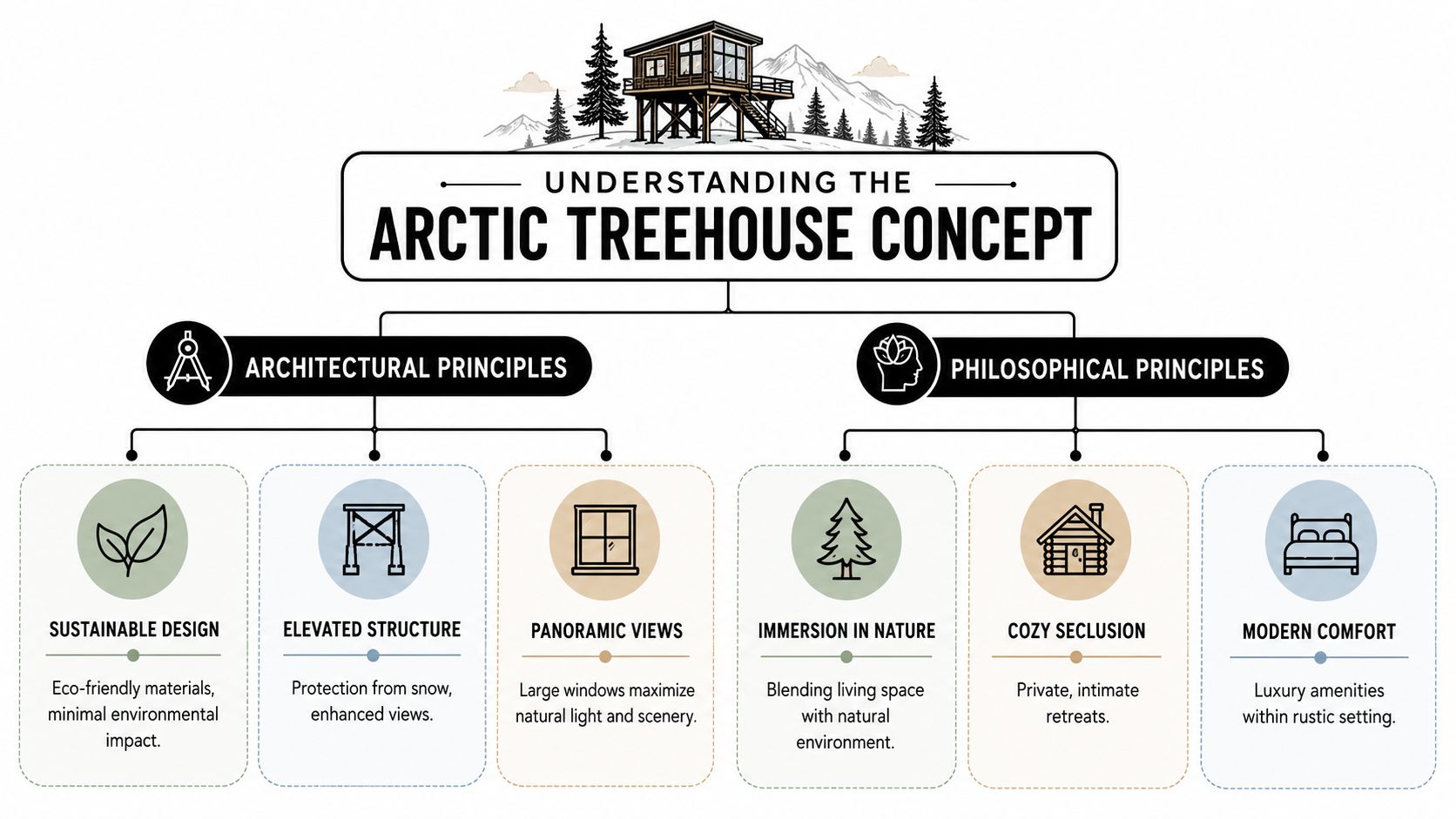
A serious traveler should understand what that means in practice. You're not booking a room with a nice window. You're booking a structure designed to mediate Arctic conditions without flattening the environment into just another resort backdrop.
How it differs from other Arctic stays
There's a meaningful difference between an Arctic treehouse, a glass igloo, and a traditional lodge.
| Stay style | What it emphasizes | Where it can fall short |
|---|---|---|
| Arctic treehouse | Privacy, design discipline, framed views, intimacy | Less suited to travelers who want large communal spaces |
| Glass igloo | Exposure to the sky, novelty, visual drama | Can feel more display-oriented than cocooning |
| Traditional lodge | Atmosphere, social warmth, classic winter romance | Often less architecturally immersive |
The treehouse model usually wins for travelers who care about how they inhabit a place, not just what amenities are listed on paper.
The philosophy behind the appeal
A strong Arctic property should do three things at once:
- Protect your comfort without making you feel sealed off
- Preserve the natural surroundings rather than overpower them
- Create emotional stillness through scale, light, and material choice
That's why this category has real staying power. It isn't gimmick hospitality. It's a clean answer to a luxury question: how do you make a guest feel sheltered and exposed at the same time?
For a broader view of how Finland rewards this kind of design-led travel, our insider's guide to luxury tours in Finland is a useful companion.
Inside the Iconic Arctic TreeHouse Hotel
You arrive after a private flight into Rovaniemi, transfer takes minutes, and within the hour you are looking out through a wall of glass into the forest with no lobby theatrics, no oversized resort sprawl, and no sense that the setting has been diluted for mass appeal. That is the hotel's real achievement. It turned a highly specific Arctic design idea into a property with international recognition, while keeping the experience intimate.
Arctic TreeHouse Hotel opened in November 2016 on the Arctic Circle in Rovaniemi with 32 suites and 5 cottages, according to Luxus Plus coverage of the hotel's opening and concept. Its position near SantaPark and within walking distance of Santa Claus Village can deter travelers who equate proximity with compromise. I disagree. For a well-orchestrated stay, that location is an advantage. You gain efficient access and still return to a setting that feels insulated and visually disciplined.
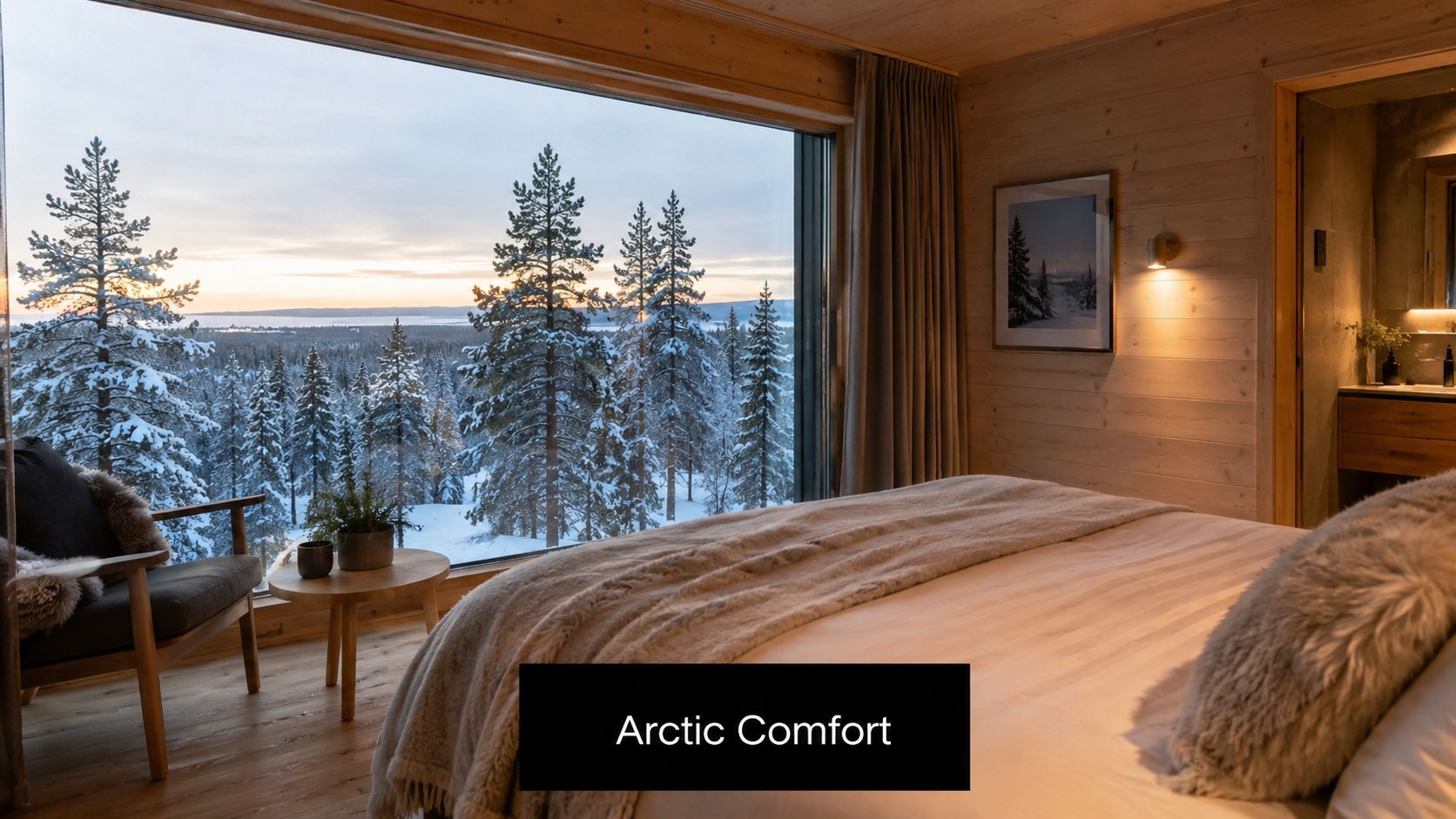
What matters here is not sheer inventory or a checklist of resort facilities. It is the way the property frames Lapland. The architecture keeps your attention on the treeline, the snow light, and the silence. That is why this hotel works best for clients who want an Arctic base with editorial clarity, not a generic luxury room dropped into the north.
What to book
Choose with intent.
- Arctic TreeHouse Suites are right for couples and solo travelers who want the hotel's signature composition. Cocooning interiors, wide forest views, and a strong sense of privacy without overpaying for space they will not use.
- Arctic GlassHouses suit guests who expect a more residential rhythm. If a private sauna and greater separation are part of the brief, this is the stronger choice.
- Executive-level accommodation is the correct move when the suite itself is a central part of the trip, especially for celebratory stays or clients building in time to linger rather than sleep and leave.
My recommendation is simple. Book the suite for the visual concept. Book the GlassHouse for indulgent privacy.
The distinction matters because this property should be used as a setting, not just a room key. Morning light, late sauna sessions, and unhurried returns after dinner or an evening outing are part of the value. Travelers who want a broader northern lights itinerary with multiple viewing environments should also look at a privately curated Iceland northern lights journey, then decide whether Lapland or Iceland better fits the tone of the trip.
Why the hotel holds its position
Arctic TreeHouse Hotel remains iconic because it has restraint. Many Arctic properties oversell the spectacle and underserve the lived experience. This one understands proportion. The rooms feel protected, the views stay central, and the design does not fight for attention once you are inside.
That makes it especially effective for short, high-value stays built around a larger Arctic program. Clients arriving by private air, combining Rovaniemi with remote wilderness time, or adding custom husky, snowmobile, or aurora experiences benefit from a property that is easy to use and visually coherent. It supports the itinerary rather than hijacking it.
A closer look at the property helps capture that atmosphere:
My recommendation
Stay at least two nights. One night reduces the hotel to a photo stop and gives you none of the calm that justifies choosing this concept in the first place.
Use the first day to arrive, settle, and let the setting do its work. Use the second for one sharply chosen outing and a proper evening back at the property. That is how experienced advisors treat Arctic TreeHouse Hotel. Not as an isolated booking, but as one precisely placed piece of a fully curated Lapland journey.
Planning Your Journey: Seasons and Auroras
Your pilot touches down in Rovaniemi at 2 p.m. In December, that arrival still feels like evening. In July, the light barely softens. The same suite, the same forest, and the same hotel produce two entirely different Arctic experiences. Choose your dates carelessly and you dilute the point of coming here at all.
Arctic travel rewards precision. Start with the atmosphere you want to live in, then build the stay around it. Aurora, snow, Christmas energy, stillness, and endless summer light each require a different setup.
A cleaner way to choose your season
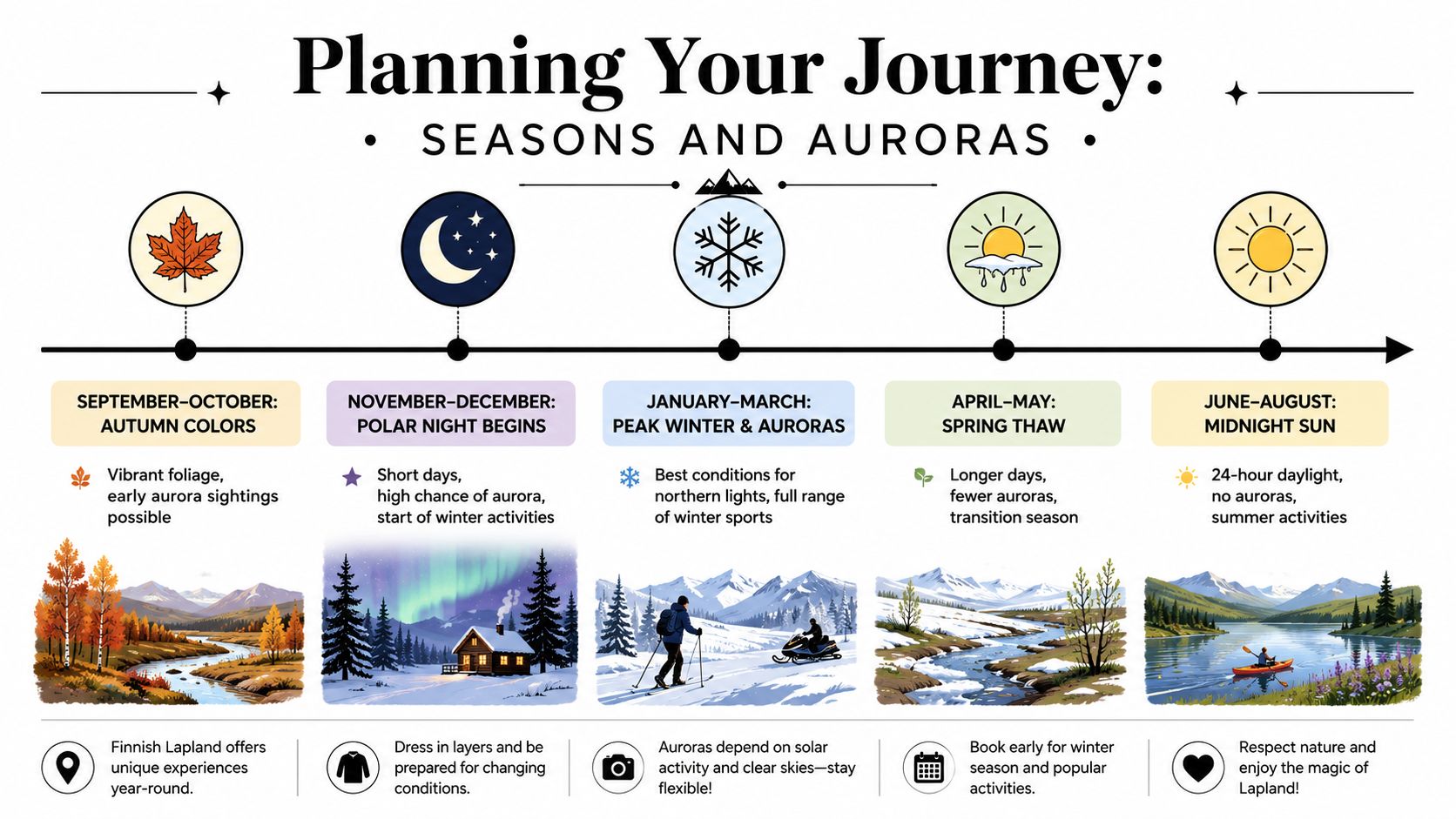
Use this framework instead:
| Travel window | What it feels like | Best for | Main trade-off |
|---|---|---|---|
| Autumn | Forest color, sharper air, early seasonal mood | Travelers who want atmosphere without peak-winter density | Less classic snow-driven imagery |
| Early winter | Darkness, anticipation, holiday energy | Festive trips and aurora-focused stays | High demand around key dates |
| Deep winter | Full Arctic expression, snow-heavy landscapes | Iconic Lapland visuals and classic cold-weather activities | More operational complexity |
| Spring shoulder | Brighter days, easier movement, softer rhythm | Families and mixed-interest groups | Less dramatic dark-sky ambiance |
| Summer | Long light, serenity, green forest | Design lovers, repeat visitors, and private reset trips | No aurora experience |
The right season depends on what you are curating. A first Lapland journey usually needs contrast, darkness, and snow. A repeat visit often benefits from restraint, space, and a calmer tempo.
If you want the Northern Lights
Treat aurora planning as probability management, not wish fulfillment. The sky owes you nothing. Good advisors build the trip so the nights feel rewarding whether the lights appear in full force, as a faint ribbon, or not at all.
Winter gives you the dark canvas required for aurora viewing. That matters. So does how you structure the day. Long, exhausting activity schedules undermine the very experience clients say they want most.
Use a better setup:
- Keep evenings flexible so a private driver or guide can adjust timing to conditions.
- Protect your energy with lighter daytime scheduling if night-sky viewing is a priority.
- Book a suite you'll enjoy spending time in because some aurora nights become beautiful evenings indoors.
- Build layered rewards into the program. Sauna, cold air, firelight, proper dining, and the hush of the forest should justify the trip on their own.
This hotel suits travelers who care about the sky as much as the room. That is the philosophy behind the Arctic treehouse concept at its best. Shelter, framing, stillness, and a strong sense of place.
For travelers weighing Finland against Iceland for an aurora-led journey, our Iceland Northern Lights experience guide shows how the two destinations differ in rhythm, terrain, and trip design.
If the trip only works when the aurora appears on cue, the trip was badly designed.
If you want the Midnight Sun
Summer in Lapland is for travelers who have no interest in cliché. The forest is green, the air is clean, and the hotel's architecture reads with greater clarity in continuous light. You notice proportion, texture, and silence rather than seasonal theatre.
This version of the Arctic works well for private reset trips, photography, hiking, and clients who prefer low social density over festive atmosphere. It is also the stronger choice for those arriving from a wider Nordic itinerary who want a few restorative nights rather than a snow-focused production.
My recommendation by traveler type
- First visit to Lapland. Choose winter. The emotional return is stronger.
- Couples focused on mood and privacy. Early winter gives you darkness and atmosphere without the heaviest holiday congestion.
- Families with different energy levels. Spring shoulder is easier to manage and more forgiving operationally.
- Repeat luxury travelers. Summer is the sharper choice if you value calm, design, and space over spectacle.
My advice is simple. Decide what the trip is for before you decide when to go. That is how Arctic travel becomes deliberate, polished, and worth the effort.
Beyond the Suite: Curated Arctic Experiences
You arrive before dusk, transfer straight into the forest, and close the door behind you. The mistake at this point is obvious. Treat the hotel as a pretty room with excursions attached, and the trip flattens into expensive logistics. Use it as the center of a tightly controlled Arctic program, and the stay becomes what this concept was built for: shelter, stillness, and selective exposure to the wild.
That distinction matters.
The strongest stays at Arctic TreeHouse Hotel are edited, not crowded. One major experience per day is enough. The rest of the value comes from contrast. Cold and heat. Silence and movement. Exposure and retreat. If you fill every hour, you strip the property of its real purpose.
For couples and honeymooners
Lapland romance works best when it stays restrained. No contrived theatrics. No overbuilt itinerary.
I would structure the day around a slow morning, a proper lunch, a period of complete privacy back at the hotel, then one beautifully timed outing after daylight fades. A husky safari can work well. So can a private aurora drive with a serious guide who knows when to wait and when to reposition. Add one intimate dinner, then leave the evening alone.
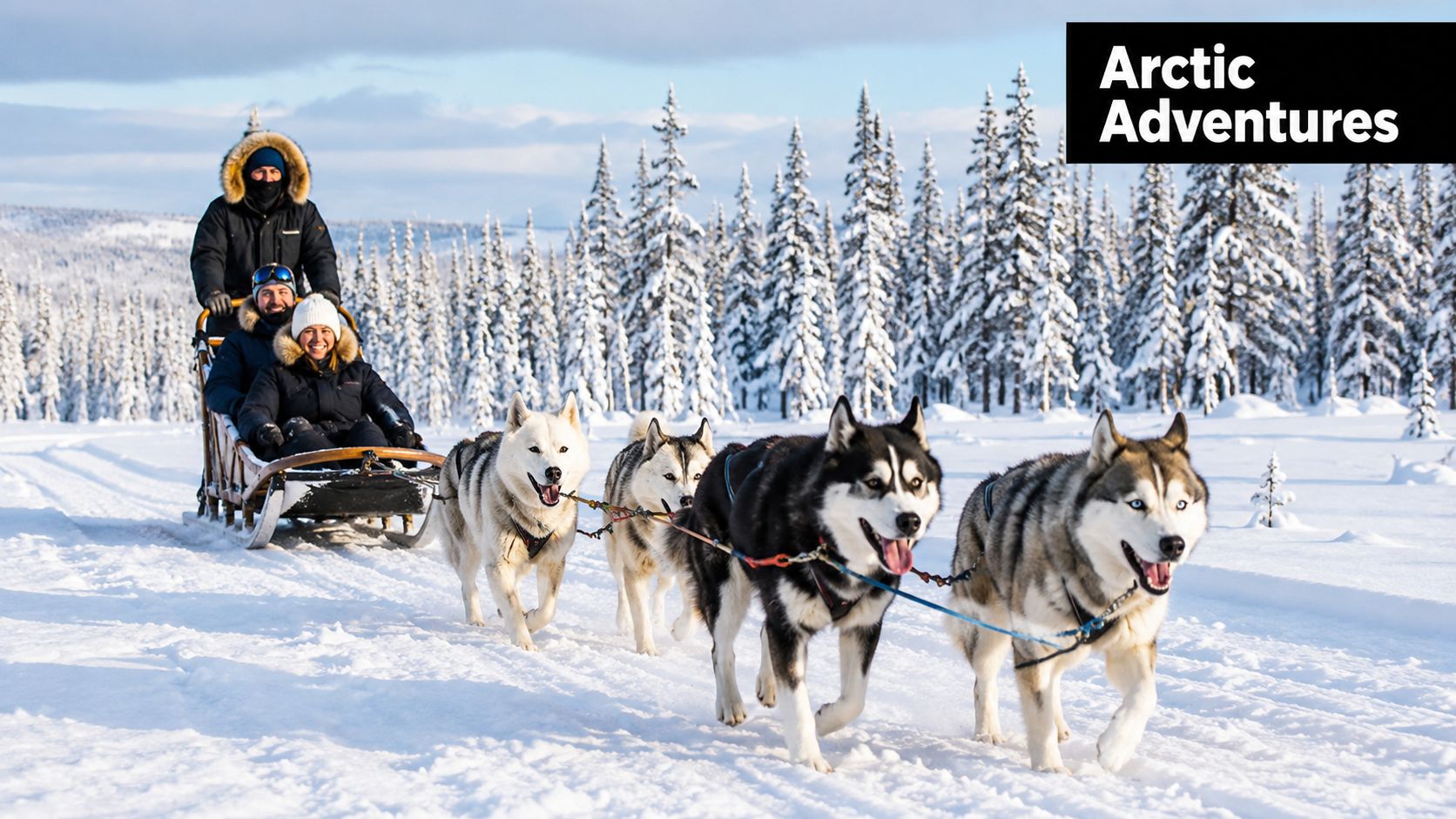
Privacy is the luxury here. Protect it.
For families and multigenerational groups
Lapland rewards disciplined planning. Families who try to sample every seasonal attraction usually end up with tired children, overextended grandparents, and a schedule that feels commercial.
A better structure is simple:
- Morning anchor. One guided activity with broad appeal, such as reindeer, huskies, or an easy snow excursion.
- Midday reset. Lunch, warmth, and real downtime back at the hotel.
- Afternoon split. Rest for some guests, light exploration for others, nothing overly ambitious.
- Evening comfort. Early dinner, low stimulation, and no pressure to force one more outing.
Children usually do well in the Arctic when adults stop treating the trip like an endurance test.
For executives and private retreats
Senior founders, investors, and leadership groups often arrive overstimulated. They do not need more input. They need control, quiet, and room to recover properly.
That makes accommodation choice more important than activity count. As noted earlier, certain categories are materially better for this kind of stay because they support actual decompression, not just sleep. Sauna access, firelight, terrace space, and enough privacy to hold a conversation or disappear for a few hours change the tone of the trip. Book accordingly, or use a specialist in luxury hotel planning and booking to secure the right category and sequence the stay around recovery rather than novelty.
What belongs in the program
Prioritize experiences that sharpen the Arctic rather than dilute it.
- One premium animal-led experience, chosen well
- A private aurora plan, not a bus-based chase
- Time in the suite to warm up, reset, and go quiet
- Unstructured hours facing the forest, which are often the most memorable part of the stay
Skip the obvious filler:
- Stacked group tours
- Heavily commercial holiday programming
- Multiple fixed dining commitments
- Any schedule that treats the suite as a place to sleep between activities
The suite should absorb the day, not merely end it.
That is the philosophy behind the Arctic treehouse idea at its best. The room frames the surroundings. The experiences should do the same. A well-composed itinerary gives you movement, then stillness. Weather, then warmth. Awe, then privacy. That sequence is what turns a hotel stay into a fully curated Arctic immersion.
Seamless Execution: The HauteBlack Advantage
An advisor earns their fee on this type of trip.
Arctic travel punishes loose planning fast. A late connection, the wrong transfer setup, poor baggage handling, or a badly timed excursion can flatten the mood before you ever settle into the suite. In Lapland, luxury is not proved by what you book. It is proved by how well the entire program holds together from wheels down to final departure.
That matters even more with the Arctic treehouse concept. The hotel is only one component. The primary work is designing the rhythm around it so the architecture, the silence, the cold, and the private moments feel intentional rather than incidental. That is the difference between a pretty winter stay and a fully orchestrated Arctic immersion.
What competent planning actually looks like
Good planning starts before the reservation is confirmed. Suite selection is checked against how you travel, not against marketing names. Arrival timing is built around daylight, fatigue, and the first evening's expectations. Dining, recovery time, and any night program are arranged so the trip feels calm, not crowded.
As noted earlier, one of the property's strengths is that it feels removed without becoming logistically awkward. A strong advisor uses that well. Private air arrivals, commercial premium cabin itineraries, drivers, luggage, and on-property timing should connect cleanly enough that you never spend your first hours dealing with avoidable friction.
Where self-booked trips lose quality
Problems rarely come from one dramatic mistake. They come from a string of small, expensive misjudgments.
- The wrong suite is booked for the pace and privacy the trip requires.
- Arrival day is overloaded, which wastes the setting on fatigue.
- Transfers are treated casually, even though cold-weather handoffs need precision.
- Shared excursions are accepted by default when private handling would change the experience completely.
- Feature assumptions go unchecked, and guests discover too late that their accommodation does not include what they expected.
These are not minor details. They shape how the entire stay feels.
Why the booking channel matters
The booking channel determines more than rate access. It determines whether anyone is managing the trip as a whole. That is why HauteBlack's hotel planning and booking services are relevant in this context. The value is practical: preferred hotel access, itinerary coordination, ground handling, and discreet management of the stay around the client's priorities.
Real value is often invisible until it fails. It sits in the pre-arranged driver who is in the right place at the right time, the correctly matched room category, the dinner held for a delayed arrival, the private guide who understands pace, and the built-in flexibility that protects the experience from weather or fatigue.
In the Arctic, luxury means removing friction before the client ever notices it.
My advice
Do not treat this as a simple hotel booking with a few excursions attached. Treat it as a remote-environment program that requires editorial judgment, timing discipline, and control over every handoff.
That is how experts curate the Arctic treehouse experience properly. The hotel provides the frame. The advisor composes everything around it.
Arctic Treehouse Hotel FAQs
Is Arctic TreeHouse Hotel worth it
Yes, if you value design, privacy, and atmosphere more than sprawling resort infrastructure.
No, if you need constant activity, large public spaces, or a traditional luxury-hotel rhythm built around lobbies, bars, and social buzz. This property is for people who want immersion and control. If that's your style, it's a smart choice.
What should I expect to spend
Expect a premium stay. I'm not giving a number because no verified pricing data is provided here, and exact rates vary materially by season, suite category, and how the trip is structured.
The smarter way to think about cost is by layers:
| Cost layer | What it usually includes |
|---|---|
| Accommodation | Suite category, season, and any meal inclusions |
| Transport | Commercial premium cabin, private air, or a hybrid setup |
| Ground handling | Airport transfers, private drivers, activity logistics |
| Experiences | Private versus shared excursions, specialist guiding, bespoke dining |
| Comfort upgrades | Top room categories, wellness preferences, celebratory details |
For UHNWIs, the question usually isn't "How cheap can this be?" It's "How polished do I want the experience to feel?" That's the right question.
Is it suitable for young children
It can be, but only with the right expectations.
Families who do well here tend to value nature, calm surroundings, and quality time. Families who struggle usually try to force an adult-style romantic Arctic trip onto children, or they overload the schedule. If you're bringing young children, choose convenience over bravado. Keep activity blocks short, leave room for naps or warming breaks, and don't let every meal become a production.
How far in advance should I book
Book as early as your calendar allows, especially if your trip is tied to peak winter demand, holiday dates, or a specific room category. Boutique-style Arctic properties don't reward procrastination.
The more specific your wish list, the earlier you should move:
- If suite type matters, book early.
- If you need private guiding, book early.
- If this is a festive-season or celebratory trip, book very early.
- If you're flexible on dates and room type, you'll have more latitude.
How many nights should I stay
Enough to settle into the place. One night is often a mistake unless it's part of a larger Lapland circuit and the expectation is purely visual. A stronger stay allows time for arrival, one or two meaningful excursions, and real in-room enjoyment.
This hotel rewards unhurried travelers.
Should I choose this over a glass igloo or a lodge
Choose Arctic TreeHouse Hotel if you want architectural intimacy, a cocooning sense of privacy, and a strong visual relationship with the forest. Choose a glass igloo if your priority is novelty and overhead sky exposure. Choose a lodge if you want larger communal life and a more traditional winter atmosphere.
My own bias is clear. For discerning travelers who care about design and emotional tone, the treehouse model is usually the more elegant choice.
Can I build a full luxury journey around it
Absolutely. In fact, that's the only way I'd recommend approaching it for a high-end client.
Use the hotel as the emotional center of the itinerary, then build outward with smart transfers, customized activities, private dining moments, and enough stillness to let the destination register. If you treat it as merely a room reservation, you'll get a nice stay. If you treat it as the core setting of a bespoke Arctic journey, you'll get something far more lasting.
If you want to turn Arctic TreeHouse Hotel into a fully customized Lapland journey, contact HauteBlack for bespoke trip planning, preferred hotel access, and discreet coordination from arrival to departure.
Explore Our Guides


Signature Experiences


