Haute Black Journal
Your 2026 Guide: National Parks in Utah Arizona

Marlene Azeez
Director, HauteBlack
View all articles →

# Your 2026 Guide: National Parks in Utah Arizona
June 14, 2026
The best Utah and Arizona park journeys are engineered, not improvised. This region rewards travelers who treat routing, pacing, and access with the same rigor they bring to choosing a villa or charter.
A strong trip here is not about collecting park names. It is about sequencing them so the transfer days stay civilized, the marquee moments land at the right hour, and the harder terrain is balanced by privacy, comfort, and recovery. Utah's five national parks sit close enough to combine intelligently, while northern Arizona adds the Grand Canyon, Page, and the Utah border country in a way that creates a rare multi-stop circuit without constant repacking.
Start by building around four refined bases: Springdale for Zion, Bryce, and easy southern Utah access; Moab for Arches and Canyonlands; Torrey for Capitol Reef and the quieter center of the state; and Page for Antelope Canyon and the Arizona side of the route. That structure changes the trip entirely. Instead of long, draining transit days, you get short scenic drives, better dining, stronger guiding options, and enough flexibility to time each park for early light, late light, or low-traffic windows.
At this point, judgment matters.
The right itinerary pairs effort with reward. Put your most ambitious hiking or heli-access day next to a restorative property stay, a private touring day, or a slower scenic drive. Save one-night stops for places that fully justify them. Keep two or three nights in the bases that can support multiple experiences without friction. Travelers who want the region at its best should also avoid treating the desert as roughing it by default. With the right planning, it feels polished, controlled, and highly exclusive.
For travelers interested in curated outdoor journeys with that level of precision, Haute Black's perspective on unique luxury adventure travel in the USA offers the right frame. The goal is not to see more. The goal is to see the right places in the right order, with private guiding, smart transfers, and access that makes these terrains feel less like a public circuit and more like a well-run members club.
1. Zion National Park, Utah
Zion should be your opening move. It sets the tone for the entire Utah and Arizona circuit with maximum visual impact, strong lodging around Springdale, and one of the cleanest transitions into Bryce or a St. George air arrival. Start here, and the rest of the route feels disciplined. Start elsewhere, and the trip often picks up unnecessary drive time and operational drag.
Zion also rewards travelers who treat it as a staged experience rather than a single park day. The canyon is compact enough to handle with precision and varied enough to support different energy levels on the same itinerary. A couple can do a guided early outing, disappear for a long private lunch, then return for late light. A family can keep the first day light and save the more ambitious hiking or climbing block for day two.
How to make Zion feel private
Privacy in Zion comes from timing, access, and where you sleep. Get those three right and the park feels controlled, polished, and far more exclusive than its popularity suggests.
- Base yourself in Springdale: Stay close to the entrance for fast starts, easier midday resets, and canyon views that keep the park present even off trail.
- Use private guiding strategically: A strong guide does far more than lead a hike. They shape the day around crowd patterns, fitness, photo timing, and the kind of pace that keeps the experience refined.
- Go in shoulder season: March and November are usually the smartest choices for comfort, cleaner light, and a calmer rhythm.
- Split the day in two: Zion performs best in windows. Early morning and late afternoon are the periods worth protecting.
Practical rule: In Zion, buy access and timing. Distance is secondary.
This is also where Haute Black's routing advantage matters. Zion works best as the first anchor in a multi-park sequence that flows from southern Utah into Bryce, the North Rim corridor, or onward into Arizona with minimal friction. Add private desert travel experiences curated for high-touch itineraries, and Zion stops feeling like a public-park stopover. It becomes the opening chapter of a very well-run desert journey.
If you want a useful contrast in how iconic canyon destinations are commonly toured, Comedy On Deck's guide to Grand Canyon is a helpful reference point. Zion demands a different approach. Less bus-tour mentality, more precise staging.
For broader inspiration on premium domestic adventure, see these luxury adventure ideas in the USA.
2. Grand Canyon National Park, Arizona
Grand Canyon punishes vague planning. Treat it as a drive-up viewpoint, and you get crowds, dead time, and a day that feels strangely ordinary for one of the world's great natural wonders. Treat it as a precisely staged stop within a larger Utah-Arizona circuit, and it becomes the dramatic hinge of the entire journey.

The first decision is strategic, not scenic. South Rim works best for travelers building a polished route from Zion or Bryce into northern Arizona, with stronger service infrastructure and far easier coordination for private drivers, premium lodging, and guided experiences. North Rim is more selective and more atmospheric, but it only makes sense if the wider itinerary has been built around it from the start.
Choose the canyon identity before you choose the hotel. A serious Grand Canyon day should center on one priority: classic rim overlooks with a private naturalist, a helicopter perspective paired with a refined ground plan, a photographer-led sunrise session, or a longer guided descent for travelers who want physical immersion instead of postcard views. Mixing all four is amateur hour.
A better structure looks like this:
- Arrive with one clear objective: Panorama, aviation, hiking, or stargazing.
- Protect transition time: The canyon is vast, and poor timing ruins the mood faster than almost anything else in the Southwest.
- Base somewhere restorative: Flagstaff often delivers a better sleep, better dining, and a cleaner next-day departure than forcing an overnight at the busiest access points.
- Use the canyon as a routed centerpiece: It fits best between southern Utah and Page, or as the Arizona anchor before a softer finish around lake country and slot canyons.
That routing matters. Grand Canyon should not sit in isolation as a famous detour. It performs best as part of a tightly run sequence, especially when private ground transport, dining reservations, and guide coordination remove the usual public-park friction. Haute Black's private travel guides for expertly routed desert journeys help turn the park from a crowded bucket-list stop into a controlled, high-touch experience with pace, privacy, and access handled properly.
For a mainstream baseline, Comedy On Deck's guide to Grand Canyon is useful. The luxury version requires stricter timing, better staging, and the discipline to do less, better.
3. Antelope Canyon, Arizona
Antelope Canyon is one of the most photographed natural wonders in the Southwest, but photography isn't the reason to go. Its primary appeal is texture, movement, and cultural context. This is a place where timing matters, but pacing matters more.
Upper and Lower Antelope deliver different moods. One feels more sculptural and meditative. The other feels more dynamic and intimate. Discerning travelers should resist the urge to race through both as a trophy exercise. If you have a serious interest in image-making, book a photography-forward experience. If you care more about atmosphere, choose the version that best suits your group's mobility and comfort.
Pair Antelope Canyon with Page, not against it
Page is often treated as a logistics stop. That undersells it. For a strong Arizona segment, Page should function as a soft-landing base with easy access to Antelope Canyon, lake views, and a more relaxed rhythm than travelers usually allow themselves.
A good day here looks like this:
- Morning canyon entry: Reserve the best timing available and arrive unhurried.
- Afternoon decompression: Return to a private terrace, spa treatment, or lake-facing lunch.
- Evening cultural layering: Add a guided local experience, artisan encounter, or sunset cruise rather than another packed sightseeing block.
The best Antelope Canyon visit feels choreographed, not crowded.
The canyon also works beautifully for milestone travel. Honeymooners get the intimacy of light and form. Families get a contained, visually rewarding experience without committing to a punishing full-day hike. Executive groups often respond well to the setting because it's immersive without being physically overwhelming.
If you're designing a broader luxury route through national parks in Utah Arizona, this is one of the smartest non-park inclusions because it breaks up long scenic days with something highly curated and compact. Haute Black can build that sort of high-touch sequencing through its travel guides and planning approach.
For visual context before arrival, this embedded clip offers a quick look at the canyon's atmosphere.
4. Monument Valley, Utah-Arizona Border
Monument Valley should be approached with restraint. It isn't a place for an overstuffed agenda. It's a place for stillness, silhouette, and long sightlines. Travelers who rush through it on the way to somewhere else usually leave with the least memorable version of one of the West's most iconic places.
That's a shame, because Monument Valley has a singular role in a high-end Southwest itinerary. It resets your eye. After the vertical drama of Zion, the sculptural density of Bryce, or the canyon vastness of the Grand Canyon, Monument Valley restores simplicity. The forms are isolated. The horizon is broad. The visual rhythm slows down.
What belongs here
The best experiences are interpretive and elemental.
- Sunrise and sunset touring: Light does most of the work here. Build around it.
- Navajo-led cultural access: Don't reduce this place to movie iconography. Context transforms it.
- One or two nights, not a drive-by: Monument Valley is strongest as a deliberate pause between the Moab region and Page or northern Arizona.
A strong couple's itinerary might include a private sunset drive, a lodge dinner with a direct view of the buttes, and a dawn photography session before departure. A family itinerary might swap the photography focus for horseback access or a guide-led cultural experience that gives younger travelers a stronger connection to place.
Go for the horizon, stay for the interpretation.
This stop also works well for executives or private groups who need a setting that supports conversation. Monument Valley isn't crowded with decisions. It encourages attention. That's rare, and valuable.
5. Arches National Park, Utah
Arches is the park that rewards precision. Get the timing right, pair it with the right base in Moab, and it becomes one of the smartest luxury plays in the Southwest. Get it wrong, and you spend your best hours in traffic, heat, and crowded viewpoints.
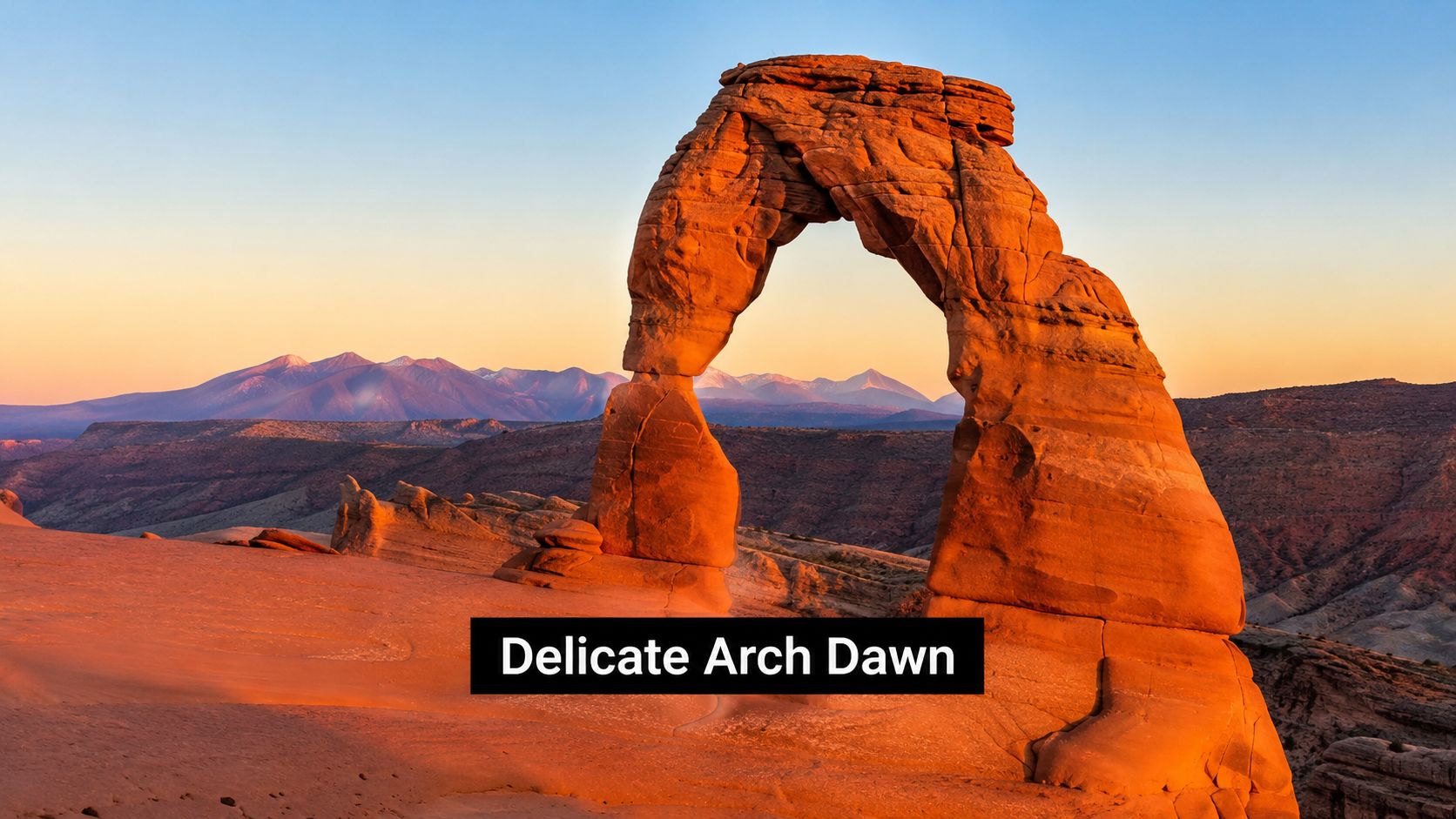
Its advantage is efficiency. The park sits just outside Moab, so you can keep a strong lodging, dining, and guiding setup without sacrificing access to headline scenery. That matters in a multi-park itinerary. Arches works best after Monument Valley and before Canyonlands, with Moab serving as your refined reset point for two or three nights.
Treat Arches as a curated half-day and it will outperform a poorly planned full day.
Build the day around light and pacing
Arches is about shape, shadow, and stone color. Those qualities peak early and late. Reserve sunrise for Delicate Arch or a quieter viewpoint if you prefer a more private experience, then leave the center of the day for recovery, lunch in town, a spa treatment, or a scenic drive that asks less of you physically.
That rhythm is the difference between efficient sightseeing and an intelligently designed day. Haute Black clients usually do best with an early entry strategy, a private guide who can edit the route in real time, and a Moab base that makes wardrobe changes, rest, and dinner reservations easy to manage.
What belongs in an excellent Arches program
A strong Arches day is selective, not exhaustive.
- For couples: Start with first light, return to Moab for a long breakfast and downtime, then re-enter the day with a private dinner or stargazing plan.
- For families: Keep the morning visual and easy, protect the afternoon for pool time or rest, then add one guided outing matched to the group's energy.
- For experienced adventurers: Use Arches for iconic forms and photography, then save your more technical effort for the surrounding Moab region rather than forcing the park to be something it is not.
The mistake is obvious. Travelers try to turn Arches into an all-day endurance exercise, even though its strongest value is concentrated beauty with very low transfer friction.
For a high-touch Utah and Arizona circuit, that makes Arches unusually useful. It gives you one of the West's most recognizable natural settings without demanding logistical acrobatics, which is exactly why it deserves a deliberate place in a well-sequenced desert journey.
6. Canyonlands National Park, Utah
Canyonlands is the park that separates a competent Southwest itinerary from an intelligent one. Arches gives you instant gratification. Canyonlands gives you scale, silence, and the kind of perspective that changes the tone of the entire journey. Because it sits so close to Moab, you can access that remoteness without surrendering comfort, privacy, or a polished service structure.
That proximity matters.
For a multi-park Utah and Arizona circuit, Canyonlands works best as the counterweight to Arches, not a duplicate of it. Arches is about concentrated icons. Canyonlands is about choosing the right district, the right pace, and the right mode of access. Haute Black clients usually get the best result by treating it as a customized experience rather than a park to “cover.”
Choose your district with discipline
Island in the Sky is the correct starting point for most travelers. It delivers dramatic overlooks, strong visual payoff, and relatively low effort. If your goal is a half day with serious impact, start here and keep the schedule clean.
The Needles belongs to travelers who want a longer, more immersive day and have the appetite for a greater time commitment. It rewards repeat visitors, active couples, and families with older children who prefer depth over quick photo stops. The Maze and the river districts are different categories entirely. Those areas suit guests working with expert outfitters, private drivers, or specialized guides who know how to handle distance, timing, and risk.
Itinerary design holds the most importance. A bad Canyonlands day feels sprawling and inefficient. A well-built one feels private, calm, and thoroughly considered.
How to use Canyonlands in a high-touch route
Use Canyonlands to widen the emotional register of the trip. After the sculptural immediacy of Arches or the theatricality of Monument Valley, this park restores a sense of vastness. It slows people down in the best way.
A few strong fits stand out:
- For couples: Reserve Canyonlands for a late-afternoon overlook program, a private photography session, or a sunset drive that ends back in Moab for an excellent dinner.
- For families: Keep expectations selective. Choose a small number of dramatic viewpoints, add interpretation from a guide who can hold attention, and return before the day turns into attrition.
- For experienced adventurers: Build around a private 4WD or river-based outing and treat the park as a serious terrain experience, not just a scenic stop.
The right question is simple. Which district supports the version of this trip you want?
Why sophisticated travelers often prefer it
Canyonlands rarely asks you to perform your vacation for a crowd. It gives you room to look longer, drive farther, and speak less. For travelers who value emotional space as much as visual spectacle, that quality is hard to beat.
Many luxury travelers come to Utah expecting Arches or Zion to dominate the memory. Canyonlands often becomes the park they keep talking about afterward.
7. Capitol Reef National Park, Utah
Capitol Reef is the park that saves a Utah itinerary from becoming a forced march. Put it in the right place and the trip gains poise, privacy, and breathing room. Put it in the wrong place, or skip it entirely, and the route often feels crowded, repetitive, and overworked.
That role matters more than many travelers realize. Capitol Reef sits between Utah's marquee park clusters, so it works best as a strategic pause rather than a box to check. In a high-touch journey, pacing can be realigned. The crowds thin out, the roads open up, and the experience becomes more personal.
Why Capitol Reef earns its place
The park's appeal is not hype. It is control.
A smart stop here gives you time to reset after Bryce or Zion before continuing east, or to soften the transition after Moab's more active rhythm. Torrey is the obvious base, and the right one. It keeps access easy while preserving the sense that you are staying near the park, not in a generic gateway town.
Capitol Reef also rewards travelers who know how to edit. You do not come here to chase constant peak moments. You come for scenic drives with space around you, quieter trailheads, orchard history that adds texture, and light that feels cleaner because fewer people are competing for the same frame.
A stronger plan usually includes:
- A Torrey base for one or two nights: This is the right stop for guests who value calm service, dark skies, and a less commercial entry point.
- A selective driving program: Scenic Drive, Fruita, and Burr Trail make more sense than trying to cover everything.
- Private interpretation: Geology and human history matter more here than spectacle alone. The park rewards context.
- A slower clock: Capitol Reef improves a trip by reducing friction, not by filling every hour.
For couples, this is one of southern Utah's best recalibration stops. For families, it offers room to move without the intensity of bigger-name parks. For photographers, it produces cleaner compositions and better patience. For founders and executives, it is one of the few parks in the region that invites clear thinking.
How to place it in a multi-park route
Use Capitol Reef as the hinge point in a broader Utah and Arizona journey. That is the smartest reason to include it.
If the trip begins in Zion and Bryce, Capitol Reef should come next to slow the tempo before the route shifts toward Moab. If the trip starts with Arches and Canyonlands, place Capitol Reef before returning southwest so the itinerary does not end on logistical fatigue. Haute Black's value here is simple. We build the handoff correctly, with the right base, the right amount of time, and the right level of guidance, so the park feels intentional rather than incidental.
Capitol Reef rarely dominates the pre-trip conversation. It often shapes the trip more than any park except Zion. That is exactly why it belongs.
8. Bryce Canyon National Park, Utah
Bryce Canyon is the park that fixes bad routing. Place it well, and an ambitious Utah-Arizona journey regains clarity, comfort, and visual drama in a single stop.
Its advantage is simple. Bryce delivers one of the region's strongest scenic payoffs without demanding the physical output, heat tolerance, or time commitment that Zion and the Grand Canyon often require. The hoodoo amphitheaters read almost like stage design at first light, and the altitude changes the experience enough that it should be planned on its own terms, not folded into a generic red-rock circuit.
That distinction matters for luxury travelers. Bryce works best as a precision stop, not a marathon day. Use it after a denser hiking section or before a longer transfer, and let the park do what it does better than almost anywhere else in the Southwest. Provide immediate spectacle from the rim, cooler air, and a cleaner, more composed rhythm.
A smarter Bryce plan
The National Park Service's Bryce Canyon trip planning guidance is useful on the practical side, especially for understanding seasonal conditions, rim access, and how quickly weather can shift at elevation. For travelers who care about comfort and mobility, Wheelchair Traveling's Utah parks accessibility guide is also a strong planning reference. Bryce rewards travelers who choose viewpoints and timing with discipline.
A well-built day here should include:
- First light at the rim: Sunrise Point and Sunset Point justify the early start. Bryce is one of the few parks where dawn consistently outperforms sunset.
- One measured descent, at most: Walk below the rim only if the group wants it and conditions support it. The visual payoff is already excellent from above.
- A proper midday reset: Long lunch, spa time, or in-room downtime makes more sense here than forcing hours of extra mileage.
- Night-sky planning: Bryce's dark skies can be the day's second headline if you arrange the evening correctly.
Bryce is about placement and timing.
Haute Black's advantage is not access to a secret canyon. It is sequencing, pacing, and private handling of the details around the park. The right arrival window, the right lodge strategy, the right overlook order, and the right onward transfer turn Bryce from a quick stop into one of the sharpest-edged moments in the trip. That is the difference between seeing Bryce and using Bryce well.
Who Bryce suits best
Bryce is especially strong for couples who want atmosphere without an all-day athletic test. It is also one of the smartest picks for older travelers and multigenerational groups because the park gives away its best views generously. Families do well here too, provided the day is structured around short efforts and excellent vantage points rather than distance.
In a multi-park itinerary, Bryce belongs where the journey needs beauty with less friction. Used that way, it feels cinematic, polished, and remarkably easy to enjoy.
8-Park Comparison: Utah & Arizona
| Destination | 🔄 Complexity (access & logistics) | ⚡ Resource & logistics (cost, permits, guides) | ⭐ Expected experience quality | 📊 Results / impact (what you get) | 💡 Ideal use cases / quick tip |
|---|---|---|---|---|---|
| Zion National Park, Utah | Moderate, shuttle reservations, variable trail technicality (Angels Landing, The Narrows) | Moderate, private guides common; nearby luxury lodging in Springdale; shuttle planning required | ⭐⭐⭐⭐, dramatic canyons and iconic hikes with curated wilderness options | High photographic and experiential impact; multi‑generational appeal | Visit shoulder seasons; book private guides and early/late access for photos |
| Grand Canyon National Park, Arizona | High, river permits, inner‑canyon logistics, seasonal North Rim closures | High, private helicopter/river expeditions are costly; permits booked far in advance | ⭐⭐⭐⭐⭐, globally iconic vistas and unmatched geological scale | Monumental scenic and prestige outcomes; opportunities for exclusive dining and heli experiences | Reserve heli or river trips well ahead; consider North Rim for solitude |
| Antelope Canyon, Arizona | Moderate, mandatory Navajo‑led tours, narrow passages; guided access only | Moderate, required Navajo guide fees; limited local luxury services | ⭐⭐⭐⭐, exceptional light‑beam photography and cultural storytelling | Strong photographic impact with cultural immersion; controlled visitor flow | Book private Navajo guide early morning; respect cultural and photo rules |
| Monument Valley (UT‑AZ) | Low–Moderate, tribal park access and seasonal guide availability; limited infrastructure | Moderate, Navajo guide services and nearby lodge stays; limited cell service | ⭐⭐⭐⭐, iconic, cinematic vistas with authentic Navajo narratives | High visual/brand impact for photography and film scouting; authentic cultural experiences | Schedule sunrise/sunset tours with Navajo guides; stay multiple nights for best light |
| Arches National Park, Utah | Moderate, popular trailheads fill early; some technical routes (Fiery Furnace) | Moderate, Moab accommodations and private guides available; parking planning needed | ⭐⭐⭐⭐, dense concentration of arches and accessible dramatic formations | Excellent photography and climbing opportunities; varied fitness‑level experiences | Visit spring/fall; arrive pre‑dawn at Delicate Arch and hire local guides for technical areas |
| Canyonlands National Park, Utah | High, remote districts (Maze), rapid weather changes, backcountry navigation | High, 4WD/expedition logistics, river permits, experienced outfitters recommended | ⭐⭐⭐⭐, vast solitude and technical wilderness experiences | Deep wilderness immersion and adventure credentials; excellent for extended expeditions | Book multi‑day river or 4WD outfitter; plan permits and safety well in advance |
| Capitol Reef National Park, Utah | Low, scenic drive accessible; some trails require scrambling | Low–Moderate, small nearby town (Torrey) for lodging; fewer permit pressures | ⭐⭐⭐, quieter geological interest with unique formations and historic Fruita | Lower crowds and high value photographic opportunities; authentic, less commercialized visits | Visit in spring for wildflowers; use Burr Trail and hire local geology guides |
| Bryce Canyon National Park, Utah | Low–Moderate, high elevation considerations; winter weather closures possible | Moderate, lodge and astronomy programs available; altitude logistics advised | ⭐⭐⭐⭐, world‑class hoodoos and dark‑sky stargazing | Exceptional sunrise photography and night‑sky experiences; cooler climate respite | Book private sunrise/stargazing sessions; acclimate to altitude and plan for cold nights |
Your Bespoke Desert Itinerary Awaits
A great Southwest trip shows you extraordinary natural settings. An extraordinary one controls how you move through them. That distinction matters more here than almost anywhere in the United States because visitor flow, infrastructure pressure, and park capacity directly affect the quality of the experience. The National Park Service uses visitation data to help determine staffing, maintenance, environmental protection, and visitor-center capacity, as explained in this analysis of national park visitation datasets. In practice, that means timing isn't cosmetic. It shapes the trip.
Nowhere is that clearer than the Grand Canyon. The park spans 1,218,375 acres, or about 1,904 square miles, and includes 278 river miles, according to Grand Canyon National Park statistics. For luxury planning, the lesson is immediate. You don't treat it as one stop. You build around terrain-specific access, rim choices, internal transit realities, and the kind of day you desire to have.
That same principle applies across the region. Zion and Bryce belong together because the transfer is manageable and the contrast is sharp. Arches and Canyonlands make sense because Moab lets you centralize service and reduce friction. Capitol Reef earns its place because it keeps a Utah route elegant rather than relentless. Monument Valley and Antelope Canyon work when they're given cultural and atmospheric space rather than squeezed into a race toward the next hotel.
For discerning travelers, the true opportunity in national parks in Utah Arizona isn't more mileage. It's better sequencing. It's deciding when to use private aviation, when to rely on a luxury SUV and guide, when to split one ambitious park day into two refined half-days, and when to spend for access that protects privacy, comfort, and time. It's the difference between checking off a celebrated region and inhabiting it properly.
Haute Black is built for exactly that level of orchestration. The value isn't just reservations. It's narrative design. It's the advisor who knows when a helicopter transfer turns a dull repositioning day into part of the spectacle. It's the guide who understands not only the terrain, but your pace. It's the ability to pair red-rock grandeur with the right suite, the right table, the right arrival, and the right silence.
Even the softer details matter. After days of desert stone and sky, a restorative garden, courtyard, or terrace can change the feel of the trip more than another scenic stop. There's a reason desert design has its own devoted following, and these ideas on thriving desert garden succulents capture part of that appeal.
The Southwest doesn't need exaggeration. It needs judgment. With the right routing, access, and partnerships, these monumental natural settings stop feeling like crowded icons and start feeling like they were arranged for you.
Haute Black designs Southwest journeys with the polish this region demands. If you want national parks in Utah Arizona arranged as a perfectly coordinated private-club experience, from preferred hotels and private aviation to insider guides and perfectly paced routing, connect with Haute Black and start building your itinerary.
Explore Our Guides


Signature Experiences


