Haute Black Journal
10 Landmarks of Indonesia: A Luxury Travel Guide

Marlene Azeez
Director, HauteBlack
View all articles →
# 10 Landmarks of Indonesia: A Luxury Travel Guide
July 21, 2026
Indonesia holds the highest concentration of UNESCO World Heritage Sites in Southeast Asia, with 10 sites as of 2023, including six cultural and four natural landmarks. That matters for luxury travelers because nowhere else in the region offers this density of temple architecture, volcanic drama, marine wilderness, and living ritual in one country.
Embarking on an exclusive journey through the landmarks of Indonesia means treating each stop as more than a photo opportunity. The best trips here pair private access with intelligent pacing. You want pre-dawn entry where possible, helicopter or private jet transfers when distances justify them, and guides who can interpret symbolism, geology, or ceremony rather than recite surface facts. Indonesia rewards travelers who plan tightly and move deliberately.
It also demands stronger logistical discipline than many glossy itineraries admit. One 2025 tourism report highlighted by Komodo Luxury notes that 78% of international luxury visitors rank safety assurance as a top decision factor, while only 12% of landmark guides provide quantified, updatable risk data for remote natural sites. For a high-net-worth itinerary, that gap is unacceptable. Build every route around current operating conditions, medical contingencies, transfer windows, and site-specific etiquette.
Start with the classics, but don't stop there. The most rewarding luxury circuits mix headline monuments such as Borobudur and Prambanan with marine expeditions, hilltop temples, and private cultural encounters that most travelers never arrange well.
1. Borobudur Temple Complex
Borobudur deserves top billing. No other monument in Indonesia delivers this level of ceremonial gravitas, architectural intelligence, and private-visit payoff in a single stop. The scale is extraordinary, with 504 Buddha statues and 2,672 photo panels arranged across six square terraces and three circular ones atop a 34-meter-high structure.
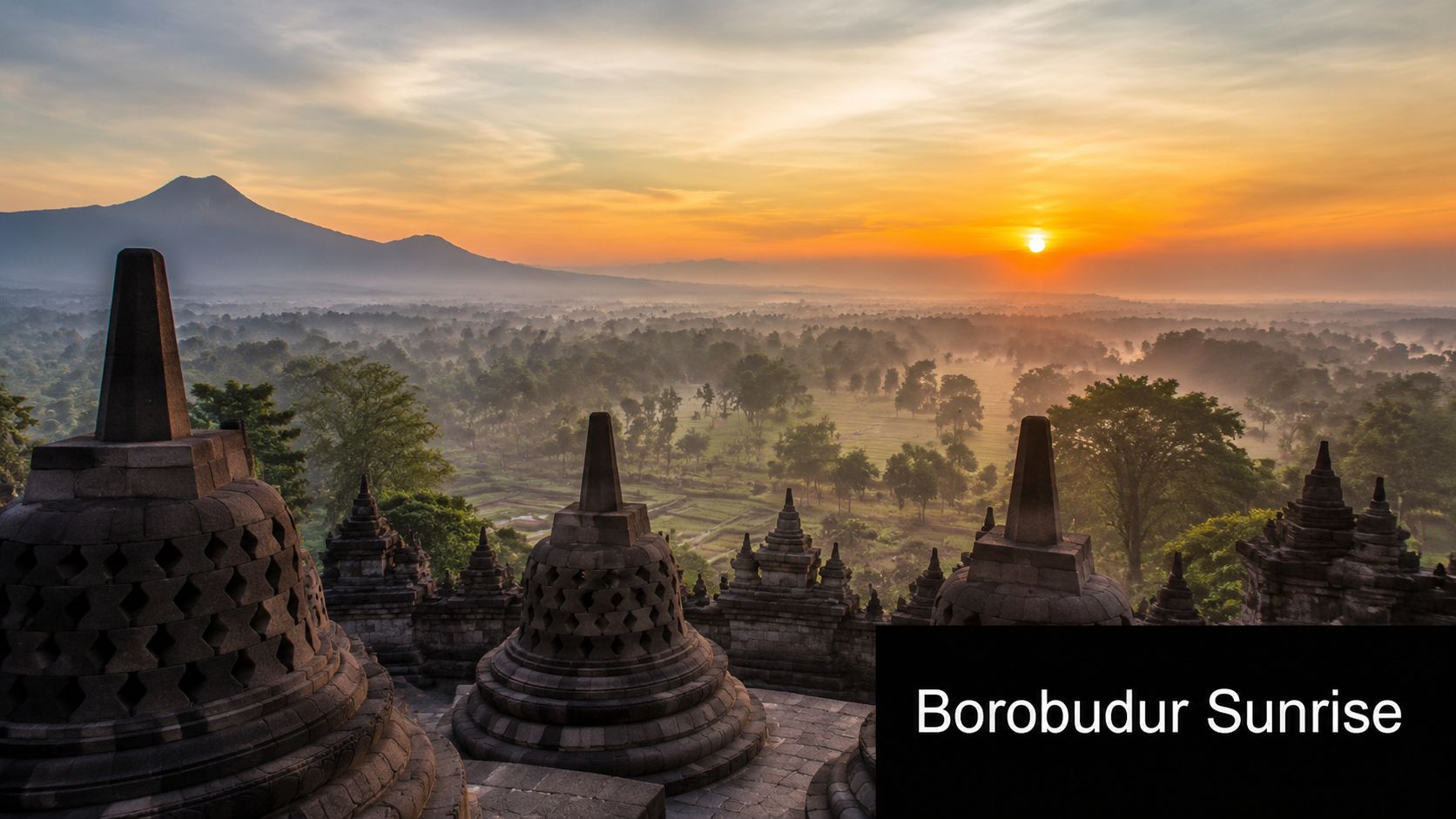
Treat Borobudur as a privately choreographed morning, not a crowded sunrise box to tick. The right plan starts with exclusive early access, continues with a specialist guide who can explain Buddhist cosmology and relief narratives clearly, and ends away from the bus circuits. Add Mendut and Pawon only if your guide can connect them into a coherent sacred route. Otherwise, keep the focus on Borobudur and do it well.
The site dates to the 8th and 9th centuries and has UNESCO recognition, as noted in this overview of Indonesia's UNESCO landmarks. What matters on the ground is how you experience it. A strong guide frames the upward path as a ritual progression from the worldly realm to release, which changes the visit completely.
How to do Borobudur properly
Arrive before first light, but do not accept a generic pre-dawn shuffle with dozens of other guests. Ask your advisor to secure the most controlled access available for your dates, confirm exact entry terms in writing, and arrange a private vehicle positioned for a fast departure once public traffic builds. If you are flying in from Jakarta or Bali, a private jet into Yogyakarta is the cleanest option. It protects the mood of the day and cuts out draining transfer time.
Use this structure:
- Pre-dawn entry with a specialist guide: Prioritize archaeological interpretation, Buddhist symbolism, and restoration context over basic commentary.
- Measured pacing on the upper terraces: Borobudur rewards silence, not rushed photography. Build in time to pause at the stupas after the first wave of visitors spreads out.
- A discreet post-visit breakfast: Return to a luxury hotel or private villa instead of lingering at crowded public outlets.
- Clear etiquette standards: Dress modestly, keep voices low, and never treat active spiritual space like a fashion set.
One more recommendation. If you want the best photographs, avoid making photography the whole purpose of the visit. Borobudur is strongest as a cultural and spiritual experience with privileged access, expert interpretation, and tight logistics. That is what justifies the stop for a high-end Indonesia itinerary.
2. Prambanan Temple
Prambanan gives you contrast. Where Borobudur feels meditative and monumental, Prambanan feels vertical, dramatic, and ceremonial. This is the temple complex to prioritize if you want your Indonesian itinerary to include Hindu cosmology, sculptural detail, and a setting that works beautifully for evening cultural programming.
The best way to experience Prambanan is to anchor it in Yogyakarta with a private guide who understands Sanskrit references, Javanese court culture, and temple iconography. Don't settle for a generic escort. A strong specialist transforms the site from striking stonework into a narrative about dynastic ambition, religious synthesis, and artistic precision.
Best luxury strategy
Rosewood-style bespoke planning, Belmond-style multi-stop curation, and private helicopter transfers all make sense here because Prambanan works especially well as part of a same-day temple circuit. If your schedule is tight, combine it with Borobudur only if you're prepared to travel efficiently and keep downtime protected.
Try one of these approaches:
- Dawn access with meditation: Ideal if you want quiet before the site becomes busy.
- Late afternoon arrival with dinner after: Better for travelers who value atmosphere and don't want a punishingly early start.
- Temple plus arts immersion: Add a private Javanese dance or batik session in Yogyakarta for context that deepens the visit.
Evening performances near Prambanan are worth arranging privately when possible. The setting matters more than the program length.
Request a guide who can explain the shrines dedicated to Brahma, Vishnu, and Shiva without turning the visit into a lecture. The point is intellectual depth with pace. If you do Prambanan well, it doesn't feel like a museum stop. It feels like stepping into a living archive of Java's sacred imagination.
3. Komodo National Park
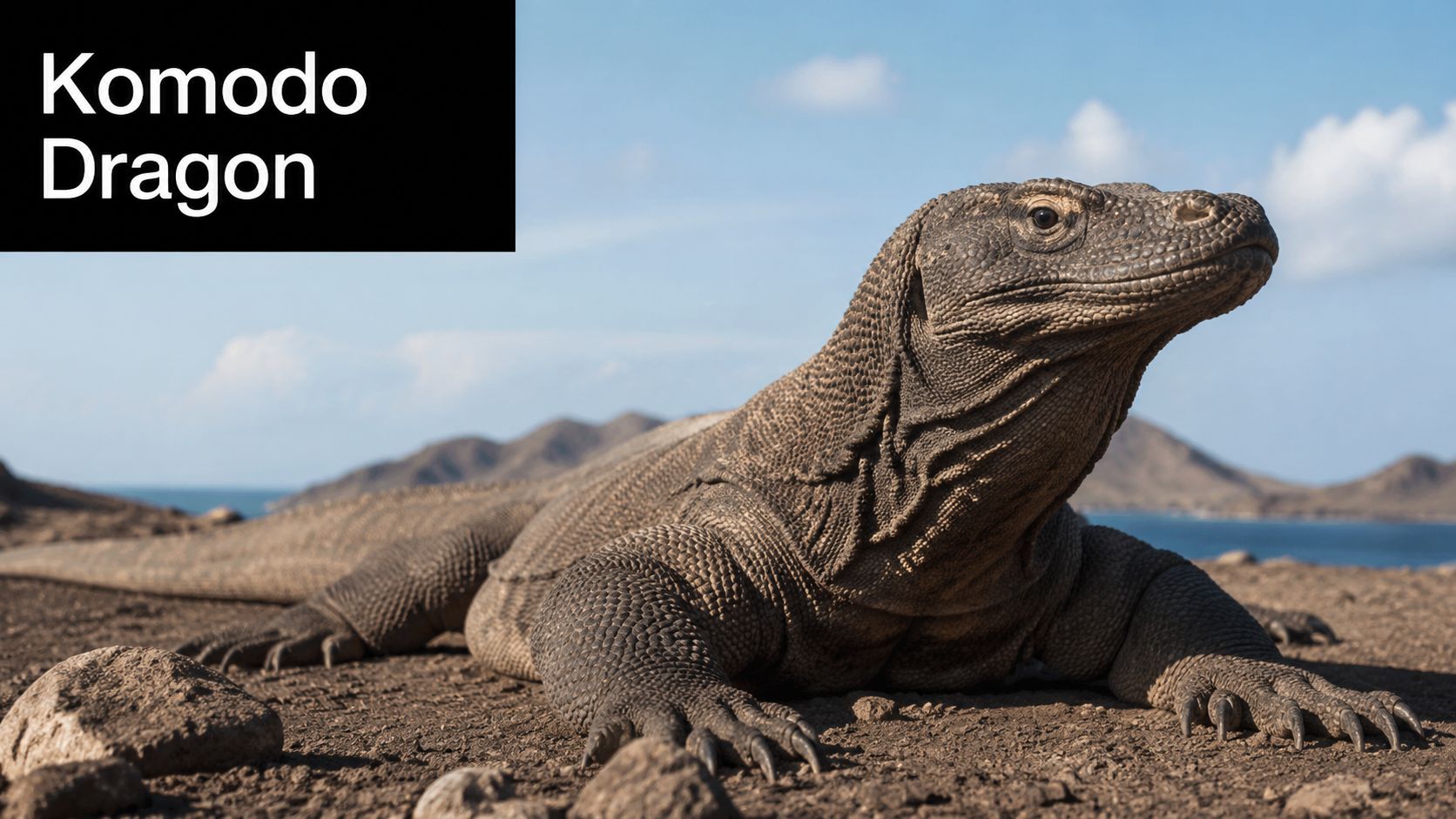
Komodo National Park is where the landmarks of Indonesia shift from stone and ceremony to raw biological power. This is one of the few places where a wildlife encounter can still feel primeval, especially if you arrive by private liveaboard or yacht and keep your shore visits tightly managed.
Komodo should never be planned casually. Chartering a proper vessel gives you control over wake-up times, dive windows, meal service, privacy, and ranger-led shore landings. It also lets you sequence the trip around the quality of light and sea conditions instead of ferry schedules.
What separates a luxury Komodo trip
The right setup includes a naturalist, not just a standard guide, and a vessel with dive support if anyone in your party wants underwater time. Many luxury travelers pair Komodo with broader wilderness planning after reviewing seasonal strategy for other iconic expeditions, including this guide to the best time for a Tanzania safari, because the same principle applies. Timing changes everything.
For broader context on protected areas, I also like these insights on worldwide national parks, especially when clients want to compare Indonesia's marine and terrestrial environments with other major conservation destinations.
Use this framework:
- Choose a private yacht or liveaboard: It's the cleanest way to avoid the rushed feel of day-trip tourism.
- Request a wildlife-focused briefing: Your party should understand ranger protocol before any dragon walk.
- Add a photography-minded sunrise track: Early departures improve both atmosphere and image quality.
Keep Komodo elegant by reducing transitions. Fewer transfers, one excellent vessel, and a clear daily plan always beat a crowded multi-boat itinerary.
This is one of Indonesia's strongest adventure-luxury experiences when handled with restraint and expertise.
4. Raja Ampat Islands
Raja Ampat is for travelers who want marine access without sacrificing intellectual depth. This archipelago isn't just beautiful. It feels expansive, remote, and unrepeatable, especially when explored by private yacht with a marine biologist or naturalist on board.
Because remote-site guidance remains inconsistent in Indonesia, you should treat Raja Ampat as an expedition with luxury finishing rather than a beach holiday with extra steps. The earlier safety finding noted above is especially relevant here. For a high-end trip, insist on current routing, sea-condition monitoring, medevac planning, and realistic transfer timing before you commit.
How to build a proper Raja Ampat itinerary
Amanwana-style expedition standards, conservation-aware operators, and helicopter or charter-air support all improve the experience. The winning move is to stay mobile. A yacht-based format lets you shift moorings, pursue the best dive or snorkel windows, and avoid spending too much time in transit between islands.
A strong Raja Ampat program usually includes:
- Private diving or snorkeling with a specialist: Best for travelers who want science, not just scenery.
- Birding on Waigeo: A smart addition if your party values biodiversity beyond the reef.
- Longer pacing: This destination rewards depth. Rushing it wastes the remoteness you paid for.
If someone in your group doesn't dive, Raja Ampat still works. Use paddleboarding, tender-based lagoon exploration, beach landings, and guided reef interpretation to keep the non-divers fully engaged. This is one of the rare marine destinations where soft adventure and serious luxury can sit comfortably together.
5. Ubud Cultural District and Tegallalang Rice Terraces
Ubud is where many travelers finally understand why Bali remains so magnetic at the top end of the market. The cultural district offers ritual, art, architecture, wellness, and cuisine in one compact region, while Tegallalang gives you a visual counterpoint through its sculpted agricultural terraces.
The mistake is to treat Ubud as a shopping town with a spa attached. Don't. Build it as a private cultural residency. Ask your advisor for artist studio visits, a senior temple guide, after-hours access where available, and an itinerary that leaves breathing room between experiences. If you want a broader Bali framework, Haute Black's guide to luxury experiences in Bali is a useful companion.
Refine the cultural access
Aman-style quiet luxury works well here because Ubud rewards slow mornings and highly selective outings. Four Seasons and similar operators can coordinate ceremony-sensitive visits that feel respectful rather than performative. Private gamelan instruction, textile workshops, and rehearsed dance demonstrations with explanation all add more value than another scenic café stop.
Try these priorities:
- Go early to temples and terraces: The atmosphere is calmer and the setting feels inhabited rather than staged.
- Work directly with artisans: You'll get better conversation and stronger provenance on anything you buy.
- Add one specialist scholar: A Balinese Hindu interpreter can connect ritual, architecture, and daily life in a way standard guides rarely do.
Ubud works best when you cut half the activities and upgrade the quality of the remaining half.
For travelers seeking the cultural core of the landmarks of Indonesia, Ubud isn't a single monument. It's a living cultural setting. That distinction is exactly why it deserves a place on this list.
6. Mount Bromo and Ijen Crater Complex
East Java delivers Indonesia at its most elemental. Bromo and Ijen belong on the same itinerary if your party wants dramatic geological contrast, but only if the logistics are disciplined. These are not casual scenic stops. They require timing, weather awareness, proper guides, and a willingness to move at unconventional hours.
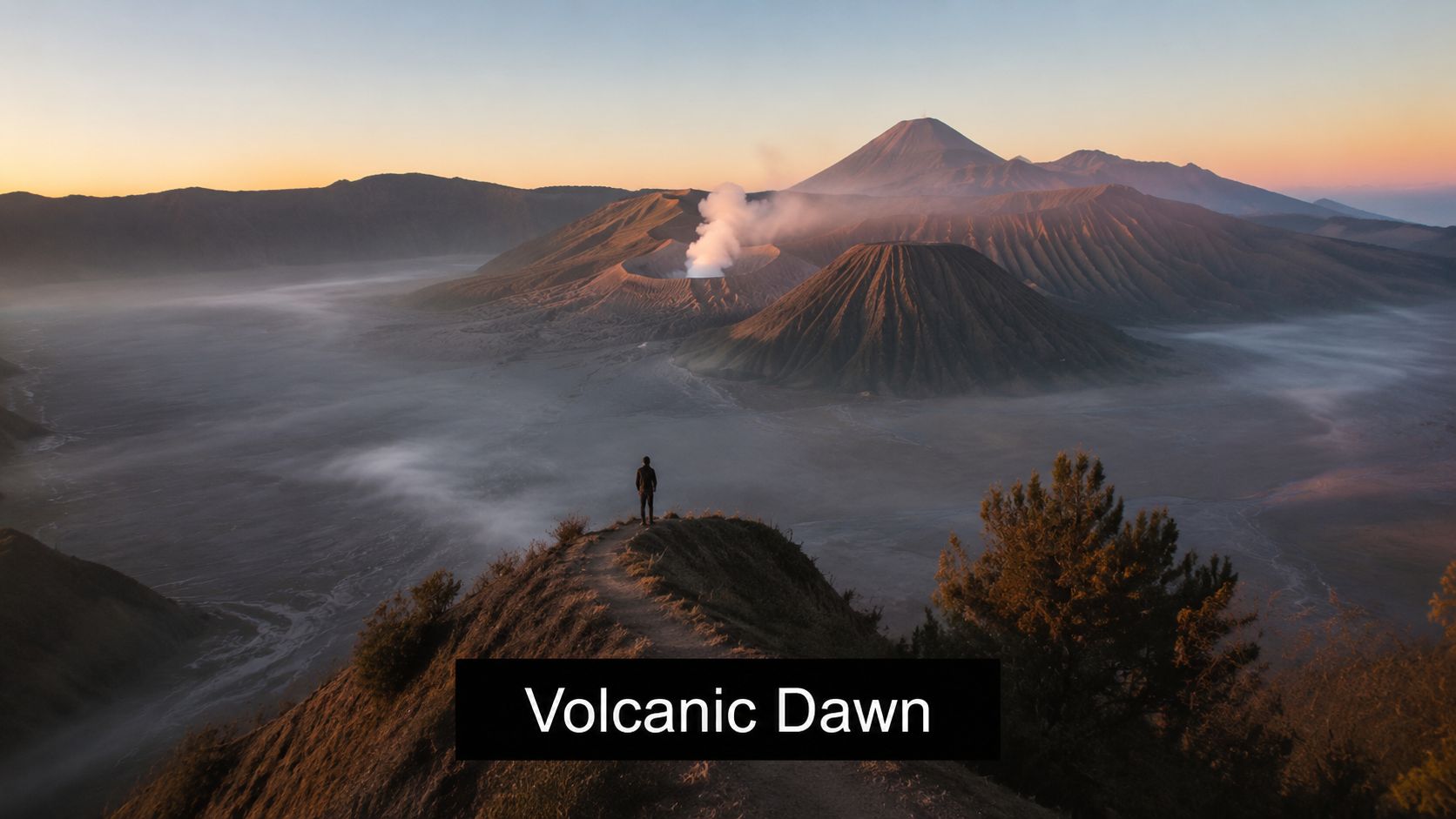
I like Bromo first, then Ijen, with a comfortable luxury base and private road support between segments. Helicopter assistance can work, but over-engineering the route sometimes strips away the atmospheric build-up that makes this volcanic circuit memorable. Keep the transfers efficient, not theatrical.
Safety first, spectacle second
The same remote-site planning gap noted earlier is especially relevant in volcanic areas. Don't rely on broad reassurance. Ask for current access status, driving times that reflect real road conditions, and a contingency plan if visibility drops or authorities change site rules.
A good Bromo and Ijen program includes:
- Experienced mountain guides: They matter more than a flashy vehicle.
- Medical and comfort planning: Especially important for altitude-sensitive or older travelers.
- Staggered wake times: Not every member of a family group needs to do every viewpoint or night climb.
This visual gives a good sense of the terrain and pacing involved:
At Bromo, focus on one excellent sunrise position rather than hopping between viewpoints. At Ijen, decide in advance whether the night ascent is right for your group. Luxury in East Java doesn't mean removing the ruggedness. It means controlling risk, reducing friction, and making sure the adventure still feels composed.
7. Candi Sukuh and Ancient Hindu-Buddhist Temple Network
Candi Sukuh is one of the smartest additions for travelers who've already seen Southeast Asia's headline temples and want something more intimate, less polished, and intellectually richer. Set on a hillside and associated with late Majapahit culture, it feels markedly different from Java's better-known sacred sites.
At sites like this, a historian or archaeologist earns their fee. Without interpretation, some visitors perceive only the unusual form and explicit carvings. With the right expert, the temple opens into conversations about fertility symbolism, political transition, mountain sanctity, and the changing religious texture of late classical Java.
Why sophisticated travelers love Sukuh
Sukuh rewards curiosity. It's less about grandeur and more about access to ambiguity, which many seasoned travelers find more memorable. Pair it with a broader East Java route and it becomes a perfect intellectual counterweight to volcanic scenery and major temple monuments.
A strong visit should include:
- An early arrival: The site is best when the air is cool and the surroundings still feel hushed.
- A specialist guide: University-affiliated experts are ideal if available.
- Time to linger: This is not a thirty-minute stop. Give it space.
If Borobudur is Indonesia's canonical temple experience, Candi Sukuh is the one that sparks better conversation over dinner.
This site won't appeal to every traveler, and that's exactly why it belongs in a luxury guide. The best bespoke itineraries don't only deliver prestige. They deliver distinction.
8. The Gili Islands and Coral Triangle Marine Reserve
The Gili Islands offer a different kind of marine luxury from Raja Ampat or Komodo. They're lighter, more relaxed, and easier to integrate into a Bali or Lombok itinerary, yet they still work well for clients who care about reef access, sea life, and low-friction coastal living.
The appeal is simplicity. Car-free movement changes the mood immediately. You can structure the experience around a private beachfront villa, a yacht transfer, or a split stay that combines Lombok privacy with Gili water time. If overwater and sea-access stays are part of your planning style, Haute Black's overwater bungalow vacation guide helps frame what level of marine accommodation best fits your trip.
How to elevate the Gilis
Don't arrive expecting extreme isolation. Arrive expecting control. A private speedboat, a reserved beach club setup, curated snorkeling with a marine guide, and selective dining reservations are what make the Gilis feel premium.
Use these moves:
- Base on the quietest island that fits your style: Privacy first, nightlife second.
- Charter your own boat for inter-island movement: Scheduled ferries flatten the experience.
- Add conservation contact: Turtle sanctuary visits and reef education give the trip more shape.
For honeymooners and couples, the Gilis work beautifully as a decompression stop after a more complex cultural or expedition-heavy route. For families, they provide just enough activity without the operational sprawl of larger island programs. That balance is why they remain one of the more versatile landmarks of Indonesia for luxury trip design.
9. Lake Toba and Samosir Island
Lake Toba belongs on this list because it offers something many premium Indonesia itineraries miss. Interior scale, indigenous culture, and geological drama in one destination. If Bali and Java give you ceremony and architecture, North Sumatra gives you cultural texture with a very different rhythm.
This is the place to slow down. Private lake transport, a thoughtful Batak cultural guide, and a well-positioned base on or near Samosir Island turn the region into a restorative stop. Don't reduce it to a scenic drive and a lunch break. It needs time to breathe.
What to prioritize around Toba
The strongest Lake Toba experiences center on conversation and place. Museum curators, local historians, craftspeople, and village elders can all add more value than standard sightseeing. Build around a few carefully chosen meetings instead of trying to "cover" the lake.
Your best options include:
- A private boat day: Essential for moving on your own schedule and experiencing the surroundings fully.
- Batak cultural immersion: Music, architecture, textiles, and oral history all matter here.
- A longer stay: This destination improves when you stop rushing.
Lake Toba is especially effective in a multi-island itinerary because it resets the pace. After marine travel or temple circuits, the freshwater setting and strong local identity feel distinct. It's one of Indonesia's most rewarding additions for travelers who want a trip with range rather than repetition.
10. Wakatobi Marine National Park
Wakatobi is for the traveler who wants underwater excellence without the social noise of more familiar island names. The experience skews toward serious divers, marine photographers, and clients who enjoy expedition structure paired with refined service.
Approach Wakatobi as a commitment, not an add-on. It deserves enough days to justify the transfer effort and enough preparation to match the sophistication of the environment. A private liveaboard or a highly controlled resort-based dive operation usually works best, depending on whether your party prefers mobility or a settled base.
Build for purpose
This destination shines when the trip has a theme. Marine science, underwater photography, conservation interest, or uninterrupted diving all make strong anchors. If you try to make Wakatobi a little bit of everything, it loses its edge.
Consider this structure:
- A specialist dive plan: Match sites to experience level and interest.
- Photography support: Especially valuable for travelers who want more than memory snapshots.
- Scholar-led interpretation: Marine biologists or naturalists add substance that luxury travelers often appreciate.
Wakatobi closes the list because it represents Indonesia at its most elite. It's not the easiest stop. That's part of the appeal. For clients who've already seen the obvious and want marine access with intellectual seriousness, few landmarks of Indonesia are more satisfying.
10-Point Comparison: Indonesian Landmarks
| Site | 🔄 Implementation complexity | ⚡ Resource requirements | 📊 Expected outcomes / Impact | 💡 Ideal use cases & insights | ⭐ Key advantages |
|---|---|---|---|---|---|
| Borobudur Temple Complex | Moderate, permits & crowd-management for VIP sunrise access | Private guides, VIP permits, nearby five-star lodging, advance bookings | High cultural immersion, exceptional photography and UNESCO-authentic experience | Luxury spiritual retreats, VIP photography tours; book 30+ days ahead | Iconic UNESCO site, rich reliefs and sunrise vistas |
| Prambanan Temple | Moderate, night shows and restoration zones require coordination | Private guides, climate-controlled accommodations, event permits | Dramatic theatrical cultural experiences with strong visual impact | Evening performances, Hindu studies, combined cultural circuits | Striking Trimurti towers, illuminated night presentations |
| Komodo National Park | High, remote islands, safety protocols and park permits | Private yacht/charter flights, naturalist guides, safety gear, permits | Outstanding wildlife viewing and world-class diving; conservation-focused impact | Luxury wildlife expeditions and private diving safaris; book 60+ days ahead | Unique Komodo dragons, rich marine biodiversity |
| Raja Ampat Islands | Very high, extreme remoteness and long transit times | Private liveaboard, marine scientists, long advance bookings, medical prep | Transformative biodiversity and dive experiences with minimal crowds | Scientific expeditions, elite diving liveaboards; plan multi-week trips | World-leading marine biodiversity, pristine dive sites |
| Ubud & Tegallalang Rice Terraces | Low–Moderate, timing and etiquette management | Private cultural guides, boutique resorts, short private transport | Deep cultural immersion, arts workshops, wellness integration | Arts residencies, wellness retreats, private craft workshops | Center of Balinese arts, easy luxury integration |
| Mount Bromo & Ijen Crater Complex | High, altitude, night treks, variable weather | Private transport/helicopter, mountain guides, medical standby | Spectacular volcanic photography and geological interpretation | Adventure photography, geology-focused tours; schedule sunrise access | Unique volcanic phenomena (Ijen blue flames, Bromo caldera) |
| Candi Sukuh & Temple Network | Moderate, remote access, limited infrastructure | Private transport, specialist archaeologist guides, translation | Intimate archaeological insight with minimal crowds | Scholarly tours, niche archaeology travelers; visit early morning | Rare late‑Majapahit architecture and erotic stone symbolism |
| The Gili Islands & Coral Triangle | Low–Moderate, sea-dependent transfers and island logistics | Speedboat/private yachts, boutique resorts, snorkeling/diving gear | Relaxed island experience with accessible snorkeling and conservation focus | Beach relaxation, family-friendly snorkeling, conservation participation | Car-free islands, easy shore snorkeling, conservation programs |
| Lake Toba & Samosir Island | Moderate, domestic flights and multi-leg travel | Domestic flights, private boats, Batak cultural guides, multi-day stays | Deep cultural immersion, cool-climate retreat, geological education | Cultural anthropology, slow-travel retreats; stay 3–4 days | Largest volcanic lake, preserved Batak traditions |
| Wakatobi Marine National Park | Very high, extreme remoteness and research coordination | Private liveaboard, marine scientists, extended expedition time, high cost | Research-grade diving, minimal crowds, strong conservation outcomes | Multi-week research expeditions and elite dive safaris; book 90–120 days | Vast coral systems, UNESCO biosphere and exceptional biodiversity |
Crafting Your Private Indonesian Itinerary
The best Indonesian journeys aren't built by stacking famous places in a row. They're designed around energy, access, and contrast. A strong itinerary might begin with temple culture in Java, soften into art and ritual in Ubud, then shift into marine exploration in Komodo, Raja Ampat, the Gilis, or Wakatobi. Another traveler may want North Sumatra for Lake Toba, followed by East Java's volcanic terrain and a recovery finish in Bali. Both can work beautifully if the transitions are clean.
That's where a luxury travel advisor matters. Indonesia looks manageable on a map until you account for domestic air links, weather sensitivity, ceremony schedules, private dock access, road times, and permit changes. An advisor should sequence your route around what each destination does best, not around the easiest booking engine result. They should also pressure-test the practical side. Which temple visit deserves a scholar? Which island works better by yacht than by villa? Where is helicopter support worth the cost, and where does it only create spectacle?
For high-net-worth travelers, the answer is usually a blended model. Use private aviation or helicopter transfers for difficult leaps. Use a chauffeured car and a strong local fixer for cultural regions. Use one excellent yacht charter instead of several fragmented marine bookings. Keep hotel changes selective. Fewer bases often create a more luxurious trip than constantly moving, even when every property is beautiful.
Cultural etiquette also needs to be part of the plan, not an afterthought. At temples and ceremonial spaces, proper dress, measured behavior, and a guide who understands when not to intrude are essential. In village settings, introductions matter. In wildlife areas, distance and restraint matter. Indonesia rewards travelers who arrive with curiosity and composure.
The same goes for comfort. If anyone in your party has health, mobility, or fatigue concerns, say so at the planning stage. That changes everything from vehicle choice to walking routes, tender boarding, wake-up times, and whether a site should be experienced from a panoramic viewpoint rather than on foot. Smart luxury isn't about forcing every activity. It's about selecting the right version of each experience.
Indonesia can absolutely support a perfectly coordinated, high-touch journey at the top end of the market. But it only happens when someone connects the pieces. Private transfers, specialist guides, excellent hosts, current operating intelligence, and thoughtful pacing turn a beautiful trip into a composed one. If your travel style includes family considerations beyond standard logistics, services like Passpaw pet travel assistance can also help when pets are part of a longer relocation-style itinerary or extended stay.
The landmarks of Indonesia deserve that level of care. They're too important, too varied, and too extraordinary to experience any other way.
HauteBlack creates Indonesian journeys the way this destination demands: with private access, smooth transfers, preferred hotel partnerships, and advisors who know how to turn famous landmarks into personal experiences. Explore bespoke planning with HauteBlack if you want VIP recognition, curated cultural access, and an itinerary built around exactly how you travel.
Explore Our Guides


Signature Experiences


