Haute Black Journal
10 Elite Kids Travel Activities for 2026

Marlene Azeez
Director, HauteBlack
View all articles →

# 10 Elite Kids Travel Activities for 2026
May 31, 2026
Children now influence family travel far more than many luxury brands still assume. In the 2025 Family Travel Association survey, 48% of respondents said older children drive the choice of vacation activities. That changes the brief completely. Kids travel activities are no longer side entertainment booked after the villa, the flights, and the dining are confirmed. They often shape the trip itself.
For discerning families, that's good news. It creates room for travel that feels more alive, more personal, and far more memorable than the standard kids' club model. The old formula works if the objective is containment. It fails if the objective is connection, exposure, and shared legacy.
The more interesting shift is that families are also choosing destinations with this in mind. Condor Ferries' 2025 family travel statistics report that 81% of families prefer destinations offering family-friendly activities, and 55% say children's opinions heavily influence the final booking decision. The implication is obvious to anyone designing high-touch itineraries. The best family journeys now begin with experience architecture, not room categories.
That's where thoughtful planning matters. A private marine biologist, a backstage rehearsal, a historian who can hold a child's attention, or a chef who knows how to teach a ten-year-old without patronizing them. Those details separate a well-funded trip from a properly orchestrated one.
If you want a useful baseline on practical family travel thinking before elevating it, Kubrio's travel with kids insights are worth a read. From there, the conversation should move beyond logistics and into curation.
1. Private Educational Expeditions with Expert Guides
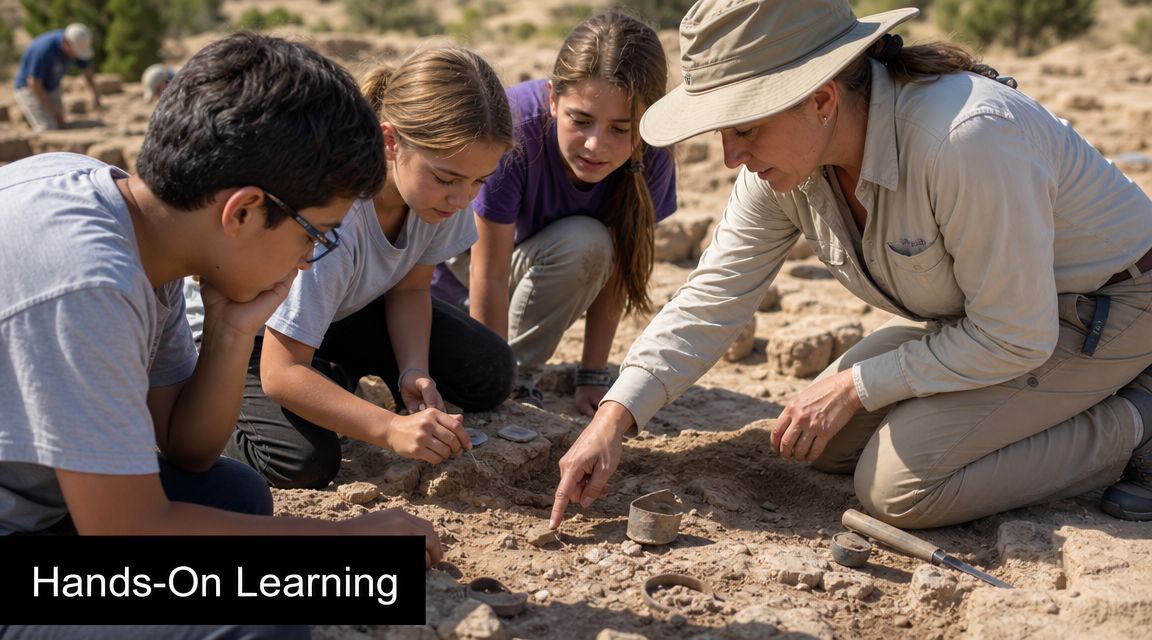
The strongest educational travel experiences don't feel like school in transit. They feel like privileged access. A family walks a historic site before public opening, studies marine ecosystems with a field specialist, or visits a museum with a guide who can move fluently between adult-level context and child-level wonder.
That last part is where many bookings go wrong. A brilliant academic isn't automatically a strong family guide. Children disengage quickly when the delivery becomes lecture-heavy, and parents end up paying for credentials rather than connection.
What works in practice
Properties and partners tied to brands like Four Seasons, Rosewood, Belmond, and select private museum programs can arrange serious educational access. In Peru, that might mean an archaeology-focused day with an expert interpreter. In coastal destinations, it may be a guided reef or tide-pool session led by someone with research credentials. In Europe, it can be an after-hours cultural walk built around one family's interests rather than a generic highlights route.
The format matters as much as the guide. Children absorb more when the session is tactile, narrative, and paced in chapters. They remember the artifact they handled, the sketchbook they used, the question they were invited to answer.
Practical rule: Book the expert early, then shape the day around the child's attention span, not the adult's ambition.
A well-run educational expedition usually includes:
- Pre-arrival briefing materials: A short custom primer, map, or field notebook gives the child context before arrival.
- Built-in decompression time: Leave room for snacks, wandering, and unscripted questions.
- Documentation for the family archive: Photos, video clips, or a bound journal can turn a single outing into part of a larger family story.
The best version of this category leaves everyone satisfied. Adults get depth. Children get ownership. Grandparents often become the emotional anchor because they have time, curiosity, and patience for the storytelling.
2. Exclusive Family Wellness and Fitness Retreats
Family wellness travel works only when it is built around how your family lives, sleeps, eats, and recovers. The fantasy version fails fast. Children resist overscheduled days, teenagers disengage when programming feels performative, and parents come home more depleted than when they left.
The better model is an integrated retreat with private coaching, age-appropriate movement, proper downtime, and enough flexibility to adjust in real time. One child may thrive with tennis and swim conditioning. Another may need sleep support, nature-based movement, or a calmer sensory rhythm. Parents usually benefit from having both private sessions and shared family appointments, rather than a single itinerary forced across every age group.
Where luxury families should raise the standard
Ask specifically for trainers, therapists, and movement specialists with pediatric or adolescent experience. "Family friendly" is marketing language. A strong practitioner can coach a 14-year-old athlete seriously, keep a 9-year-old focused, and still protect the tone of the retreat.
The strongest properties also coordinate the schedule across departments. Spa, fitness, dining, childcare, and villa teams should all be working from the same brief. That is what turns a wellness stay from a set of bookings into a well-run family reset. For families considering this category, Haute Black's private wellness travel planning is a useful benchmark for privacy, continuity, and customized pacing.
Brand matters, but fit matters more.
Aman, Miraval, Four Seasons, and Ritz-Carlton can all deliver credible family wellness programs in the right destination. The difference lies in execution. Some properties are better for athletic families who want racket sports, performance training, and nutrition support. Others suit families who need gentler restoration, strong sleep routines, quiet surroundings, and staff who can adapt the day without fuss.
A few decisions shape the outcome:
- Protect the family's natural rhythm: If your children do not perform well early, schedule movement later and keep mornings slow.
- Use destination-specific practices with judgment: Yoga in Bali, breathwork by the sea, or tai chi in Asia can be meaningful when the instruction is calibrated for children rather than staged for adults.
- Keep unscheduled hours on purpose: Pool time, garden walks, and long private lunches often regulate a family better than another formal session.
Families remember how they felt together. They rarely care how many classes made it onto the calendar.
3. Private Cultural Masterclasses with Renowned Artists and Creators
This is one of the most elegant categories in luxury family travel because it delivers intimacy without infantilizing the experience. A child doesn't need a “kid version” of culture. They need an artist, musician, chef, or designer who can make process visible.
Private cultural masterclasses work best when the host has a real point of view. A chef demonstrates how balance works in a sauce. A painter explains composition. A musician breaks down timing and emotion. The child sees excellence at close range, and the adults don't feel as though they've been parked in a children's program.
What separates access from theater
Many hotels advertise workshops, but not all of them qualify as true masterclasses. Some are branded activity sessions with polished props. The better version is bespoke, limited, and responsive to the family's interests and skill levels.
That might look like a private cooking session with a noted culinary figure at a flagship property, a drawing class in Florence with a practicing artist, or a chamber music encounter arranged around a family's concert schedule. In the strongest itineraries, the session also produces a keepsake: a signed sketch, a recording, a recipe folio, or a note from the instructor.
The child doesn't need celebrity for celebrity's sake. They need someone accomplished enough to make the craft feel real.
A few planning principles matter here:
- Share ability levels in advance: A serious teen pianist and a curious eight-year-old need different pacing.
- Request flexible timing: Artists and chefs often have primary commitments, so rigid slots can collapse quickly.
- Build a follow-up option: A virtual check-in or continued mentorship extends the value of the session long after departure.
Families often think of these experiences as indulgent. They're better understood as formative. Children remember meeting excellence in person.
4. Luxury Adventure Sports and Extreme Activity Programs
Adventure is where luxury family travel either proves its value or exposes lazy planning. Access to helicopters, private guides, expedition yachts, and restricted terrain means very little if the day is misjudged for the child in front of you.
The strongest programs are engineered, not merely booked. A good advisor builds around stamina, confidence, altitude, weather windows, and recovery time, then matches each family member to the right level of challenge. That is how a glacier landing becomes exhilarating instead of frightening, and how a first dive or summit feels earned rather than staged for a photo.
How strong family adventure design actually works
The families who get the most from this category do not treat every day as a headline event. They sequence it. A technical experience should follow orientation, skill testing, and at least one lower-pressure rehearsal with the same guide team. Children read risk quickly. If the setup feels calm and competent, they usually engage well. If it feels hurried, they shut down just as quickly.
A connected network matters. The right fixer on the ground can secure pediatric-aware instructors, reserve softer alternates when weather closes in, and protect the standard of the day even when the original plan falls apart. A family combining outdoor challenge with cultural depth often does well to pair these active days with something more reflective, such as a Japan cultural immersion itinerary designed around private access and family pacing.
Poorly planned adventure tends to fail in predictable ways. The transfer is too long. The briefing is designed for adults. The signature activity comes too early in the itinerary. Or everyone is forced into the same level for the sake of convenience.
A better approach looks like this:
- Choose guides who work well with children under pressure: Technical credentials matter, but temperament matters just as much.
- Protect energy, not just safety: A child who is cold, hungry, or overstimulated will remember discomfort long after the scenery.
- Build premium fallback options: Weather closures should lead to a private wildlife drive, a boat-based exploration, or a skills session, not a dead day at the hotel.
- Let one adult stay flexible: Splitting briefly can preserve the quality of the experience for everyone else.
I often advise families to define one true stretch experience for the trip, then surround it with lighter wins. That may be a private via ferrata progression in the Dolomites, a supervised junior motorsport session, or a yacht-based marine excursion with snorkeling, paddle coaching, and a naturalist who can hold a child's attention for more than ten minutes. The result is still ambitious, but the ambition is controlled.
Families preparing children for more language-rich destinations can also use pre-trip learning to reduce hesitation and improve confidence in unfamiliar settings. Mandarin Mosaic's Mandarin learning guide is a useful example of the kind of preparation that helps children feel more capable before a demanding itinerary begins.
The best family adventure programs feel polished because someone has already solved the hard parts. Timing. Equipment. Backup routes. Medical contingencies. Emotional pacing. In this category, restraint is often the clearest sign of expertise.
5. Bespoke Language Immersion and Cultural Exchange Programs
Language immersion becomes valuable when it escapes the classroom tone that makes children feel they're doing remedial vacation homework. In luxury settings, the better model combines private instruction with lived use. A child learns key phrases in the morning, then applies them with a market vendor, a museum educator, or a family host over lunch.
That shift from lesson to lived interaction makes the experience stick. It also changes how children move through a destination. They stop consuming the place passively and start participating in it.
The strongest design for immersion
Families do well when they start before departure. A short run of virtual sessions gives the child confidence and gives the in-destination instructor a baseline. Once on the ground, the rhythm should alternate between direct teaching and practical use.
Japan is especially strong for this because language, etiquette, craft, and ritual can be integrated elegantly into the itinerary. Haute Black's Japan cultural immersion experience offers a useful example of how language and cultural access can be layered together rather than siloed.
For families exploring Chinese language travel, Mandarin Mosaic's Mandarin learning guide is a helpful companion resource.
What to request from your advisor
The common mistake is aiming for “fluency” on a short trip. The realistic target is comfort, participation, and curiosity. That's enough to transform the child's relationship with the place.
- Ask for younger-learner specialists: Not every language tutor can handle travel fatigue or varied ages.
- Integrate dining and shopping: Ordering, greeting, and simple conversation often produce the best gains.
- Continue afterward with the same teacher: Continuity matters more than intensity.
Families often report that these programs change the tone of the whole trip. Children become less performative and more observant. They listen differently.
6. Private Golf Tournaments and Junior Golf Academies
Golf works particularly well in luxury family travel because it offers structure without forcing constant togetherness. A child can train with a PGA-certified instructor while a parent plays a separate round, visits the spa, or joins later for a short family match. The day feels coordinated, not crowded.
The mistake is assuming every child should go straight into a multi-day academy format. Some children love the ritual, the repetition, and the metrics. Others only enjoy golf when it remains social and lightly competitive.
A better standard than casual resort lessons
The best junior golf setups begin with honest assessment. Does the child want instruction, or do the parents want the symbolism of instruction? If enthusiasm is real, request a junior specialist, proper club fitting, and a schedule built around weather and stamina.
Properties tied to Four Seasons, Ritz-Carlton, Rosewood, Belmond, and private club networks can often arrange meaningful access. The premium version includes swing analysis, on-course coaching, and a small closing tournament that feels ceremonial rather than pressured.
A useful outside reference for families building a development path beyond the trip is Golfrep's guide on growing golf club membership and coaching pathways.
Why this category stays relevant
Golf creates one of the cleanest multigenerational formats in travel. A grandparent can watch, a parent can participate, and the child can develop a real skill in a setting that still feels luxurious. It also leaves room for parallel programming, which is often essential in family itineraries.
Some children want a coach. Others want a caddie, a fun nine holes, and lunch on the terrace. Book the version that fits the child you have.
7. Curated Performing Arts Experiences and Private Entertainment
The right performance access can do more for a child than a row of standard sightseeing. It teaches attention, taste, and cultural fluency in a format the whole family can share at once. The catch is execution. A famous production with no context often loses younger travelers within minutes.
What works is orchestration. Private rehearsal access, a concise introduction from a musician or dramaturg, a backstage walk-through sized to the child's attention span, and seats chosen for sightlines rather than status all change the experience. Through the right family travel planning team, families can arrange programs that feel personal instead of ceremonial.
Cities with mature cultural institutions remain the strongest settings for this category. Paris, Vienna, New York, Milan, and London offer the widest range of opera, ballet, theater, and chamber music access. Certain villas, yachts, and private estates can also host smaller-format performances that suit children better than a formal evening in a grand house.
What families remember
Premium seats are the least interesting part of this category.
The memorable version builds a relationship to the art. A child meets a conductor before a matinee and listens differently. A teen studying dance watches company class in the afternoon, then recognizes the discipline behind the glamour that night. For mixed-age families, a private recital or short performance in residence often lands better than a three-hour production with a late curtain.
Trade-offs matter here. Backstage access sounds impressive, but some children respond better to a 20-minute artist conversation than a long institutional tour. A private performance can feel intimate and generous, but it lacks the scale and electricity of a major house on a strong night. The best plan matches the child's temperament, not the parents' social checklist.
Booking advice that prevents expensive mistakes
- Prioritize format over fame: The best-known production may be too long, too abstract, or too late in the evening.
- Build in interpretation: A short private briefing before curtain gives children a framework for what they are about to see.
- Choose access with a purpose: Rehearsals, costume views, or artist meet-and-greets should support curiosity, not just produce photos.
- Keep the finish clean: Arrange a simple supper, an early transfer, and one meaningful keepsake such as a signed program or annotated score excerpt.
Families often remember these evenings for years because they create a shared reference point. Everyone attended the same performance, but each person leaves with a different layer of meaning. That is what makes curated arts programming worth doing well.
8. Multi-Destination Family Grand Tours with Integrated Logistics
A family grand tour succeeds or fails on logistics. The properties may be exceptional, the access may be rare, and the itinerary may look beautiful on paper, but poor sequencing will drain the trip fast, especially for children.
Actual work is not booking three or four luxury stops. It is designing a route that protects energy, keeps service standards consistent, and makes each move feel purposeful. That is why Haute Black family travel planning should be built around the full journey, not a string of isolated reservations.
Multigenerational travel adds another layer. Grandparents may want cultural depth and comfort. Parents usually need efficiency and privacy. Children need predictability, food they will eat, and transfers that do not feel like endurance tests. A strong advisor handles those competing needs before departure, not after the first missed connection or late check-in.
Pacing decides whether the trip feels polished or exhausting.
Families often try to cover too much ground because every destination sounds worthwhile. In practice, fewer stops with longer stays usually produce a better result. Children settle in, staff learn preferences, and the family has enough time to use the villa, yacht, guide team, or club-level services they are paying for. Constant movement creates friction. Repacking every other day, early departures, and repeated airport formalities can flatten even an otherwise superb itinerary.
The strongest grand tours usually include:
- A clear anchor in each destination: one defining private experience, not five competing headline moments
- Recovery time after every major transfer: especially after long-haul flights, border crossings, or rail-to-car combinations
- Operational consistency: room configurations, dietary notes, childcare expectations, and transport standards carried through every stop
- One decision-maker behind the scenes: a lead advisor or concierge who owns the itinerary end to end
Route design matters as much as hotel selection. Barcelona, the Riviera, and Italy can work beautifully because the rhythm builds naturally from city energy to coastal ease to cultural depth. Japan paired with Southeast Asia can also work, but only if flight times, climate shifts, and pace are handled carefully. I usually caution families against adding destinations only because they are nearby on a map. Proximity does not always mean ease.
The best grand tours feel edited. Every stop has a role. Every transfer has a reason. Children stay engaged because the journey holds together as one well-run experience instead of a luxury checklist.
9. Private Marine Biology and Ocean Conservation Expeditions
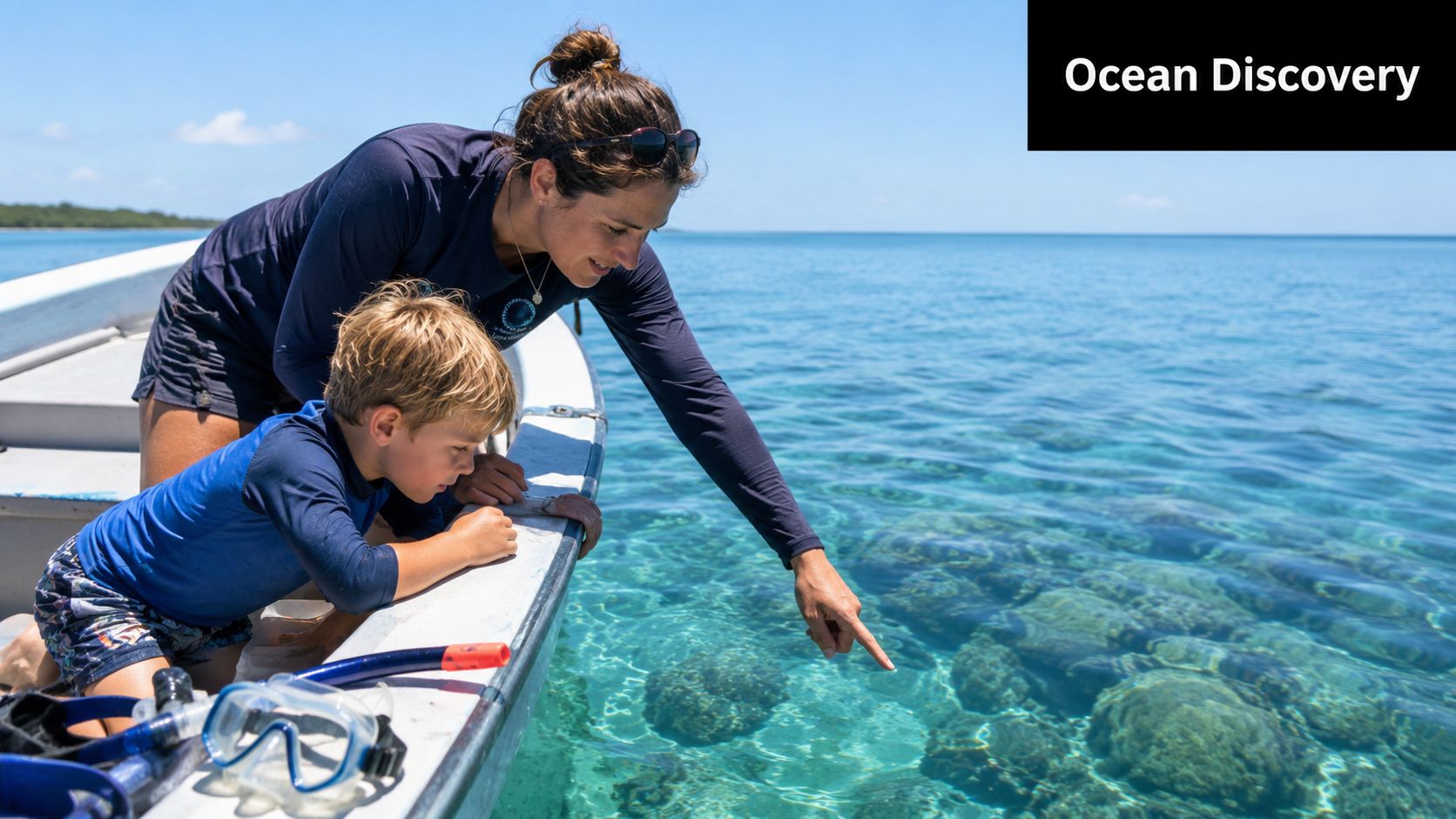
Among all kids travel activities, this category often delivers the highest return in wonder. Children respond powerfully to ocean life because it combines science, movement, unpredictability, and beauty. The key is to turn that fascination into participation rather than passive viewing.
Luxury resorts in the Maldives, Bora Bora, Fiji, the Galápagos, and other marine-rich regions increasingly support conservation-oriented experiences with researchers, dive teams, and naturalists. But the strongest programs don't stop at snorkeling. They connect the outing to habitat, stewardship, and observation.
How to make ocean programming work for children
Book around the season and the child's confidence in water. That sounds obvious, but families often secure a beautiful property first and only later ask whether conditions suit the child's swimming ability or sensory comfort. That sequence should be reversed.
The programming itself should be concrete. Coral restoration, turtle monitoring, guided reef interpretation, and age-appropriate marine data collection all work well when the guide can teach without overwhelming.
Ocean experiences succeed when children feel capable in the environment. They fail when adults push them into conditions they haven't learned to trust.
A frequently overlooked consideration
Transit and marine settings can be especially hard for neurodivergent, disabled, or sensory-sensitive children. Specialized guidance often recommends practical regulation tools such as sensory activities, audio entertainment, books, movies or shows, classic games, and surprise items for transitions and long travel segments, as discussed in Treehouse Schoolhouse's road trip activities for sensory-aware planning.
That matters here because boats, docks, saltwater, heat, gear changes, and waiting periods can all become overstimulating. The right expedition team builds regulation into the plan, not just the science.
10. Private Culinary Boot Camps and Gourmet Dining Educational Series
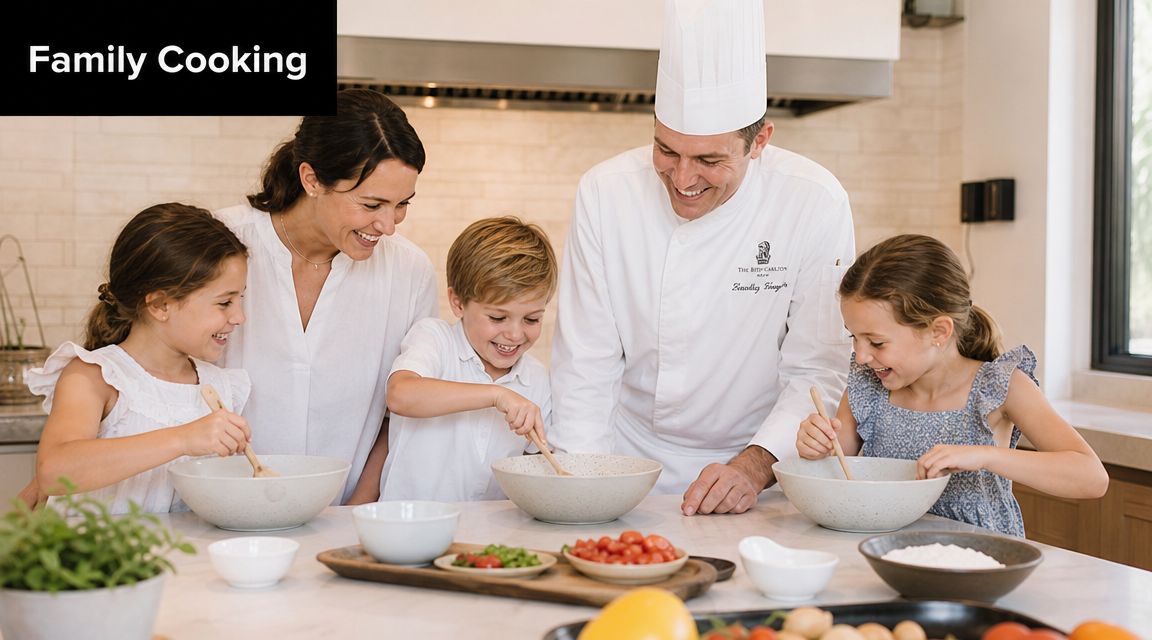
The best family culinary programs do far more than fill an afternoon. They give children real technical instruction, give parents a shared framework for participation, and turn meals into part of the trip's intellectual and social value. For families used to high service, that distinction matters. A pleasant cooking class is easy to book. A private culinary series with the right chef, sourcing access, pacing, and follow-through takes careful orchestration.
A strong format usually runs across several days. One session might begin with a private market visit or garden walk focused on ingredient quality and seasonality. Another can move into the kitchen for knife work, sauces, doughs, or regional technique. The best programs end with a polished meal that feels earned, not staged for children.
How to keep the experience refined
The chef matters more than the kitchen. A Michelin-starred name can impress on paper, but families usually get better results from a chef who knows how to teach across ages without making the room feel remedial or chaotic. That is a specific skill.
Age, appetite, confidence, and sensory tolerance all shape the curriculum. Younger children tend to do well with tactile prep, mixing, dough work, and tasting exercises. Older children can handle knife skills, timing, plating, and flavor structure. Teenagers often respond especially well to the social side of food. Table setting, menu logic, restaurant etiquette, and aroma-based pairing education can feel advanced without becoming performative.
For many luxury families, culinary programming also works as a reliable anchor for the wider itinerary. It fits well between museum days, private touring, and time on property, and it gives the family a shared thread that carries through the trip.
What to require before booking
- A personalized curriculum: The chef should receive cuisine preferences, allergies, dietary rules, sensory considerations, and current skill levels well before arrival.
- Proper production support: Someone needs to handle ingredient sourcing, kitchen setup, cleaning, and service so the family stays focused on the instruction.
- A strong takeaway: A printed recipe collection, edited video clips, or professional food photography extends the experience after the trip.
- A final hosted meal: The closing dinner should showcase the dishes and techniques the family practiced during the series.
A short visual reference can help families imagine the format in action.
Done well, this category leaves families with more than a pleasant memory. It gives them a repeatable ritual, a dish that belongs to them, and a sharper sense of how they want to gather at home and abroad.
Top 10 Kids Travel Activities Comparison
| Experience | 🔄 Implementation complexity | ⚡ Resource requirements | ⭐📊 Expected outcomes | 💡 Ideal use cases | ⭐ Key advantages |
|---|---|---|---|---|---|
| Private Educational Expeditions with Expert Guides | High, expert sourcing, 8–12+ weeks coordination | High, specialist fees, educational materials, luxury logistics | Deep intellectual enrichment, cultural competence, documented learning | Multi‑generational families; execs combining travel with child development | Tailored expert-led curricula, multi-age customization, lasting impact |
| Exclusive Family Wellness and Fitness Retreats | Moderate, coordinate trainers, nutritionists, health screens (6–8 weeks) | High, wellness staff, spa facilities, medical oversight | Improved family health habits, stress reduction, sustainable routines | Health‑conscious families; lifestyle-transitioning executives | Holistic, customizable wellness with family bonding |
| Private Cultural Masterclasses with Renowned Artists | Very high, artist availability, 3–6 months advance booking | Very high, talent fees, studio/performance access, documentation | Significant artistic skill development, portfolios, mentorship | Arts-focused families; children cultivating creative talent | Direct mentorship from top practitioners, unique cultural cachet |
| Luxury Adventure Sports & Extreme Activity Programs | High, safety protocols, specialized logistics, seasonal planning | Very high, certified guides, equipment, medical standby, insurance | Confidence, resilience, advanced outdoor skills, unique access | Active/adventure families; multi‑generational thrill seekers | High-adrenaline, professionally managed experiences with luxury support |
| Bespoke Language Immersion & Cultural Exchange | Moderate–high, curriculum design, 2–4 week minimum commitment | High, native instructors, immersion staff, cultural programming | Accelerated language proficiency, cultural fluency, possible certification | International families; expat or globally oriented executives | Intensive real‑world practice, rapid progress, resume value |
| Private Golf Tournaments & Junior Golf Academies | Moderate, coach scheduling, course access, daily sessions | High, PGA coaches, course fees, custom fitting, tech analysis | Athletic development, competitive results, discipline | Golfing families; juniors pursuing competitive golf | Professional instruction, tournament experience, networking |
| Curated Performing Arts Experiences & Private Entertainment | Moderate–high, align with performance calendars, 2–3 months lead | High, performer/venue fees, backstage logistics, VIP services | Artistic inspiration, insider exposure, memorable cultural moments | Arts‑appreciating families; cultural refinement seekers | Backstage access, direct artist interaction, educational context |
| Multi‑Destination Family Grand Tours with Integrated Logistics | Very high, multi‑country coordination, 3–6 months planning | Very high, private transport, multiple luxury properties, lead advisor | Broad cultural exposure, cohesive narrative journey, strong family bonding | Ultra‑HNW families; multi‑generational extended travel | Seamless logistics across regions, white‑glove coordination, flexibility |
| Private Marine Biology & Ocean Conservation Expeditions | High, research partnerships, certifications, seasonal windows | High, research vessels, scientists, underwater tech, resort support | Conservation impact, hands‑on science learning, environmental stewardship | Environmentally conscious families; aspiring marine scientists | Field research participation, measurable conservation outcomes, expert ties |
| Private Culinary Boot Camps & Gourmet Dining Series | Moderate, chef scheduling, kitchen logistics, safety measures | High, Michelin chefs, private kitchens, market/farm access | Practical culinary skills, food literacy, shared family creations | Foodie families; multi‑generational culinary learning | Access to top chefs, tangible skills and recipes, cultural food immersion |
Orchestrating Your Family's Next Chapter
The best kids travel activities are not activities at all. They are carefully built experiences that shape how a family learns, connects, and sees the world together.
That distinction matters. A child who studies reef systems with a marine biologist, cooks beside a serious chef, or walks an archaeological site with an exceptional private guide is doing more than filling an afternoon. The child is building confidence, taste, curiosity, and a sense of place. For families who travel often, those outcomes matter far more than another beautifully photographed holiday.
What separates an excellent family journey from an expensive but forgettable one is design. Destination choice matters, of course, but curation matters more. The right advisor matches the guide to the child's temperament, the wellness format to the family's real energy, and the pacing to the age spread across the group. A strong itinerary leaves room to breathe while still giving each day shape and purpose.
Luxury families often see only the visible layer. Behind that polished experience sits a large amount of planning. Research partners must be credible and engaging with children. Private instructors must know how to teach without diluting standards. Transfers, room configurations, dietary preferences, staffing, privacy requirements, and contingency plans all need to work together. If they do not, even the most exclusive concept starts to feel cumbersome.
Expert advisory earns its place here. The job is not only to reserve villas, guides, or restaurant tables. The job is to build continuity across the trip, decide what belongs in the same journey, and protect the family from poor combinations, rushed transitions, and experiences that sound impressive on paper but disappoint in practice. That is especially important in multigenerational travel, where children need stimulation, parents want ease and polish, and grandparents want comfort, access, and meaningful participation.
Haute Black operates at that level of orchestration. The role is to turn a family's ambitions into a coherent private journey, whether that means a scholar-led expedition in Peru, a culinary program across Italy, a restorative retreat in Asia, or a multi-stop itinerary where every handoff is handled with precision before departure.
Handled well, family travel gives every generation a real stake in the experience. Children are not parked in side activities while adults pursue the “real” trip. The journey belongs to everyone. That is the standard. Connect with a Haute Black advisor to begin designing your next chapter.
Haute Black creates bespoke family journeys that go far beyond standard luxury travel. From private cultural access and wellness retreats to multigenerational grand tours with logistics handled without friction, Haute Black designs experiences where the right doors open at the right time, and every detail is managed with precision.
Explore Our Guides


Signature Experiences


