Haute Black Journal
10 Beautiful Places to Go in Spain: A Luxury Guide

Marlene Azeez
Director, HauteBlack
View all articles →
# 10 Beautiful Places to Go in Spain: A Luxury Guide
May 25, 2026
Spain belongs on any serious shortlist of Europe's most beautiful countries. The mistake is treating that beauty as a simple checklist of famous cities and photogenic coastlines. A significant advantage of Spain is that its most compelling places are supported by an unusually well-developed travel infrastructure, which means they can be experienced with precision, privacy, and style if the trip is built properly.
Beauty in Spain also comes in very different forms. Barcelona delivers architectural drama and urban energy. Mallorca rewards clients who want polished coastal living without sacrificing discretion. Seville and Córdoba offer grandeur, ritual, and atmosphere. Granada pairs Moorish heritage with mountain access, while Marbella, Ibiza, and Formentera serve a more private Mediterranean rhythm when handled well.
For a UHNW traveler, destination choice is only the starting point. What matters is access. Which property has the right suite inventory and service culture. Which guide can get you through a landmark before the crush. Which transfer keeps a day smooth instead of wasteful. Which lunch is worth your time.
That is the difference between a pretty trip and a properly curated one.
This guide is built as a logistical and experiential blueprint, not a generic roundup. It focuses on where to go, how to sequence each stop, where to stay at the right level, and when to use a city, island, or resort as part of a wider journey. For clients planning a multi-stop introduction to the country, Haute Black's Spain journey through Madrid, Seville, and Barcelona shows the standard of pacing and access that Spain deserves.
1. Barcelona
Barcelona is the city I recommend when a client wants Spain at full voltage. It gives you modernist architecture, serious shopping, the Mediterranean, and enough cultural density to justify a proper stay rather than a rushed stop. Among Spain's landmark attractions, Sagrada Família is consistently cited as one of the country's most iconic sites, which is why access strategy matters more here than in almost any other Spanish city.
A standard Barcelona trip is crowded and fragmented. A well-built one feels cinematic.
How to do Barcelona properly
Start with a private Gaudí-focused day. Pair Sagrada Família with Casa Batlló, Casa Milà, and a controlled Park Güell visit, then finish in the Eixample with a late lunch rather than forcing a museum marathon. Clients who want the city handled at the right level should begin with Haute Black's Spain journey through Madrid, Seville, and Barcelona.
Practical rule: In Barcelona, pay for time, not only access. The right driver, guide, and timed entry sequence matter more than adding extra stops.
The second day should move away from monuments and into lifestyle. Passeig de Gràcia for fashion. A behind-the-scenes gallery or atelier appointment. Then a dinner reservation that doesn't require performing your way through a dining room filled with tourists trying to out-document each other.
- Stay central: Choose a base in the Eixample or along the best part of the seafront so you can pivot between architecture, retail, and the marina without wasting the day in traffic.
- Use the city as a launch point: Barcelona works beautifully with a Costa Brava yacht day or a private wine excursion.
- Protect your pace: Four nights is the minimum if you want the city and one coastal extension without turning the trip into a transfer exercise.
Where Barcelona becomes luxurious
The city's beauty is obvious. The luxury lies in editing it. Skip the impulse to overbook. Let one day be cultural, one day be culinary, one day be coastal, and one evening be fully unscripted. That's when Barcelona feels expensive in the right way.
2. Mallorca
Mallorca is the Balearic answer for clients who want the Mediterranean without the performative edge. It balances mountain scenery, polished beach clubs, stately fincas, elegant village life, and villa privacy better than almost anywhere else in Spain. It's one of the most beautiful places to go in Spain for couples, families, and multigenerational groups because it never forces one pace on everyone.
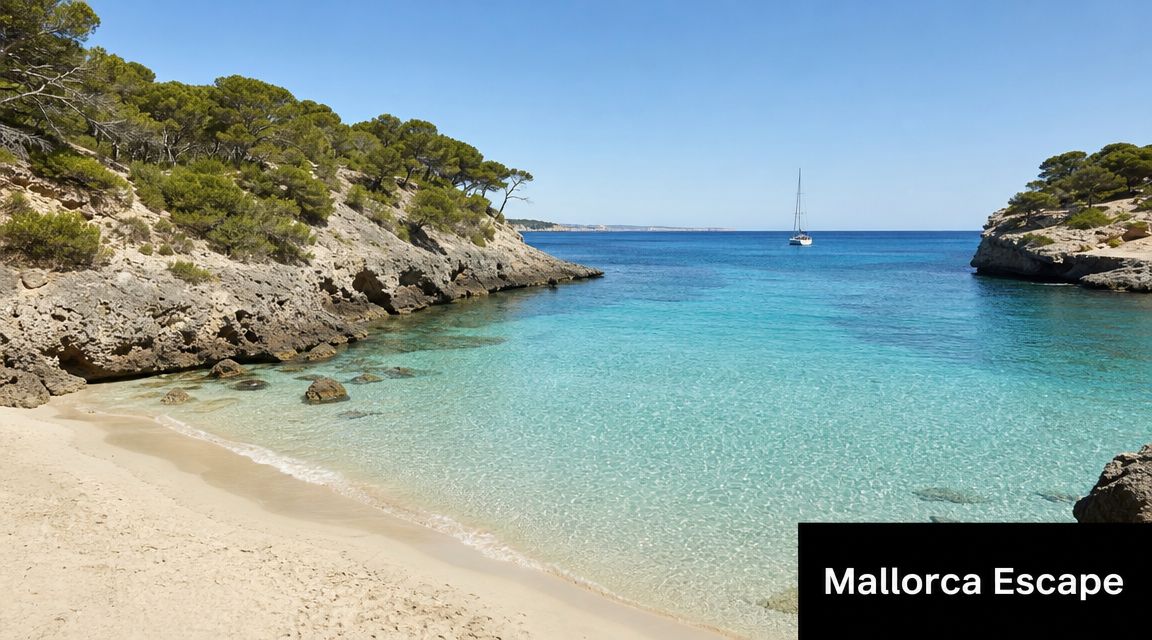
Mallorca should be planned around where you want to wake up. Palma gives you access and energy. Deià and Sóller give you a more secluded, design-forward island rhythm. The southeast works for beach-led villa stays.
The right Mallorca rhythm
I usually divide Mallorca into two moods. The first is inland refinement: estates, olive groves, mountain drives, and long lunches. The second is maritime: charter days, hidden coves, and low-key waterfront dinners. If you want a property-specific starting point, Haute Black's Son Net Mallorca insider guide is the right lens.
The mistake is trying to “see” Mallorca. The island rewards returning to the same terrace, the same swim ladder, the same driver, the same table at sunset.
What to book before you land
- Secure the house first: In Mallorca, the villa or estate defines the trip. Everything else follows from that.
- Build one sea day into every stay: A private charter changes your relationship to the island immediately.
- Use shoulder season: May, June, September, and early October preserve the island's elegance better than peak summer.
Mallorca works best when your itinerary leaves room for appetite, weather, and mood. Overplanning is the fastest way to flatten it.
For families, add chef service and children's programming. For couples, lean into spa, vineyard lunches, and a boat with a strong lunch setup. For seasoned island travelers, combine a rural estate with a few nights in Palma for contrast.
3. Seville
Seville is Spain at its most seductive. It has heat, scent, ceremony, horse-and-carriage romance if you want it, and enough historical gravity to support private interpretation rather than surface sightseeing. It's also known as the birthplace of flamenco and home to a UNESCO World Heritage Site cathedral, which tells you exactly why this city lands so powerfully with first-time and repeat travelers alike.
Seville is best experienced in the evening. The light softens, the stone glows, and the city stops feeling like a destination and starts feeling inhabited.
The experiences worth arranging
A proper Seville stay should include three things. First, a private architectural visit through the cathedral district and royal spaces with a guide who can speak fluently about Andalusia's overlapping Christian and Islamic histories. Second, a flamenco evening in an intimate venue rather than a tourist-forward stage show. Third, a sherry-focused extension into Jerez if food and wine matter to you.
The city also works beautifully for shorter luxury stays because it's emotionally immediate. You don't need a week to feel it. You do need thoughtful timing.
- Book spring or autumn: Seville is at its best when you can walk comfortably and dine outside with pleasure.
- Reserve night experiences early: The best flamenco settings are limited and often intimate.
- Add one cultural day trip: Jerez and Cádiz complement Seville exceptionally well.
Who Seville suits best
Seville is ideal for honeymooners, culture collectors, and travelers who want atmosphere as much as activity. It's less about shopping and more about immersion. If your idea of luxury includes silence in a tiled courtyard, a private guitar performance, or a meal after midnight in a hidden garden, put Seville near the top of the list.
4. Granada and the Sierra Nevada
Granada has one of the strongest visual reveals in Spain. You arrive for the Alhambra and stay for the tension between palace, hillside neighborhood, and mountain backdrop. The Alhambra is a fortified Moorish palace completed in 1354, a detail that explains why Granada feels less like a pretty city and more like a surviving world.
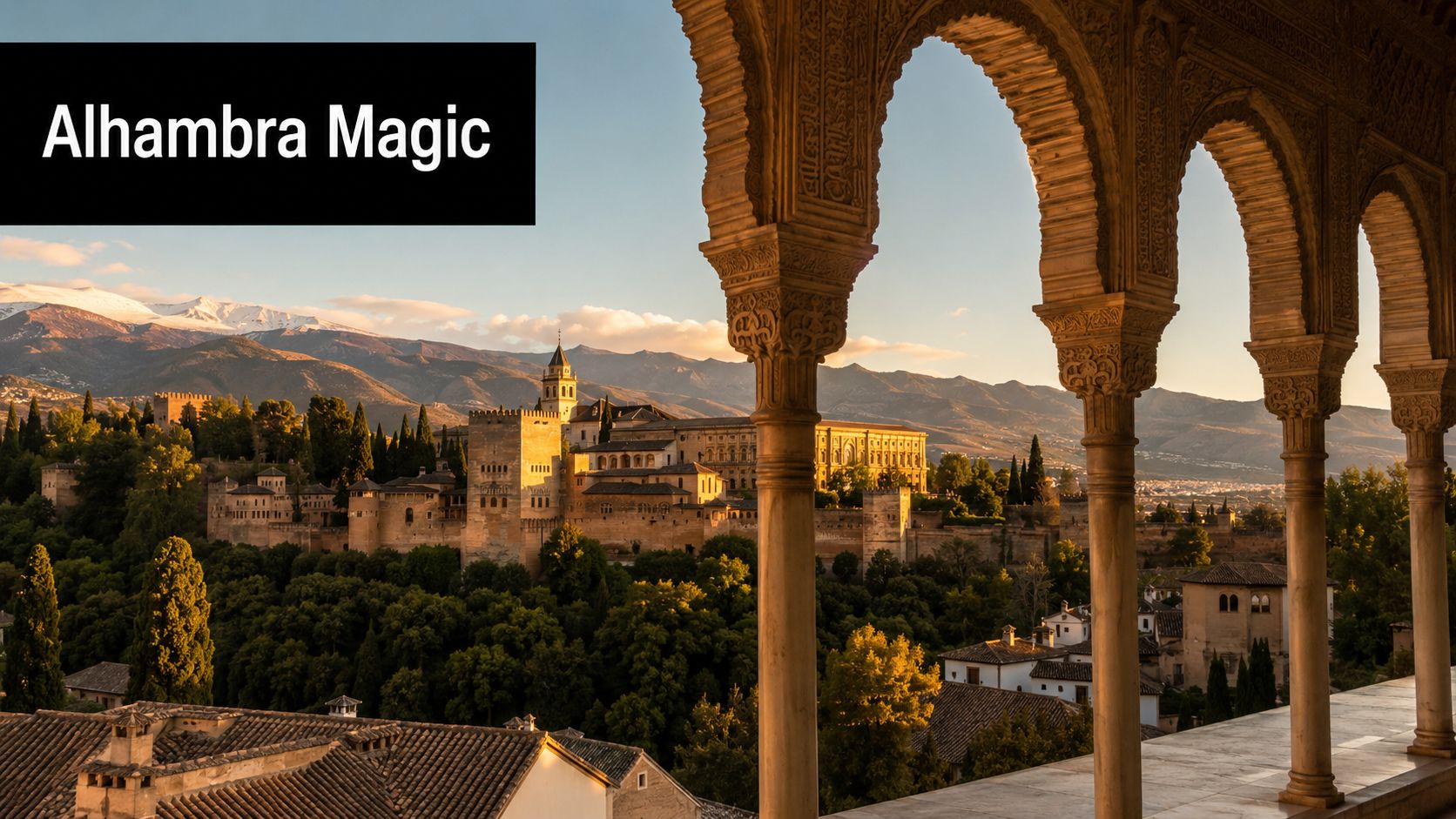
Granada needs discipline. Without planning, visitors spend the trip chasing views and standing in lines. With planning, it becomes one of the most transporting stops in the country.
What makes Granada exceptional
Begin with the Alhambra under the care of a serious guide. Then shift immediately into contrast. Walk the Albaicín slowly. Stop for tea. Use private transport where the hill streets become tedious. Give the city one evening entirely devoted to a viewpoint dinner, because Granada after dark is as important as Granada by day.
The Sierra Nevada adds an entirely different register. Its presence enhances Granada beyond a mere heritage stop. It can become a mountain retreat, a winter extension, or a scenic reset after urban Spain.
Here's the visual preview most travelers need before they commit to the route:
How to structure the stay
- Give Granada enough time: Three nights lets the city breathe.
- Pair culture with altitude: Add a Sierra Nevada lodge or guided mountain day for contrast.
- Use a guide with historical range: Granada rewards interpretation. Surface commentary won't do it justice.
Granada is for travelers who want beauty with intellectual depth. It's not slick. That's part of the appeal.
5. Costa del Sol and Marbella
Marbella remains the most efficient answer for clients who want sun, service, villas, golf, beach clubs, marinas, and no friction. The Costa del Sol isn't subtle, but at the top end it's highly functional. You can arrive, transfer quickly, settle into a staffed villa or polished resort, and move straight into a social or restorative rhythm.
This is not where I send travelers who want medieval romance. It is where I send them when they want polished coastal living done well.
How to separate glamour from noise
Marbella has two versions. One is obvious and loud. The other is private, manicured, and handled behind gates. The key is controlling your geography. Stay where access to the Golden Mile, Puerto Banús, and your preferred clubs is easy, but not so close that your hotel feels like an extension of the scene.
Golf clients should build around guaranteed tee strategy and club relationships. Social travelers should lock in beach access and dinner reservations before arrival. Families should focus on villas with proper staff flow and easy day-trip options into the hills.
Choose Marbella if you want coastal Spain with infrastructure, not isolation.
What works best here
A strong Marbella stay includes lazy mornings, one or two highly curated dinners, a yacht day, and optional inland excursions when the coast starts feeling too performative. Ronda can work. So can a countryside lunch. But don't overload the calendar. Marbella is a place for comfort and social ease, not conquest.
6. Ibiza
Ibiza is still misunderstood. Clients who dismiss it as nightlife-only miss one of Spain's most versatile island experiences. Clients who arrive expecting peace everywhere are equally mistaken. Ibiza is best for travelers who want range: villa privacy, beach culture, design-led hospitality, wellness, and, if desired, access to the world's most famous late-night rooms.
If you want a full-service island base with privacy built in, Haute Black's private villa service is the right starting point.
Where Ibiza earns its place
The island can pivot faster than almost anywhere in Europe. Morning yoga at a secluded finca. Boat to Formentera for lunch. Sunset from a private terrace. Club access after midnight. Then disappear the next day into the north for artisan markets, farms, and cliffside calm.
That range is the luxury proposition. You don't have to choose one identity for the whole trip.
- Stay in a villa if privacy matters: Ibiza's best version often happens behind your own gate.
- Split the island by mood: South and west for scene, north for quiet.
- Book serious nightlife through connected channels: The best tables and timings require planning, especially in high season.
Who should book Ibiza
Ibiza is excellent for celebratory travel, stylish groups, privacy-loving couples who still want optional energy, and clients who value a concierge-led villa environment. It's less successful for travelers who expect a sleepy Mediterranean island in every corner. For them, Formentera or Mallorca is usually the better fit.
7. Toledo
Toledo is the day trip many travelers reduce too quickly and the overnight stay many discerning travelers remember for years. The city rises above the Tagus in a way that feels staged for painters, and its layered Christian, Muslim, and Jewish histories make it one of Spain's most culturally resonant places.
I recommend this destination to clients in Madrid seeking depth without logistical sprawl.
Why Toledo deserves a full day at minimum
Toledo works best early and late. Early, before the day-tripper wave fully settles in. Late, after the streets regain their gravity. A private guide should focus less on reciting dates and more on showing how the city's civilizations overlap in architecture, ritual, and urban design.
The cathedral, El Greco lens, old synagogues, monasteries, and river views all matter. But so does wandering without an agenda once the formal tour ends.
- Go early from Madrid: The first hours are the quietest.
- Consider one overnight: Evening transforms the city.
- Prioritize interpretation: Toledo rewards serious cultural framing.
The luxury version of Toledo
Luxury here doesn't mean excess. It means access, pacing, and discretion. A well-timed museum visit, a guide with scholarly depth, and a quiet table after the crowds leave are enough to enhance the entire experience. Toledo is one of the most beautiful places to go in Spain if your taste runs toward history rather than spectacle.
8. Córdoba
Córdoba is one of Spain's most important cities for travelers who care about civilizational overlap. Roman, Moorish, Christian, and Jewish legacies all remain legible here, and the Mezquita gives the city one of the most intellectually and visually powerful interiors in Europe. Córdoba is also one of the commonly recommended city destinations in Spain's tourism sector, alongside places such as Madrid, Barcelona, Seville, Granada, Málaga, Salamanca, Zaragoza, and Bilbao, as reflected in this overview of tourism in Spain.
That concentration matters because Córdoba pairs exceptionally well with Seville or Granada rather than as a standalone long stay.
The Córdoba approach I recommend
Enter the Mezquita with a historian, not a general guide. This is not a monument you skim. Then move outward into the old Jewish quarter, courtyards, Roman traces, and a more local dining rhythm. Córdoba rewards travelers who are happy to spend an afternoon walking slowly through whitewashed lanes and then turn inward for a serious dinner.
The city is also manageable. That's part of its luxury appeal. It doesn't demand an exhausting schedule to feel complete.
Best use of Córdoba in a broader trip
- Pair it with Seville: This is the most ideal combination.
- Stay near the historic core: You'll appreciate the ease.
- Visit outside extreme heat: Córdoba is more enjoyable when walking remains pleasant.
For culturally minded travelers, Córdoba often becomes a favorite because it doesn't need embellishment. The monumentality is already there.
9. The Basque Country and Bilbao
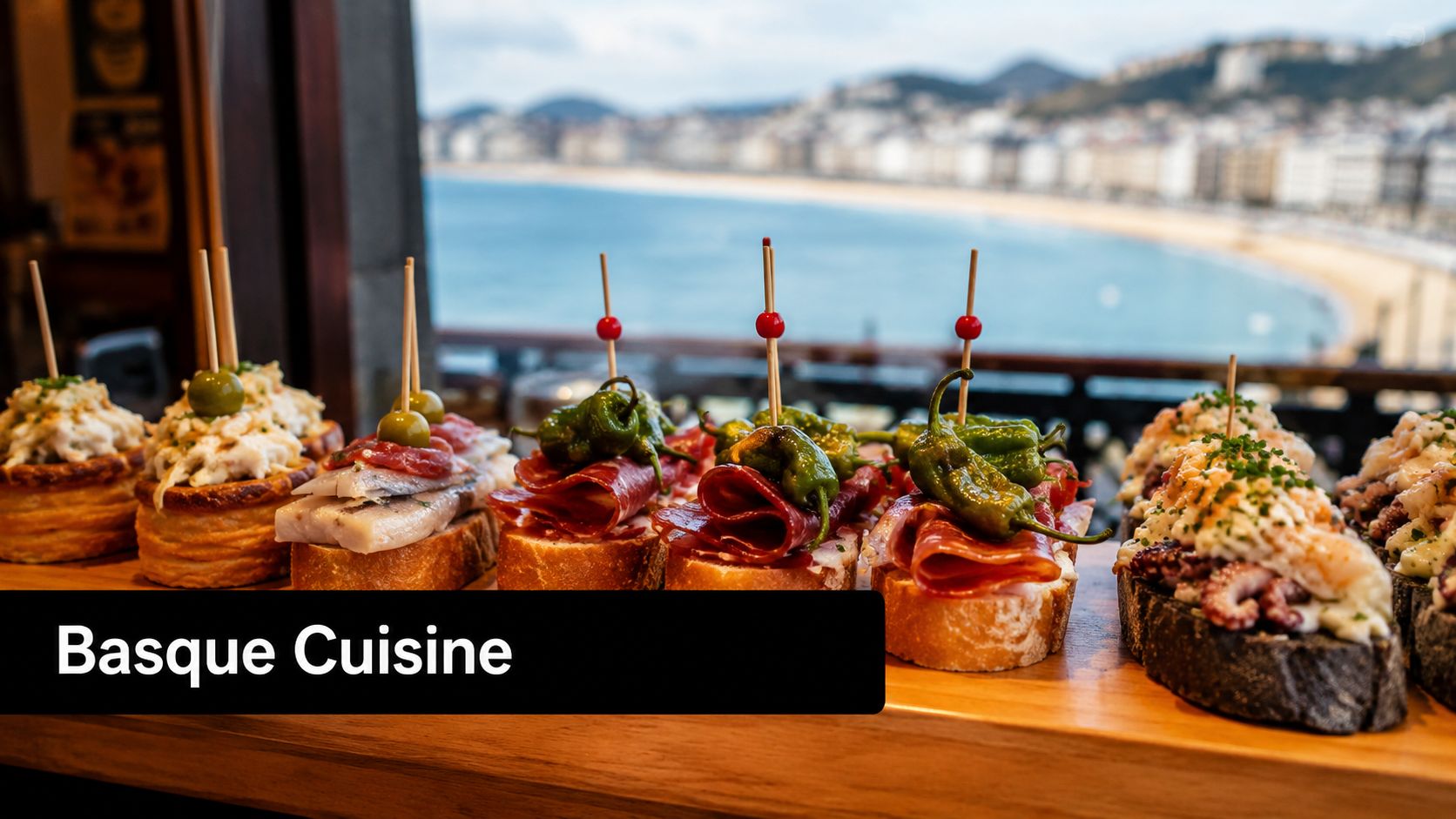
The Basque Country is Spain's sharpest contrast to Andalusia and the Mediterranean islands. It feels cooler, more architectural, more gastronomic, and more self-contained. Bilbao gives you design, museums, and urban regeneration. San Sebastián gives you one of Europe's most elegant food-and-sea combinations. Together, they form one of the country's most refined regional pairings.
Spain's experiential supply is also highly clustered, with Mabrian reporting that 88% of the country's online experiences are concentrated in a few regions, including Catalonia, Andalusia, and major tourism hubs, according to this Mabrian analysis of Spain's experience supply. In practice, that makes the Basque route especially attractive when planned around the strongest urban anchors and pre-booked culinary access.
How to split the region
Bilbao deserves museum time and architecture time. Don't collapse those into a rushed half-day. San Sebastián deserves dedicated lunches, pintxos crawls, and at least one major dining reservation. This is a region where eating is cultural participation, not merely leisure.
In the Basque Country, leave room between meals. The region is built around appetite and conversation.
What to prioritize
- Book destination dining early: The best rooms move fast.
- Spend nights in both cities: Bilbao and San Sebastián serve different instincts.
- Add a coastal driver day if time allows: The road between Basque towns is part of the experience.
For clients who collect restaurants, this region is mandatory. For clients who care more about beaches and villas, it's better as a contrast stop than the core of the trip.
10. Formentera
Formentera is where I send clients who want the Balearics stripped back to light, water, and silence. It is the antidote to excess without sacrificing style. Reached easily from Ibiza but emotionally far from it, Formentera is one of the most beautiful places to go in Spain for travelers who care more about sea color, privacy, and long lunches than nightlife.
This island requires commitment to slowness. If you arrive looking for constant stimulation, you'll miss the point.
Why Formentera works so well
The roads are small. The views remain expansive. The beach clubs, when selected carefully, still feel aligned with the island rather than imposed on it. A villa stay here can feel almost impossible to improve upon if you have the right staff, a chef for selected meals, and a reliable boat setup.
Formentera also works as the quiet half of an Ibiza and Formentera combination. One island for energy. One for decompression.
How to experience it at the right level
- Arrive by private transfer from Ibiza: Start cleanly.
- Book beach access in advance: The island may feel relaxed, but the best setups are finite.
- Keep your days open: A fixed schedule fights the island's rhythm.
For couples, it's a superb post-city reset. For families, it offers a safer-feeling, calmer island cadence. For privacy-focused travelers, it's often the best Balearic answer of all.
Top 10 Beautiful Places in Spain Comparison
| Destination | 🔄 Implementation complexity | ⚡ Resource requirements | 📊 Expected outcomes | 💡 Ideal use cases | ⭐ Key advantages |
|---|---|---|---|---|---|
| Barcelona | Medium, advance VIP access & crowd management | High, luxury hotels, private aviation, yachts, multilingual concierge | High cultural and culinary impact; urban + coastal experiences | Architecture & gastronomy-focused city break (4–5 days) | Iconic Gaudí sites, Michelin scene, excellent connectivity |
| Mallorca | Medium, villa logistics and seasonal planning | High, private villas, marinas, charter yachts, resort staff | High privacy and coastal relaxation; scenic diversity | Private villa retreats, yachting, family stays | Secluded coves, luxury resorts, top yachting infrastructure |
| Seville | Low–Medium, cultural permit coordination for exclusives | Medium, boutique luxury, private guides, event venues | High cultural immersion; intimate Andalusian authenticity | Flamenco evenings, heritage immersion, regional day trips | Authentic flamenco, UNESCO sites, personalized experiences |
| Granada & Sierra Nevada | Medium, timed-ticket coordination for Alhambra | Medium, private guides, mountain lodges, transport | High historical depth + alpine activities (seasonal) | Culture + mountain mix; Alhambra-focused stays (3–4 days) | Alhambra access, mountain retreats, varied experiences |
| Costa del Sol & Marbella | Medium, peak-season demand and venue reservations | Very High, ultra-luxury villas, marinas, golf memberships | High leisure & social impact; strong privacy options | Golf, yachting, high-society beach stays | Premier beach clubs, championship golf, extensive luxury services |
| Ibiza | High, event scheduling and peak-season logistics | High, private villas, club access, yacht charters, DJS | Very high entertainment value; mixed wellness/daytime options | Nightlife + wellness balance; villa parties & sunset events | World-class clubs, celebrity DJs, vibrant villa culture |
| Toledo | Low, straightforward logistics but limited luxury supply | Low–Medium, boutique hotels, private guides, car transfers | High cultural authenticity in intimate setting | Day trips or overnight cultural immersion from Madrid | Preserved medieval heritage, walkable UNESCO sites |
| Córdoba | Low–Medium, off-hours access recommended for major sites | Medium, boutique luxury, private guides, local experts | High historical and scholarly impact with fewer crowds | Deep cultural exploration, Mezquita-focused visits | Mezquita, authentic Andalusian traditions, value-for-luxury |
| Basque Country (San Sebastián & Bilbao) | Medium, advanced restaurant bookings needed | High, Michelin restaurants, curated culinary tours, boutique hotels | Very high gastronomic and cultural impact | Culinary-focused itineraries & contemporary art tours | Concentration of Michelin stars, Guggenheim, refined food culture |
| Formentera | Medium, ferry/yacht logistics and limited services | Medium, private villas, yacht transfers, bespoke provisioning | High privacy and pristine nature; low-key luxury | Quiet beach retreats, family privacy, yacht-based stays (3–5 days) | Exceptional beaches, seclusion, intimate villa experiences |
Your Bespoke Spanish Itinerary Awaits
Spain is one of the few countries where a single trip can combine architectural icons, serious gastronomy, private island living, Moorish heritage, and mountain scenery without compromising comfort. The question is not which places are beautiful. The question is how to experience them properly, with the right pacing, the right access, and the right addresses.
Crowding has returned to Spain's marquee destinations, and the difference between a good trip and an excellent one now comes down to logistics. Barcelona and Palma require advance strategy. The most desirable suites, villas, beach clubs, guides, and restaurant tables disappear early. Clients who book late get Spain's famous settings. Clients who plan well get Spain at its most polished and private.
Build your itinerary around contrast. Barcelona pairs well with Mallorca for city culture followed by estate privacy. Seville works best with Córdoba for a concentrated Andalusian route that feels rich rather than rushed. Granada earns a mountain extension if you want the Alhambra balanced by fresh air and open space. Marbella benefits from a short inland detour or yacht component. Bilbao and San Sebastián should be treated as a food and design circuit, not an afterthought.
Northern Spain also deserves a place in the conversation. Travelers who have already done the classic southern route often find the greatest surprise in the green north, where the mood shifts from grand historic spectacle to refined coastal living, serious cuisine, and quieter scenery.
Execution matters more than ambition. The right trip uses the smartest airport sequence, private drivers where rail adds friction, rail where it saves time, and hotels chosen for purpose rather than brand recognition alone. A city hotel should put you close to what matters while preserving discretion. An island stay should deliver space, not just a sea view. A villa should come with staffing, provisioning, transport, and local coordination that function on arrival.
Haute Black arranges Spain in that exact way, with bespoke itineraries, villa support, concierge transport, and preferred partner hotel benefits. For travelers planning private aviation, multi-stop routing, or high-demand cultural access, coordinated planning is not an extra. It is the difference between a pretty trip and one that feels precise, calm, and worth your time.
Spain rewards travelers who expect more than reservations. If you want Barcelona with after-hours architectural access, Mallorca with the right private estate, Seville with a flamenco evening that still feels intimate, or a fully customized route across Spain's most beautiful destinations, connect with Haute Black to design the journey properly.
Explore Our Guides


Signature Experiences


